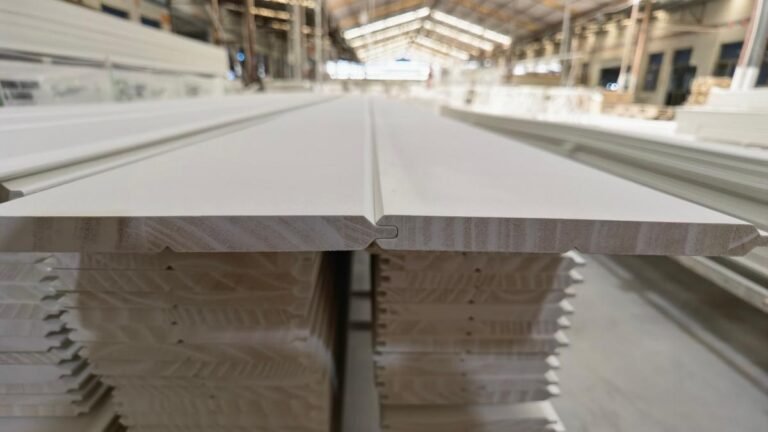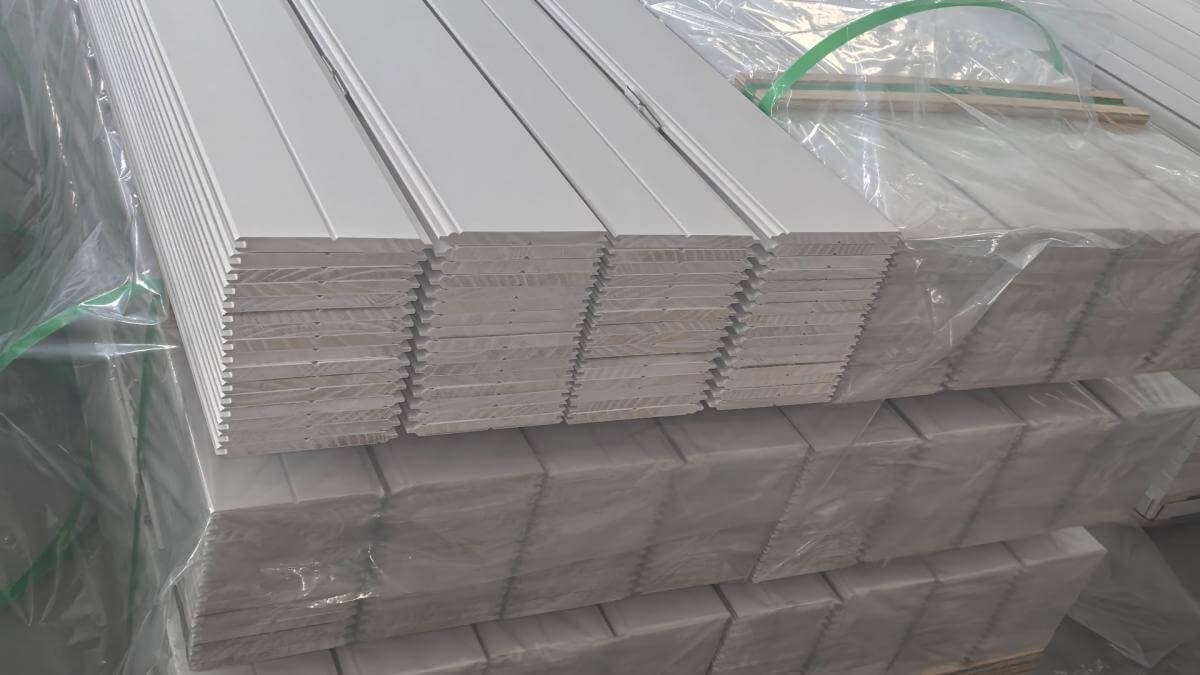
When North American distributors and door manufacturers begin sourcing conversations with molding and millwork suppliers, price is almost always the opening topic. That instinct is understandable — trim and millwork are high-volume, margin-sensitive categories. But the costs that consistently catch buyers off guard are rarely the ones on the quotation sheet.
Compliance failures at customs. Baseboard stock that cups after installation because it shipped at the wrong moisture content. Finger-jointed door casings that look flawless in the sample but show joint telegraphing through the finish coat six months later. Batch color drift that generates installer callbacks on a 200-unit residential project. These are supply chain problems, and they have supply chain costs: rework, returns, delays, and the much harder-to-quantify cost of a damaged contractor relationship.
Goodwood Mouldings has operated from a 200,000 m² manufacturing facility in Xiamen, China since 1995, shipping to North American distributors, door manufacturers, and project buyers for over three decades. The average customer relationship in our network spans more than eight years. That longevity reflects something the industry already knows: a reliable molding and millwork supply partner is harder to find than a low-price quote.
This article outlines five dimensions worth evaluating when you are assessing any molding and millwork supplier — not just for the first order, but for the supply relationship you are actually building.
Compliance Documentation: The Non-Negotiable Starting Point
For any MDF-based molding entering the United States, CARB Phase 2 compliance is not a preference or a premium tier option. It is a legal requirement.
Under California Code of Regulations, Title 17, Section 93120–93120.12, MDF panels thicker than 8mm must meet a formaldehyde emission limit of ≤0.11 ppm (measured by the large-chamber test method). Since the federal Toxic Substances Control Act Title VI came into full enforcement in 2019, these limits apply to composite wood products sold anywhere in the United States — not only in California. A supplier whose MDF substrate does not meet CARB Phase 2 is shipping you a customs and liability problem, not a product.
For distributors serving the green building segment, FSC Chain of Custody certification is increasingly appearing in project specifications and retailer requirements. LEED material credit eligibility depends on certified sourcing documentation, and that documentation has to exist at the manufacturer level before it can travel with the shipment.
Two practical checkpoints when evaluating a supplier's compliance posture:
Ask for per-shipment third-party lab reports, not just the certification certificate. A CARB certificate confirms that a supplier's product was tested and passed at a point in time. A third-party lab report per batch confirms that the specific material in your container was tested. These are not the same thing, and the difference matters when your import broker is reviewing documentation at the port.
Confirm which certifications are held at the manufacturing facility versus at a trading intermediary. FSC Chain of Custody, for example, must be held by each entity in the supply chain that takes title to the product. A supplier claiming FSC certification while acting as a reseller of another factory's stock is a different compliance situation than a manufacturer holding CoC directly.
Goodwood Mouldings holds CARB Phase 2, EPA TSCA Title VI, FSC Chain of Custody, CE marking, E0/E1 emission grade, and ISO 9001 certifications, with third-party lab reports included as standard documentation with every shipment.
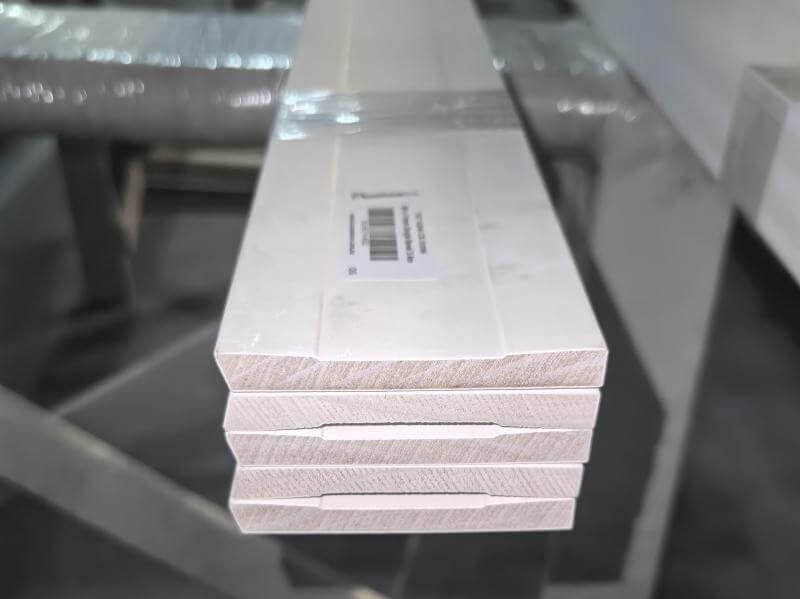
Material Quality: What the Spec Sheet Doesn't Tell You
Product specifications list dimensions, species, and finish type. They rarely capture the production decisions that determine whether those specifications hold up after 12 months in the field. Three areas in particular separate suppliers who understand their material from those who are relaying information from a subcontractor.
Moisture Content Control
Moisture content is the primary driver of dimensional instability in solid wood moldings, and it is the variable most frequently mismanaged on the export side of the supply chain.
Solid wood shipped at 12–14% moisture content into North American distribution environments encounters a significant problem during the heating season. Indoor relative humidity in heated North American interiors can fall below 30% in winter months. Wood at 12–14% MC equilibrating to a 25–30% RH environment loses moisture rapidly and unevenly: the unfinished back face of a baseboard dries faster than the primed front face, creating differential shrinkage stress across the profile width.
For solid wood baseboards wider than 75mm (3 inches), this differential shrinkage — in the absence of a back relief cut — generates the mechanical conditions for cupping. The correct export moisture content target for the North American market is 8–10%. Profiles wider than 90mm supplied into North American markets should carry back relief cuts as a standard specification, not an optional upgrade.
When evaluating a supplier, ask specifically: What is your kiln-dry target MC for North American orders? How do you verify MC at the point of shipment — resistance meter, capacitance meter, or oven-dry method? The oven-dry method (per AS/NZS 1080.1) is the most accurate and is appropriate for certification-level batch confirmation.
MDF Density and Tooling Discipline
Not all MDF is the same, and the difference shows up in the finish — if you know what to look for.
Standard-density MDF (680–720 kg/m³) produces more edge fiber tearout during profile milling, requires additional sanding passes, and absorbs 15–20% more primer than high-density MDF (800–880 kg/m³). For complex profiles, the higher-density substrate produces sharper, cleaner edges and more consistent primer uptake — the additional material cost of 12–18% over standard MDF is often offset by reduced post-processing labor.
Tooling discipline is an equally important signal. MDF's urea-formaldehyde resin binder wears cutting tools significantly faster than solid timber: a profile cutter that lasts approximately 8,000 linear meters on solid wood degrades to around 3,000–4,000 linear meters on MDF. When tooling dulls, the result is feathered or ragged edges on the profile — and feathered edges compromise primer adhesion. A primer coat that achieves GT0 on a cleanly milled edge can drop to GT2 or worse on a poorly milled one (per ISO 2409 cross-cut test), meaning the topcoat the installer applies on-site is bonding to an inadequately prepared surface.
A useful question to put to any MDF molding supplier: are tool-change intervals governed by mileage thresholds, or by visual inspection? The answer tells you something about whether their production system is managed proactively or reactively.
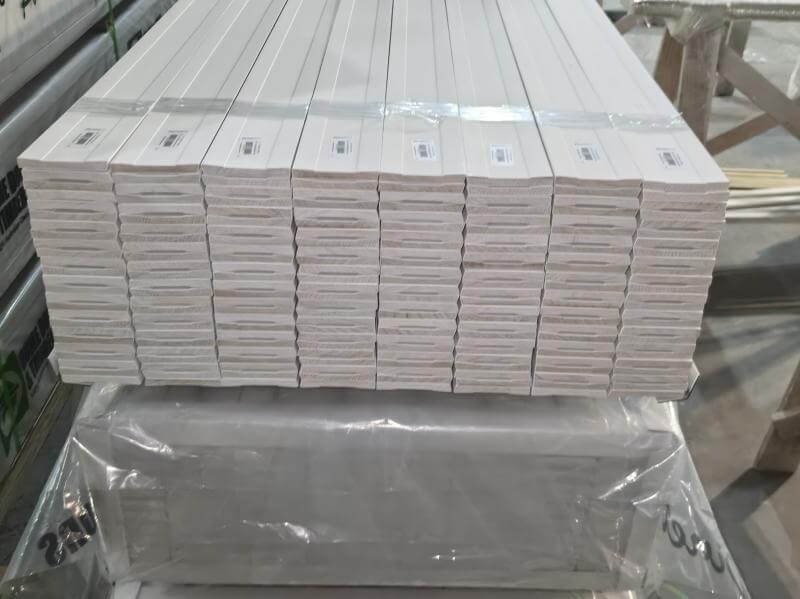
Finger-Joint Adhesive Specification
Finger-jointed stock is the dominant substrate for paint-grade moldings and door casings in the North American market, and it performs well in that role — with one important qualification that applies to structural applications.
PVA (polyvinyl acetate) adhesive achieves 80–90% of clear wood dry strength in finger joints and is appropriate for interior decorative applications: baseboards, chair rails, door casings used purely as trim. However, PVA joints show meaningful strength reduction under moisture exposure, and they are not appropriate for structural door frame applications where the frame carries the weight and operational load of a solid-core door.
For door frames carrying doors above approximately 35 kg, PUR (polyurethane) hot-melt adhesive is the correct specification. PUR cures irreversibly and retains over 90% of joint strength under wet conditions — a meaningfully different performance profile than PVA under the same loading scenario.
When sourcing finger-jointed millwork components for door frame applications, confirm explicitly whether the supplier uses PVA or PUR adhesive on that product line, and whether that specification varies by application type or is applied uniformly across their range. A supplier that uses PVA on door frames because it is less expensive is transferring a long-term performance risk to you and your customers.

Batch-Level Consistency: The Hidden Cost of Variation
A distributor's reputation with their installer and contractor base is built on one thing more than any other: the product they ship this month looks and fits the same as what they shipped last quarter.
Batch-to-batch color variation is one of the most common sources of downstream callbacks in the trim category, and it is almost never visible in a sample evaluation. Color matching against RAL or NCS reference standards provides a baseline, but printed color references carry their own batch variation. The meaningful metric is delta-E (ΔE) — the colorimetric distance between batches.
At ΔE values above 2.0, color difference becomes perceptible to the human eye under natural light. At ΔE above 3.0, the difference is typically described as clearly distinct by untrained observers. For split-delivery projects — a multi-family residential development receiving molding across three shipping windows, for example — batch-to-batch ΔE tolerance of ≤1.0 is the appropriate specification to hold a supplier to.
Dimensional consistency follows a similar logic. Goodwood's production tolerance for solid wood profiles is ±0.3mm on width and ±0.2mm on thickness after planing — tighter than the ±0.5mm common across much of the market. For door and window manufacturers running CNC assembly lines, the difference between ±0.2mm and ±0.5mm incoming stock tolerance is the difference between smooth production flow and line stoppages for manual adjustment.
When evaluating consistency commitments, ask for batch traceability records rather than blanket quality certificates. A supplier operating a three-tier inspection system — incoming material inspection (IQC), in-process inspection (IPQC), and final outgoing inspection (FQC) — with batch-level records linking raw material to finished product gives you a meaningful audit trail when a consistency issue does arise. Final outgoing inspection at AQL 2.5 (per ISO 2859-1) is the appropriate sampling standard for appearance-grade trim products.

Operational Flexibility: Mixed Loading and SKU Continuity
The economics of molding and millwork distribution have shifted significantly over the past decade. Retailers and builders have reduced on-hand inventory commitments. The result is that distributors carry the inventory risk that used to sit further up the chain — and a supplier model that requires full-container single-SKU orders makes that risk more expensive to carry, not less.
Mixed-container loading capability is one of the most practical differentiators to evaluate in a molding and millwork supplier. The ability to consolidate 20–60 SKUs into a single container allows a distributor to replenish across their range in proportion to actual sales velocity, rather than ordering in full-pallet multiples of their slowest-moving profiles to satisfy minimum order requirements. In practice, this flexibility has helped distributors reduce inventory holding by around 45% while maintaining order fulfillment rates above 98%.
SKU continuity is a related and underappreciated capability. Profiles get discontinued. Tooling wears out and suppliers retire older SKUs. For a distributor whose contractor customers have specified a particular baseboard profile for years, a supplier discontinuation creates a serious problem — one that typically ends either in a forced switch the installer does not want or in losing that contractor relationship to a competitor who can still source the profile.
Goodwood has replicated over 300 discontinued profiles to date, with sample turnaround of 3–7 working days. That capability exists because the tooling investment is made at the manufacturer level, not passed to the buyer as a new-tooling minimum order. For distributors managing multi-hundred-SKU ranges across a fragmented contractor base, this is not a minor convenience — it is a supply continuity mechanism.
For door and window manufacturers, the relevant operational flexibility metric is different: it is dimensional precision on semi-finished components. CNC-processed door frames and jambs supplied at ±0.5mm tolerance reduce on-site fitting labor by 40–60% compared to site-cut stock, a meaningful cost difference on multi-unit residential and commercial projects.
A Supplier That Tells You When It's Not the Right Fit
There is a simple heuristic that experienced buyers in this industry often apply: if a supplier presents no limitations, they are probably not telling you the truth about their capabilities either.
Goodwood Mouldings is a good fit for distributors and manufacturers with planned, recurring volume requirements and lead times that accommodate a 25–35 day stock lead time plus ocean freight. The minimum order quantity is a full container — a 20-foot or 40-foot dry container depending on the order composition.
There are scenarios where Goodwood is not the right answer, and we would rather say so directly:
- Small-volume emergency replenishment (less than a full container): the per-unit economics of LCL shipments do not work for either party at this volume level. A local stocking distributor is the right source for this requirement.
- Orders requiring delivery in under 21 days: production and ocean freight to major North American ports take a minimum of 21–30 days combined. For urgent requirements, a domestic warehouse with available stock is the correct solution.
- Stain-grade applications using finger-jointed stock: finger joints are visible under clear or semi-transparent finishes regardless of manufacturing precision. This is a structural characteristic of engineered wood, not a quality variable — and any supplier suggesting otherwise is misrepresenting the product. Stain-grade applications require solid wood, select or better grade.
- Exterior molding applications: MDF and finger-jointed profiles are interior dry-environment products. Prolonged exposure to moisture or exterior conditions causes irreversible structural degradation even in moisture-resistant grades. Exterior applications require tropical hardwood or alternative materials.
Being explicit about these boundaries is not a sales concession — it is what makes the relationship useful for the applications where the fit is genuine.
Choosing a Supply Partner, Not Just a Vendor
The five dimensions covered in this article — compliance documentation, material quality, batch consistency, operational flexibility, and supplier transparency — form a more complete evaluation framework than price comparison alone.
The North American molding and millwork market rewards supply relationships that reduce unpredictability: consistent products that perform as specified, documentation that clears customs without intervention, and a supplier that communicates clearly about what it can and cannot do.
If you are evaluating sourcing options for primed MDF moldings, finger-jointed door casings, engineered millwork components, or custom profiles for the North American market, contact Goodwood Mouldings at info@goodwoodmouldings.com to discuss your requirements.
Frequently Asked Questions
What is CARB Phase 2 and does it apply to wood moldings?
CARB Phase 2 sets a formaldehyde emission limit of ≤0.11 ppm for MDF panels thicker than 8mm. Since TSCA Title VI took federal effect in 2019, it applies to all composite wood products sold in the United States, including MDF-based moldings and trim.
What moisture content should wood moldings have for the North American market?
Solid wood moldings destined for North America should be kiln-dried to 8–10% moisture content. Higher MC levels create cupping and warping risk when the product equilibrates to the dry indoor environments common in heated North American buildings during winter.
Can finger-jointed moldings be used for door frames?
Finger-jointed stock is appropriate for decorative door casing applications. For structural door frames carrying doors above approximately 35 kg, PUR adhesive rather than standard PVA should be specified — PUR retains over 90% of joint strength under moisture exposure, where PVA degrades meaningfully.
What is mixed-container loading and why does it matter for distributors?
Mixed-container loading means consolidating multiple SKUs — typically 20–60 different profiles — into a single shipping container. For distributors, this allows inventory replenishment proportional to actual sales velocity across a product range, rather than forcing full-pallet minimum orders per SKU, which significantly reduces inventory holding cost.
Goodwood Mouldings manufactures and exports wood moldings, engineered profiles, and architectural millwork components from Xiamen, China. Product lines include primed MDF moldings, finger-jointed pine profiles, solid hardwood trim, veneered profiles, and CNC-processed door and window components. All MDF products are CARB Phase 2 and EPA TSCA Title VI certified.