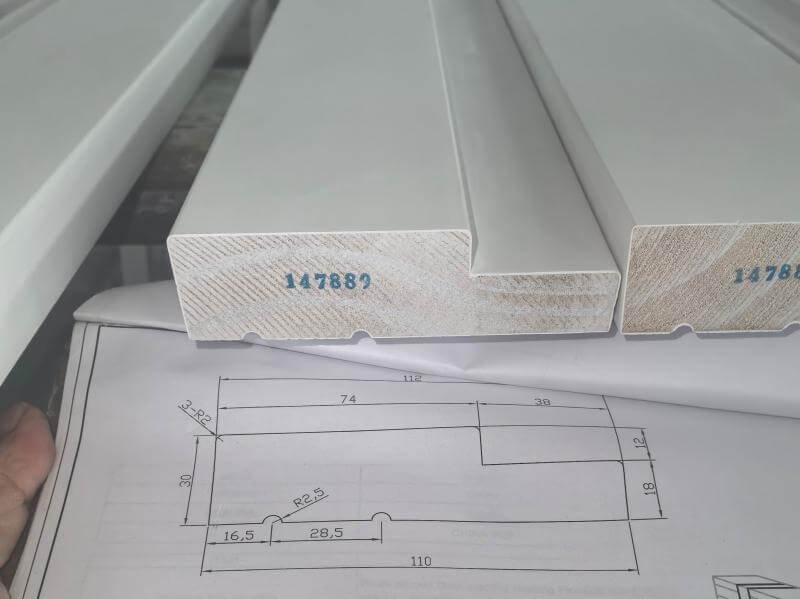
Solid Wood Moulding: Clear-Grade Profiles for Premium Interior Finishing
Milled from clear solid stock -- pine, poplar, oak and other species -- solid wood moulding offers natural grain and strength that engineered profiles can't fully replicate. Kiln-dried and moisture-controlled to match your target market's climate, then finished in-house from priming through custom colour.
How It's Made
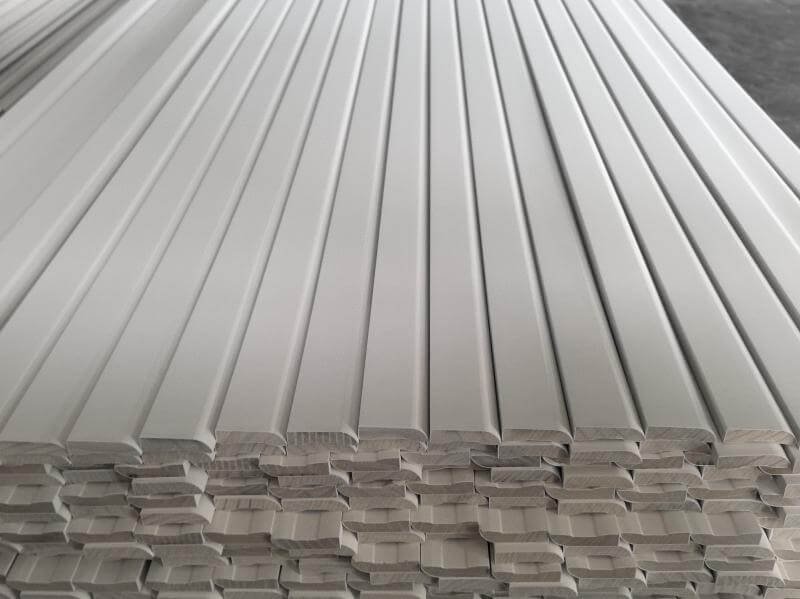
Moisture content is the single most critical variable in solid wood moulding production. Our kiln-drying programme targets specific equilibrium moisture content bands matched to the destination market's climate -- North American heated interiors require a tighter, drier range than European or Australian conditions. Controlling this before any milling begins is what prevents warping, checking and joint failure after installation.
01 · Log Drying
Kiln to target MC
02 · Cutting & Grading
Defect removal
03 · Four-Side Planing
Dimension control
04 · Profile Milling
CNC or fixed tooling
05 · Sanding
Surface preparation
06 · Coating
Prime or custom finish
Specifications
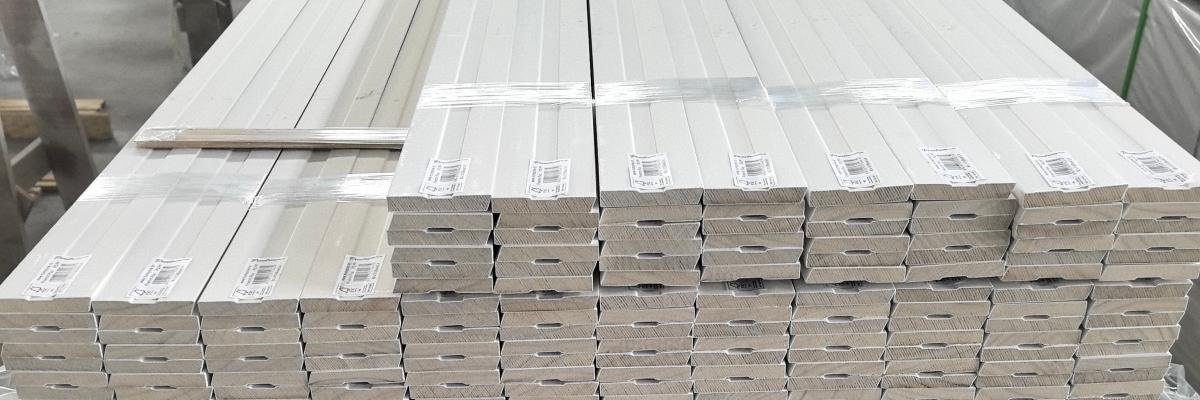
The following targets reflect our standard production parameters for solid wood moulding. Tolerances are verified at FQC (final quality control) before packing. Custom dimensional tolerances can be agreed at order stage for high-precision programmes.
| Parameter | Target Range |
|---|---|
| Moisture Content (North America) | 8-10% |
| Moisture Content (Europe) | 10-12% |
| Moisture Content (Australia) | 10-14% |
| Width Tolerance (planed) | ±0.3 mm |
| Thickness Tolerance (planed) | ±0.2 mm |
| Bow | ≤1 mm / 300 mm |
| Twist | ≤1 mm / 1,000 mm |
| Appearance Grade -- Stain-Grade | Select & Better |
| Appearance Grade -- Paint-Grade | Standard |
Available Species
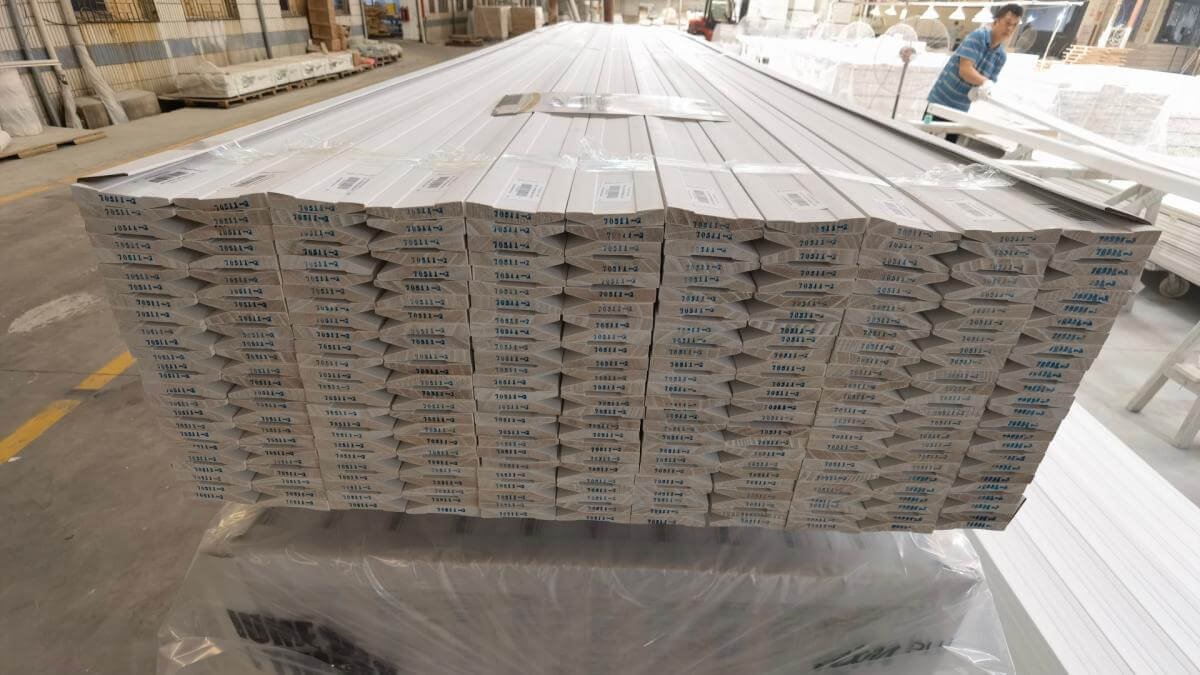
- Pine -- widely used for paint-grade and primed profiles; cost-effective and stable
- Poplar -- preferred for stain-grade and paint-grade interior trim; smooth, consistent grain
- Oak -- premium hardwood for exposed stain-grade applications; open grain, strong character
- Other species -- available on request; suitability confirmed during quoting based on application and market
Applications
Solid wood moulding is the material of choice when the finished surface will be visible and the specification calls for natural grain, stain-grade clarity, or profile complexity that benefits from a single-piece substrate.
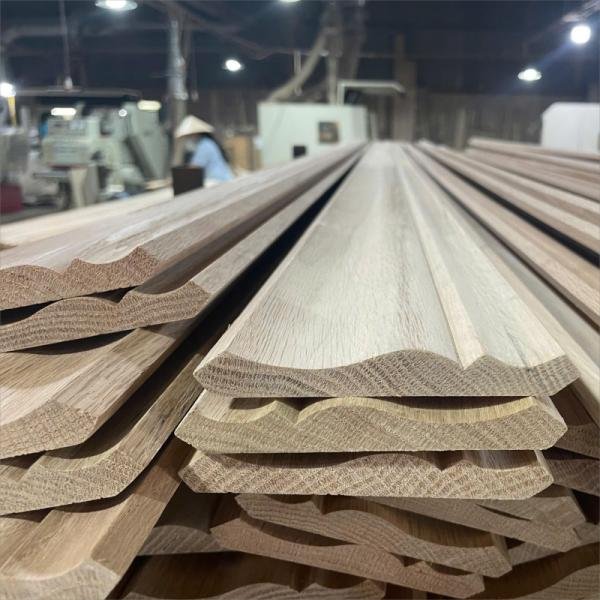
Crown Moulding
Ceiling-to-wall transitions in high-end residential and hospitality interiors. Complex cove and spring profiles benefit from solid stock's dimensional stability and clean milled edges.
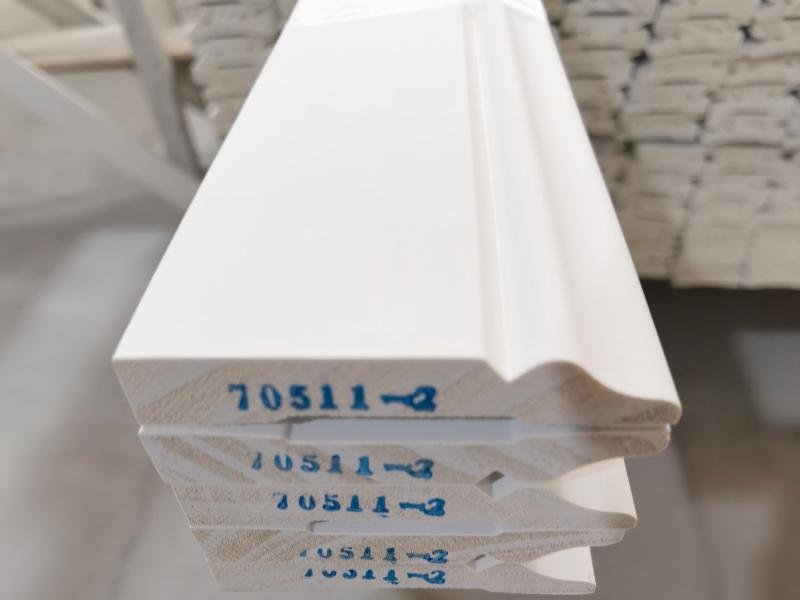
Baseboard & Chair Rail
Floor-level and mid-wall trim where stain-grade or painted solid wood provides a premium tactile and visual finish. Particularly suited to heritage and traditional interior specifications.
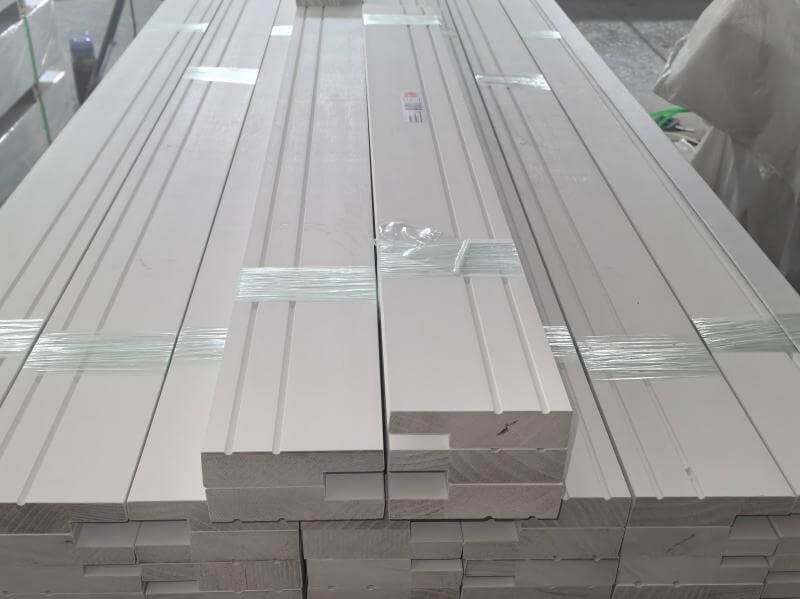
Door & Window Trim
Casing, architrave and surround profiles for premium door and window systems. Solid wood allows complex back-bevel and cope-and-stick details that MDF cannot reliably hold at fine section.
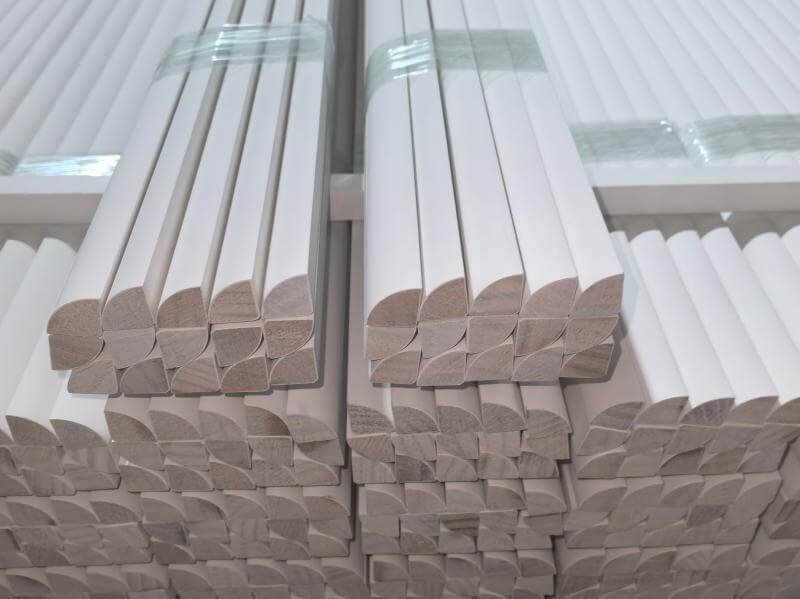
Historic Renovation Matching
Replicating discontinued or period profiles for North American renovation programmes. Our CNC capability allows us to match a physical sample or drawn profile, including legacy species and appearance grades.
Panel & Wainscoting Trim
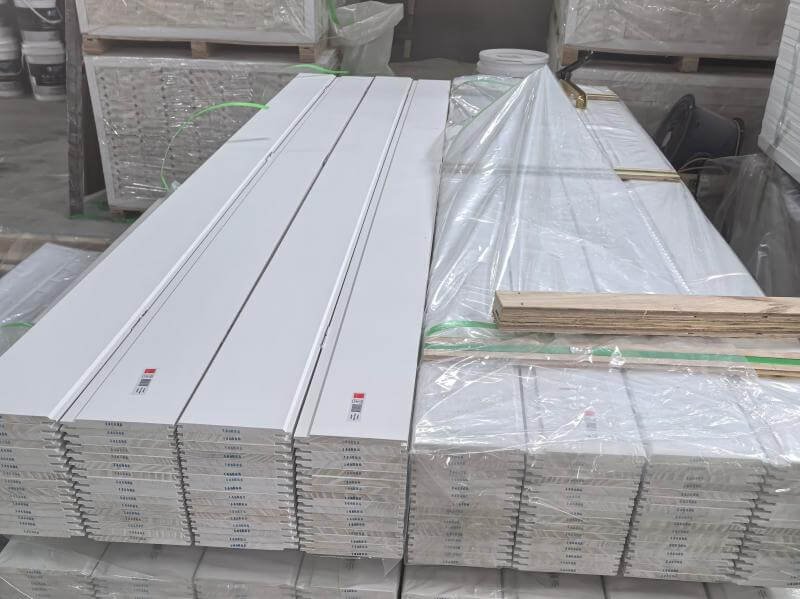
Picture rail, panel moulding, beading and stop profiles for wall panelling systems. Solid wood holds fine detail and accepts stain uniformly across a run, which is critical for wainscoting consistency.
Custom Architectural Millwork
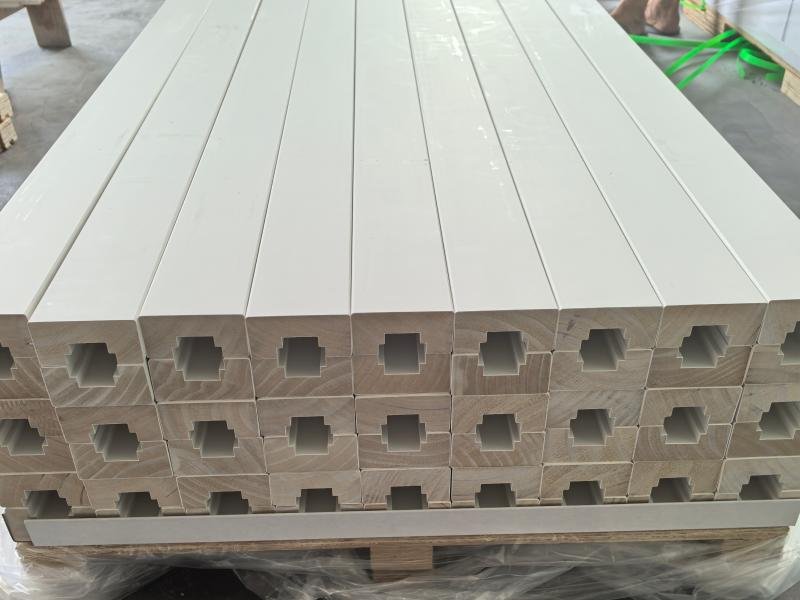
Made-to-print profiles for multi-family residential, hospitality and commercial interiors where the specification requires a bespoke cross-section not available from standard catalogue stock.
Where Solid Wood Isn't the Right Fit
We'd rather flag these considerations now than have them surface after production. If any of the following applies to your project, we'll suggest a more suitable product during quoting.
-
Wide profiles in dry-heated climates
Profiles ≥90 mm wide are more sensitive to seasonal humidity change and may require a back relief groove when specified for dry-heated interiors (e.g. North American forced-air heating). We'll recommend this detail proactively where relevant.
-
Tight colour consistency across batches
Natural colour and grain vary by batch -- that's inherent to solid wood. For projects requiring tight colour consistency (ΔE<1.0 across runs), a painted finish on MDF or a veneered profile is usually a better fit.
-
Price-sensitive paint-grade programmes
Solid wood costs meaningfully more than MDF or finger-jointed alternatives. For high-volume, paint-grade-only programmes where grain character is irrelevant, finger-jointed or MDF profiles will deliver comparable performance at a lower unit cost.
Looking for a more cost-effective paint-grade alternative?
Compare with Finger-Jointed Moulding →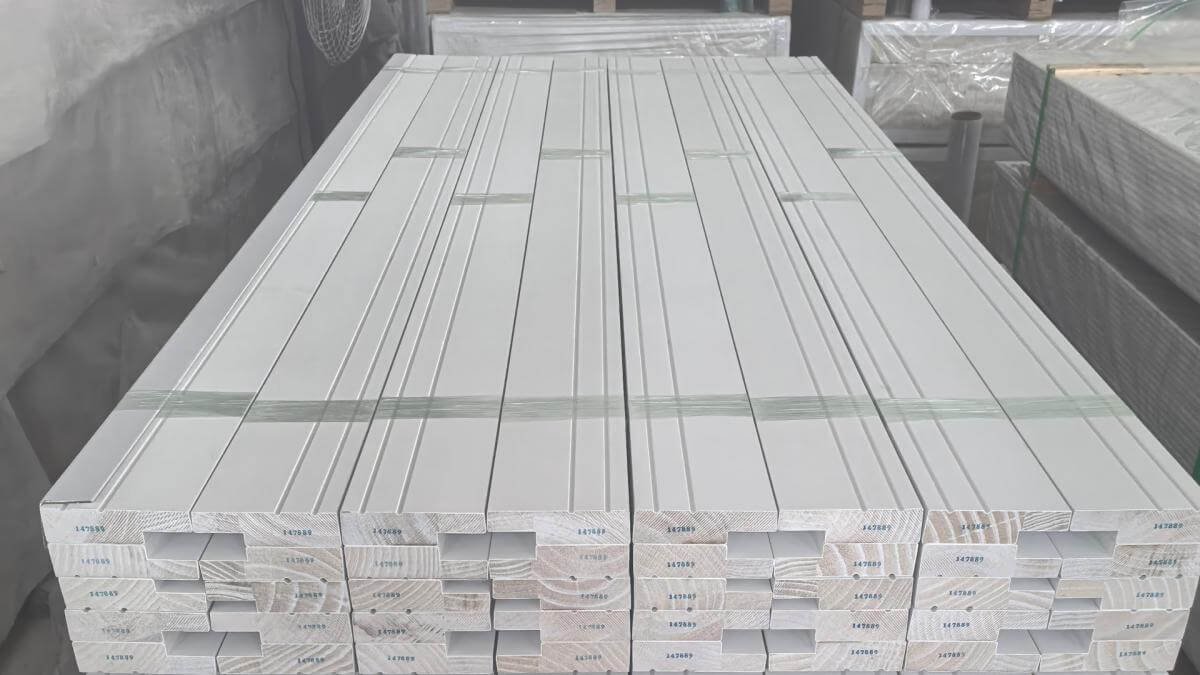
Related Products
Need a Solid Wood Sample?
Send us your profile reference -- a physical sample, drawing or SKU number -- and we'll assess feasibility and provide a sample within our standard lead time. We supply trade buyers in the US, Canada, UK and other established markets.
- Since
- 1995
- Certifications
- 6 Active
- Profiles Replicated
- 300+