Six International Certifications -- FSC, CARB, EPA, CE, ISO 9001, E0/E1
Our certification framework covers the mandatory compliance thresholds for North American (CARB, EPA), European (CE, E1) and globally-recognised (FSC, ISO 9001) procurement programmes. This page documents what each certification covers, which markets it applies to, and what it means when you're qualifying us as a supplier.
Active Certifications
One Factory, Three Compliance Systems
Most moulding suppliers are certified for their own domestic market. If you're sourcing across the US, Canada, Europe and the UK from a single supplier, you typically face a fragmented picture -- some certifications apply, some don't, and verifying scope becomes its own procurement task.
Our six active certifications are maintained simultaneously because our customer base spans all three major compliance systems. CARB Phase 2 and EPA TSCA Title VI cover the formaldehyde requirements for US distribution. CE marking under the EU Construction Products Regulation and E0/E1 classification cover European and UK project requirements. FSC chain-of-custody and ISO 9001 certification apply globally and are among the first items checked during supplier qualification audits at major importers and project buyers.
We're documenting these here -- rather than listing them as badge icons only -- because we find that buyers qualifying a new supplier need to understand what each certification actually requires, not just that we hold it. We can supply the original certificates, test reports and audit summaries on request.
North American System
CARB Phase 2 and EPA TSCA Title VI establish the federal and state-level formaldehyde emissions limits for composite wood products sold or manufactured in the United States.
CARB · EPA / TSCA Title VI
European / UK System
CE marking under the EU Construction Products Regulation (EU CPR 305/2011) and E0/E1 formaldehyde classification under EN 13986 cover the primary compliance requirements for European and UK timber product imports.
CE · E0 / E1
Global Procurement Standards
FSC Chain of Custody certification tracks material origin from certified forests. ISO 9001 documents our quality management system and is a standard requirement in supplier qualification audits at most large importers and project buyers globally.
FSC · ISO 9001
What Each Certification Covers
A brief summary of each certification's scope, the issuing or governing body, and what it means in practice for a trade buyer qualifying us as a supplier.
FSC
Forest Stewardship Council Chain of Custody
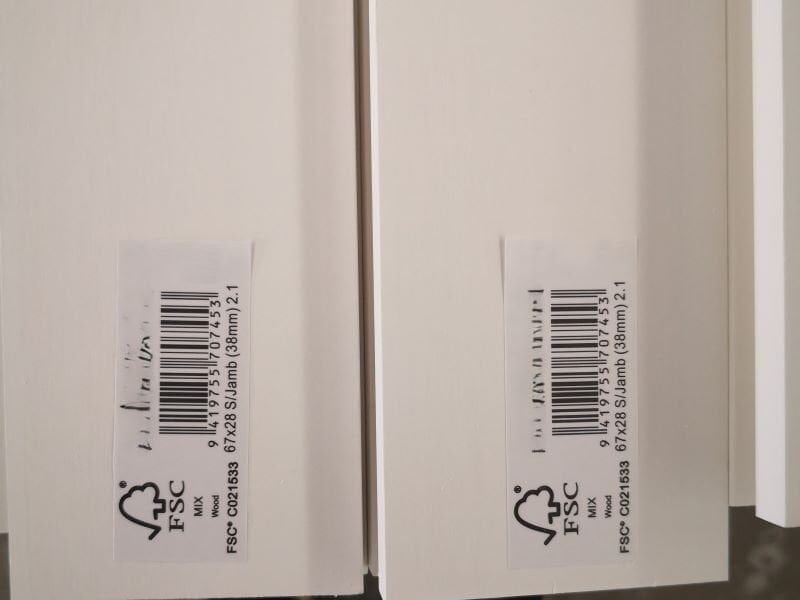
FSC Chain of Custody certification documents that the wood raw materials we use can be traced back to FSC-certified, responsibly managed forests. For buyers whose own sourcing policies or end customers require certified wood content, this is the primary verification mechanism. Our FSC CoC certification number is available on request.
Relevant to: All markets -- frequently required in project specifications, large retailer supplier programmes and public procurement.
CARB
California Air Resources Board -- ATCM Phase 2
CARB Phase 2 sets the formaldehyde emissions limits for composite wood products -- hardwood plywood, particleboard and MDF -- sold or distributed in the United States. For finger-jointed and MDF mouldings, CARB Phase 2 compliance is a legal prerequisite for US market entry, not an optional differentiator. Third-party certifier test reports are available on request.
Relevant to: All products containing composite wood sold in the United States and Canada.
EPA / TSCA Title VI
Toxic Substances Control Act -- Formaldehyde Standards
TSCA Title VI, effective from 2019, extended CARB-equivalent formaldehyde emissions standards to the federal level, covering composite wood products manufactured in or imported into the United States. Emission limits under TSCA Title VI are aligned with CARB Phase 2 for HWP, PB and MDF. Our compliance covers both CARB and EPA requirements simultaneously through the same third-party certification programme.
Relevant to: US importers and distributors handling MDF or finger-jointed composite wood products.
CE Marking
EU Construction Products Regulation (EU CPR 305/2011)
Under the EU Construction Products Regulation, certain categories of structural and semi-structural wood products sold into the EU market must carry CE marking, supported by a Declaration of Performance and assessment against the relevant harmonised European Standard. CE marking is mandatory for products falling within the scope of the relevant EN standards -- it is not a quality mark but a regulatory compliance declaration. We can provide the Declaration of Performance for applicable product categories.
Relevant to: Buyers supplying European Union and UK construction or fit-out projects.
ISO 9001
Quality Management System Certification
ISO 9001 documents the structure and consistency of our quality management system -- covering incoming material inspection (IQC), in-process quality control (IPQC) and final product inspection (FQC) checkpoints. For buyers conducting supplier audits, ISO 9001 certification provides an independently verified baseline for our documented procedures, corrective action processes and quality record management. It does not certify product quality directly, but it does certify that our system for managing quality is independently audited.
Relevant to: All markets -- required in most formal supplier qualification programmes.
E0 / E1
European Formaldehyde Emissions Classification (EN 13986)
E0 and E1 are the formaldehyde emissions classification grades defined under EN 13986 for wood-based panels used in construction. E1 (≤0.124 mg/m³ air, as measured under EN 717-1) is the standard requirement for interior applications across EU markets. E0 (≤0.080 mg/m³) represents a stricter classification, increasingly specified in health-sensitive applications such as schools and healthcare environments. We manufacture MDF and composite mouldings at E0/E1 grade as required per order specification.
Relevant to: European Union, UK and buyers in markets that reference EN standards in project specifications.
A note on scope: Not every certification applies to every product type in our range. Solid wood mouldings, for example, are not subject to CARB/EPA composite wood regulations (they contain no added adhesive binders). Finger-jointed mouldings are produced at CARB Phase 2 / E1 compliance as standard, but are not recommended for clear-finish/transparent lacquer applications where finger joint lines would be visible. We confirm applicable certifications per product type during the quotation process -- we'd rather flag a scope limitation upfront than after production.
Certification-to-Market Applicability
Which certifications apply to which markets -- a reference for buyers qualifying our compliance documentation against their destination market requirements.
| Certification | United States | Canada | Europe / UK | Australia / Other |
|---|---|---|---|---|
|
FSC
Chain of Custody |
Required by many retailer & project programmes
|
Frequently specified
|
Required in public procurement & green building specs
|
Applies globally
|
|
CARB Phase 2
Formaldehyde -- composite wood |
Mandatory -- legal requirement
|
Recognised standard; CARB compliance accepted
|
Not required; E1 governs
|
Not a formal requirement; some buyers accept it
|
|
EPA / TSCA Title VI
Formaldehyde -- US Federal |
Mandatory -- federal law
|
US jurisdiction only
|
Not applicable
|
Not applicable
|
|
CE Marking
EU CPR 305/2011 |
Not required
|
Not required
|
Mandatory for applicable product categories in EU & UK
|
Not applicable
|
|
ISO 9001
Quality Management System |
Required in most formal supplier qualification audits
|
Frequently required
|
Standard requirement in EU procurement
|
Applies globally
|
|
E0 / E1
EN 13986 -- formaldehyde class |
Not required; CARB governs
|
Not required; CARB accepted
|
Required for wood-based panels in EU & UK
|
Referenced in AU/NZ specifications and other EN-aligned markets
|
Which Certifications Matter Most -- by Buyer Type
Door & Window Manufacturers
Typically require the full set -- CARB/EPA for US distribution, FSC for programme specifications, ISO 9001 for supplier qualification. CE and E1 if supplying European markets.
Importers & Distributors
US distributors: CARB/EPA are non-negotiable. ISO 9001 for supplier approval processes. FSC if stocking certified-wood ranges for retail programmes.
Project & Contract Buyers
Multi-family, hospitality and commercial project specifications typically call out FSC, E1 or E0 (for health-sensitive environments), CE for EU projects, and ISO 9001 in contractor-managed vendor lists.
Related Resources
Compliance documentation doesn't exist in isolation. Here are the pages most relevant to buyers working through supplier qualification.
Compliance FAQ
Frequently asked questions covering CARB test report interpretation, certificate validity periods, what we can and can't certify, and how to request compliance documentation for customs clearance.
Quality Control Process
How we run IQC (incoming material), IPQC (in-process) and FQC (final product) inspection checkpoints across our production floor -- with documented procedures, tolerances and rejection criteria.
Request Certificate Copies
Need original certificates, third-party test reports or compliance declarations for your QA file? We typically turn document requests around within 1-2 business days.
If you're qualifying us as a new supplier, you may also want to review our full quality control documentation, which covers material traceability, moisture content testing and dimensional tolerance specifications. For questions specific to CARB Phase 2 test report formats or how to read our EPA compliance declarations, our compliance FAQ addresses the most common questions we receive from US import buyers.
Ready to Verify Our Compliance Documentation?
Whether you're working through a formal supplier qualification process, need specific test reports for customs clearance, or want to confirm that our certifications cover your product category and destination market -- contact us directly. We reply to all trade compliance enquiries without routing through intermediaries.
- Original certificates and third-party test reports available on request
- We confirm applicable certifications per product type during quotation
- Typical document request turnaround: 1-2 business days
- Direct response -- no third-party distributors or intermediaries involved