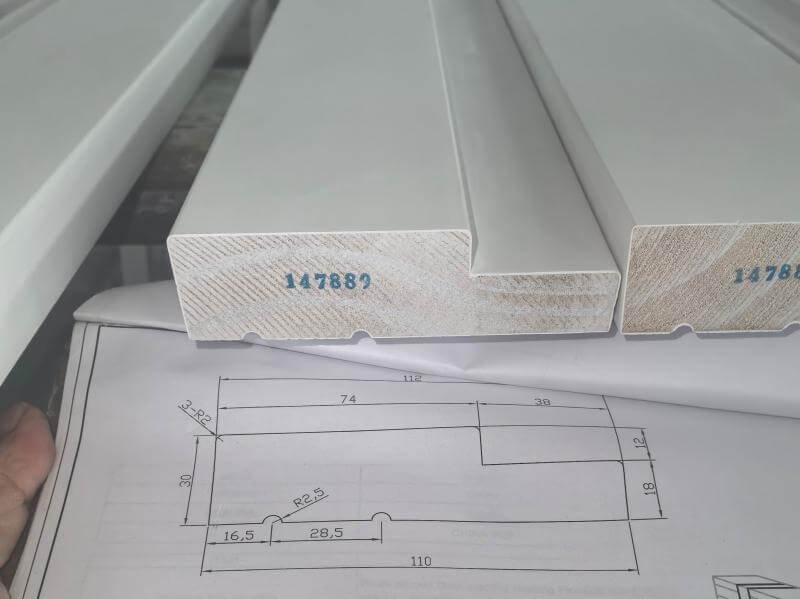
Our Quality Control System: IQC, IPQC & FQC
A three-stage quality management process, combined with batch management and full traceability, designed to meet the documentation and compliance expectations of North American and European buyers.
End-to-End Inspection
Our Three-Stage Quality Process
Each stage targets a distinct point in production -- preventing defects from advancing downstream rather than catching them at the end.
IQC
Incoming Quality Control
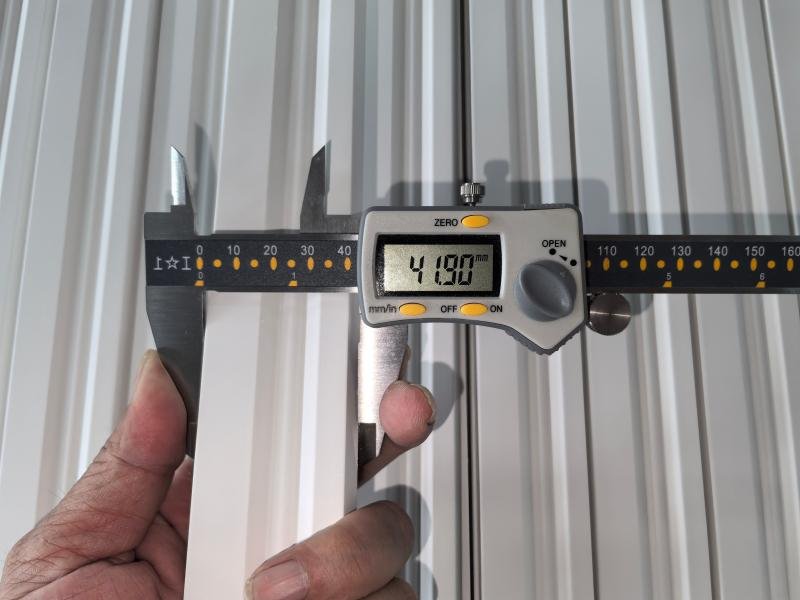
Before any raw material or board stock enters the production line, our IQC team conducts dimensional checks, moisture content assessment, species verification and surface defect screening. Non-conforming material is quarantined and documented -- it does not proceed to processing.
- Dimensional tolerance verification
- Moisture content assessment
- Species and grade confirmation
- Surface defect and knot screening
- Non-conformance quarantine and logging
IPQC
In-Process Quality Control
IPQC inspectors are stationed at key process stages -- moulding, finger-jointing, veneering, coating and CNC finishing -- conducting scheduled and random sampling throughout the run. When a parameter drifts outside tolerance, the line is paused and the root cause is documented before production resumes.
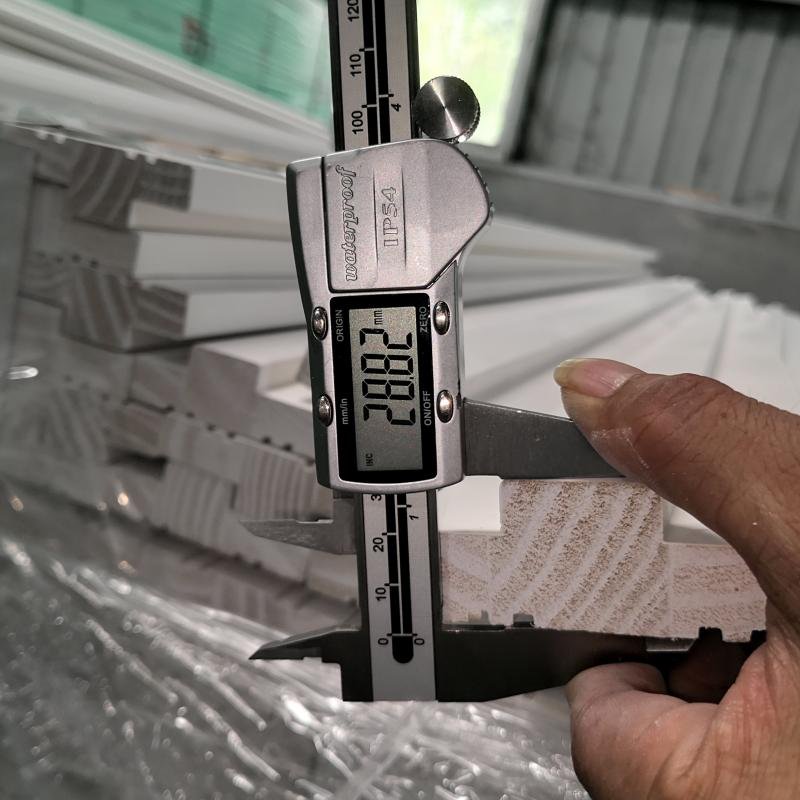
- Profile dimension sampling at each stage
- Coating adhesion and coverage checks
- Finger-joint bond integrity verification
- Veneer alignment and surface uniformity
- Deviation logging and corrective action records
FQC
Final Quality Control
Before any finished moulding is packaged and palletised, FQC inspectors carry out a comprehensive review of the completed batch -- confirming dimensional accuracy, surface finish, colour consistency against the approved reference, and packaging integrity. FQC sign-off is required before a batch is cleared for export.
- Full dimensional conformance check
- Colour consistency against approved reference
- Surface finish and defect-free verification
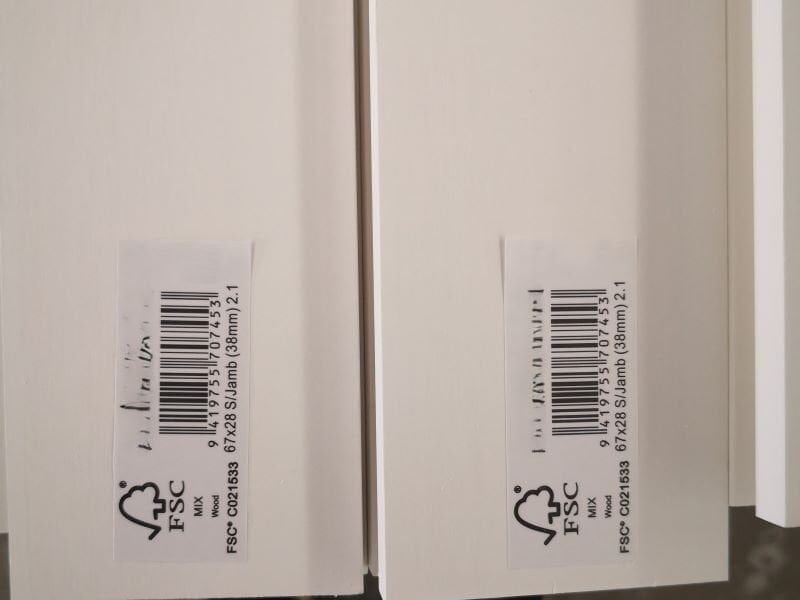
- Packaging and labelling accuracy review
- Export clearance sign-off and documentation
A note on scope: our three-stage QC system is designed to catch the majority of dimensional and surface non-conformances before shipment. It does not eliminate the possibility of transit damage or installation-related issues beyond our facility. We recommend buyers conduct incoming inspection on arrival and contact us promptly if discrepancies are found -- we maintain batch records that support any post-shipment review.
Supply Chain Confidence
Batch Management & Traceability
Two of the most common complaints we hear from buyers switching suppliers are cross-batch colour variation and moisture content that doesn't hold up once product reaches a heated warehouse or a climate-controlled job site. Both problems are symptoms of the same root cause: production batches that aren't tracked with enough granularity to identify where the deviation occurred.
At Goodwood, every production batch carries a traceable record from IQC intake through FQC sign-off. Raw material lot numbers, processing dates, equipment settings, inspection results and operator sign-offs are logged at each stage. If a colour variation or moisture issue surfaces -- whether flagged by our own FQC team or reported by a buyer on arrival -- we can pull the batch record and identify the specific material lot and production window involved.
For buyers managing multi-year programmes, this traceability also supports your own incoming inspection process. We can provide batch-level documentation alongside shipping paperwork, giving your QC team a reference point that doesn't rely on visual memory or informal notes.
Cross-Batch Colour Control
Approved colour references are retained per SKU and checked at FQC against each new batch before clearance.
Moisture Content Tracking
Moisture is assessed at IQC intake and monitored through processing -- non-conforming material is quarantined before it reaches the line.
Compliance Documentation
Batch records, CO, PL and CI are prepared per shipment -- supporting FSC chain-of-custody and CARB compliance requirements.
Post-Shipment Review Support
If a discrepancy is reported after arrival, we can retrieve the specific batch record to support your incoming inspection review.
Third-Party Verified
Quality Backed by Active Certifications
Our QC system operates within a framework of six active certifications -- each requiring ongoing compliance, not just a one-time audit. For buyers navigating CARB formaldehyde regulations, FSC chain-of-custody requirements or CE marking for European markets, our certification portfolio provides the third-party verification your procurement and compliance teams need.
Explore Further
Learn more about the facility and certifications that support our quality control system.

About · Certifications
Certifications & Compliance
FSC, CARB, EPA, CE, ISO 9001 and E0/E1 -- details on what each certification covers and what it means for your sourcing compliance.
View Certifications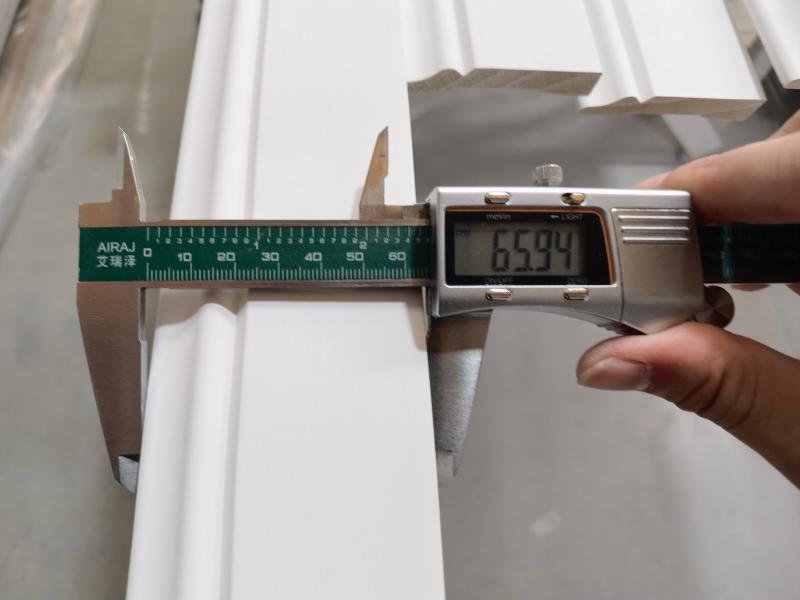
About · Factory
Our Production Facility
A 200,000 m² integrated facility covering log processing through export packaging -- entirely in-house, with no outsourced subcontracting.
View the FactoryReady to Source with Confidence?
Have Documentation Requirements to Discuss?
Whether you need CARB compliance documentation, FSC chain-of-custody records or batch-level traceability reports for your incoming inspection process, tell us what your team requires. We'll confirm what we can provide before you commit to a trial order.
Request a Quote