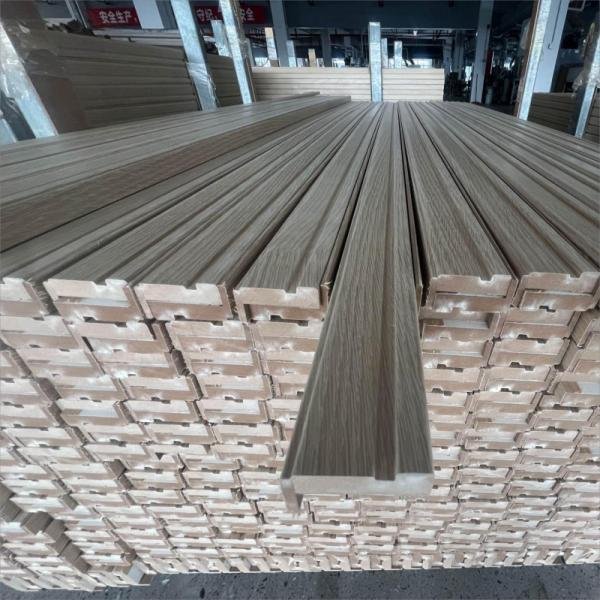
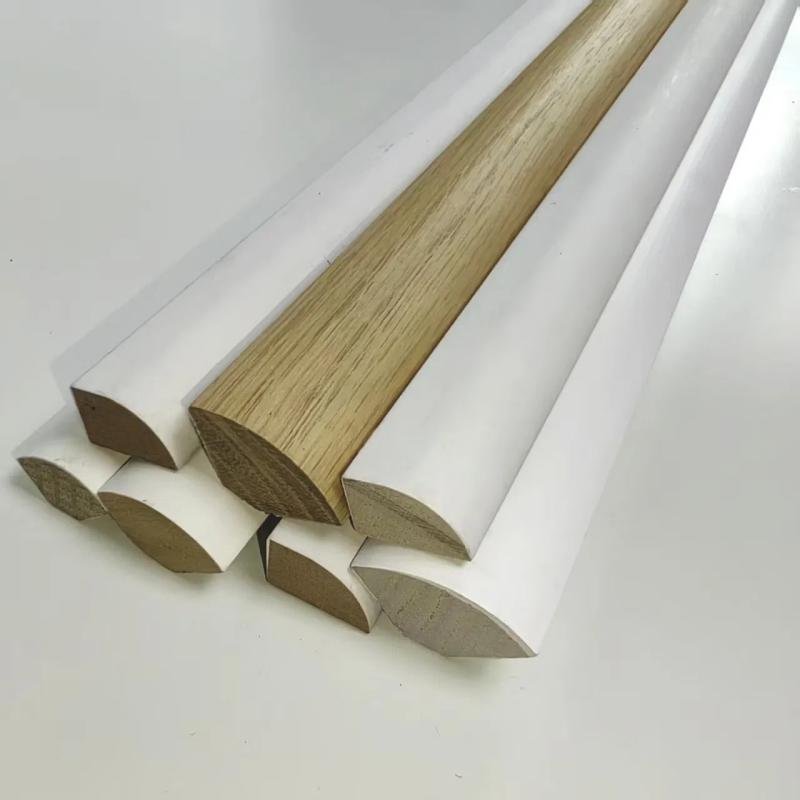
Veneered Mouldings -- Real Grain, Engineered for Consistency
Natural or engineered veneer bonded to CARB-compliant MDF or finger-jointed substrate. Veneered mouldings deliver the visual warmth of solid wood at predictable cost -- but veneer selection and thickness matter significantly for complex profile geometries and long-term batch consistency. This page explains both.
Three Things B2B Buyers Need to Know Before Specifying Veneered Mouldings
Veneer thickness, veneer type, and substrate compliance are the three variables that determine whether a veneered moulding performs on complex profiles -- and whether it holds up across production batches.
Veneer Thickness by Application
Not all veneer thicknesses suit all moulding profiles. Specifying the wrong thickness for a complex contour is one of the most common causes of delamination in transit.
-
0.3mm
Commercial Grade
Suitable for flat-face profiles or mouldings with low curvature. Most cost-efficient option for high-volume decorative trim.
-
0.5 mm
Premium Grade
Recommended for complex curved and coved profiles. Provides adequate pliability without fracture risk on tight-radius contours.
-
0.8-1.0mm
Thick-Slice / Prestige
Intended for high-end applications requiring a tactile solid-wood feel. Can accept light sanding and some site-applied finishes.
Natural vs Engineered Veneer
The choice between natural and engineered veneer is primarily determined by your profile geometry and your tolerance for inter-batch grain variation -- not by price alone.
Natural Wood Veneer
- Authentic random grain -- every piece unique
- Preferred for high-end residential & hospitality
- Prone to wrinkling on complex reverse curves
- Grain & tone vary batch-to-batch
Engineered Veneer (0.5mm standard)
- Uniform grain pattern, consistent colour across batches
- Higher conformability on curved & coved profiles
- Preferred for multi-SKU programs needing repeatable colour
- Pattern uniformity may read as less premium to some end-buyers
CARB-Compliant Substrate System
For veneered mouldings destined for the North American market, substrate emissions compliance is a non-negotiable baseline -- not a premium option. Our standard production system is built around this.
-
E0-Grade UF Adhesive
Formaldehyde emission ≤0.5 mg/L (perforator method), meeting E0 classification under GB/T 17657.
-
CARB Phase 2 MDF Substrate
MDF core sourced from CARB-certified panel suppliers; compliant documentation (TPC certificates, lot records) available on request.
-
Finger-Jointed Substrate Option
For buyers preferring a wood-core substrate, finger-jointed blanks are available as an alternative to MDF, subject to profile geometry constraints.
- Veneer Thickness Range
- 0.3-1.0mm
- Substrate Formaldehyde Standard
- E0Grade
- Substrate Compliance
- CARBPhase 2
- Mixed SKU Loading
- 20-60SKUs
Commercial to prestige grade
≤0.5 mg/L (perforator method)
TPC documentation on request
Per full-container shipment
What Veneered Mouldings Cannot Guarantee -- and When to Plan Ahead
We raise these points before production, not after. Understanding these constraints upfront saves costly rework for both parties.
Natural Veneer Grain Cannot Be Matched Batch-to-Batch
Natural wood veneer retains the inherent variation of the log -- grain direction, colour tone, and figuring will differ between production batches. For large-area installations in a single interior space (e.g. wainscoting, panelling, or full-room trim packages), we recommend confirming and reserving sufficient volume from a single batch at the point of order. We can hold confirmed stock with lead-time scheduling -- ask at the quoting stage.
Profiles Beyond 45° Reverse-Arc Require 0.5mm+ Engineered Veneer
Standard 0.3mm natural veneer is not recommended for profiles featuring reverse curves greater than approximately 45°. At these geometries, the veneer face is placed under tension during pressing and can develop microcracks that open further under temperature and humidity cycling during shipping or storage. For these profiles, we specify 0.5mm or thicker engineered veneer, which provides the pliability to conform without fracture risk. If your profile falls into this category, flag it at the sample request stage and we will advise on the appropriate specification.
Interior use only: Veneered mouldings -- whether on MDF or finger-jointed substrate -- are not engineered for exterior or high-humidity applications. Veneer face layers are not rated for sustained moisture exposure. For exterior profiles, see our Solid Wood Moulding range. For interior painted applications where a wood face is not required, MDF Mouldings offer a more cost-efficient substrate.
Compare Substrate Options
Veneered mouldings sit between MDF and solid wood in the cost-performance spectrum. The right substrate depends on your finish specification, application environment, and volume.
MDF Moulding
Ideal for painted interior applications where a wood-grain face is not required. Consistent density, crisp profile definition, and the lowest cost-per-linear-foot option in our range.
View MDF MouldingSolid Wood Moulding
For exterior applications, clear-finish interiors, or buyers who require genuine solid-wood structure throughout. Higher cost per linear foot; no delamination risk on site finishing.
View Solid Wood MouldingAbout Goodwood
Nearly 30 years of wood moulding manufacturing -- built on a vertically integrated facility, documented process controls, and internationally recognised certifications.
200,000 m² Vertically Integrated Production -- Log to Export Pack
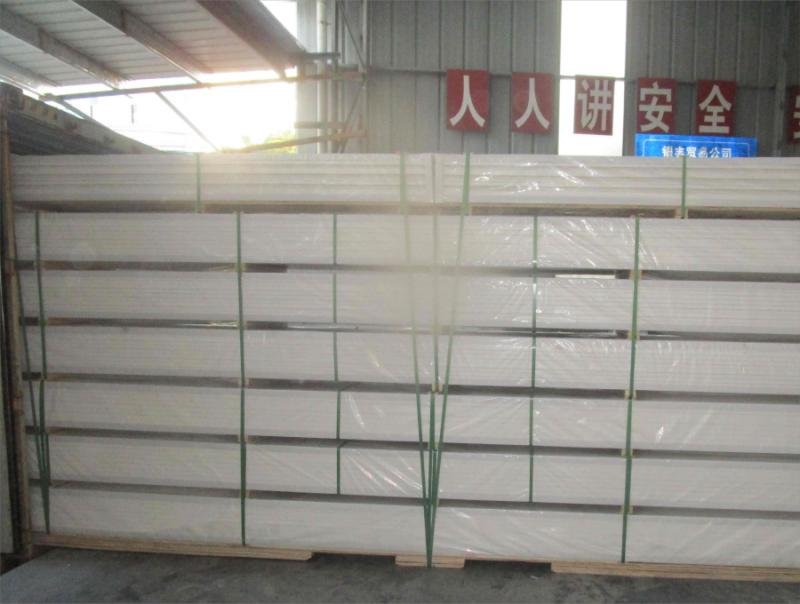
Every stage -- raw log intake, finger-jointing, veneering, coating, CNC finishing, and export packaging -- takes place in-house on our Xiamen floor. No outsourced subcontracting means consistent quality and predictable lead times.
Tour the Factory
IQC, IPQC and FQC: Three-Stage Inspection Across Every Production Run
Incoming material inspection, in-process quality checkpoints, and finished-goods final inspection run on every batch. Dimensional tolerances, moisture content, and surface finish are documented at each stage -- not just on first articles.
View Our QC Process
FSC, CARB, EPA, CE, ISO 9001 and E0/E1 -- Verified for North American and European Trade
Our certification portfolio covers chain-of-custody forestry, formaldehyde emissions compliance, and manufacturing quality management -- the credentials that matter when specifying products for the US, Canada and UK markets.
See All CertificationsTell Us Your Profile, Finish Spec, and Volume -- We'll Handle the Rest
Whether you're selecting between natural and engineered veneer, specifying a complex curved profile, or need CARB-compliant documentation for a US market program, we respond to trade inquiries with a direct capability assessment -- typically within a few business days.