MDF Moulding Precision Profiles for Interior Finishing
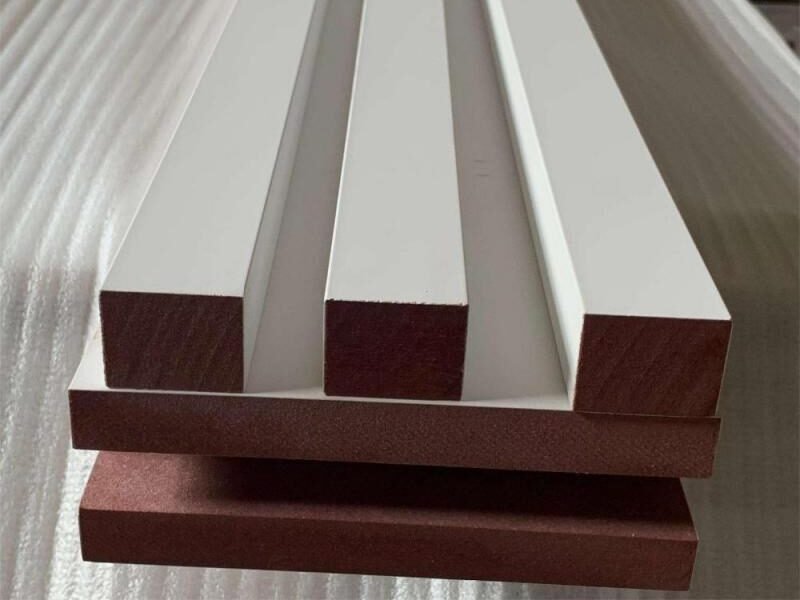
Medium-density fibreboard substrate delivers a consistently flat, grain-free surface ideal for fine paint finishes and crisp routed profiles. We supply MDF mouldings at two density grades to match your profile geometry and application requirements -- with E0 formaldehyde certification and honest guidance on where MDF should, and shouldn't, be specified.
What Trade Buyers Confirm Before Ordering MDF Moulding
Three technical criteria we address upfront -- density grade, formaldehyde compliance, and edge treatment -- account for the majority of pre-order qualification questions we receive from UK and Australian importers.
Density Grading for Application
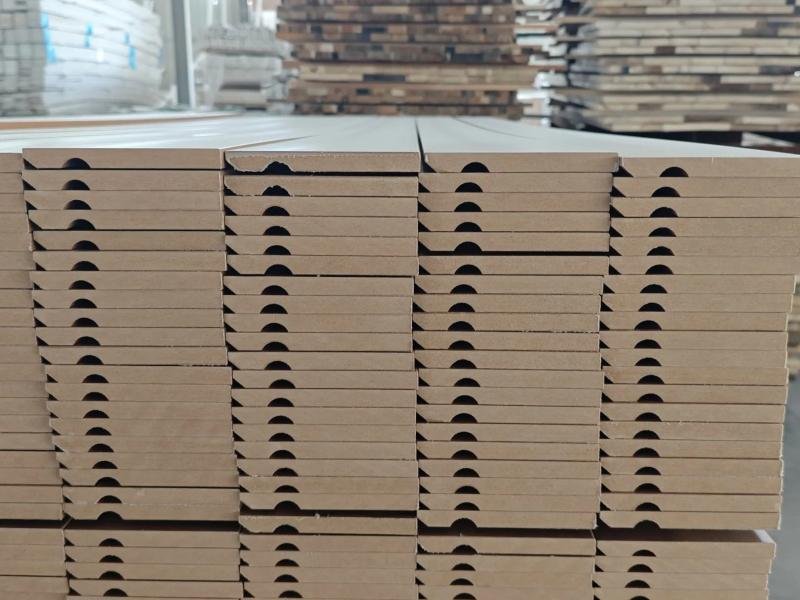
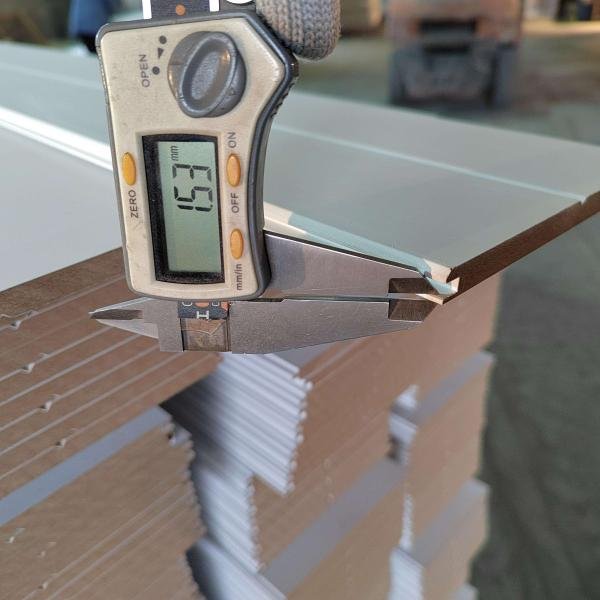
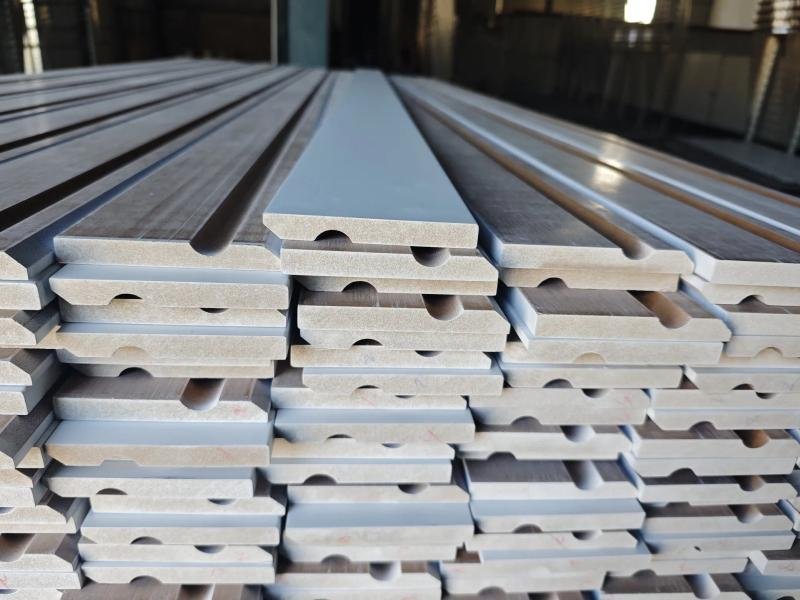
We source and process MDF at two distinct density bands. Standard-density board at 700-750 kg/m³ suits wide architraves, skirtings and baseboards where profile geometry is relatively simple and the priority is dimensional stability at competitive cost. For mouldings with tighter radii, finer detail or sharper arrises -- such as ovolo, ogee and bead profiles -- we specify high-density board at 800-860 kg/m³. The higher fibre compaction produces a cleaner machined edge with less grain tear-out, which matters when the finished profile will receive a fine water-based or solvent paint system.
We'll recommend the appropriate grade during quoting based on your profile drawing. Both grades are available with E0 formaldehyde certification.
E0 Formaldehyde Standard
All MDF substrate we use in export production meets E0 grade (≤ 0.065 ppm) formaldehyde emission, which corresponds to and is more stringent than CARB Phase 2 (≤ 0.11 ppm for MDF) and aligns with the European E1 indoor air quality benchmark. For UK buyers operating under BS EN 622 classification and for Australian projects subject to ACCC import requirements, E0 certification provides a clear, documentable compliance position. We supply test reports from accredited third-party laboratories on request -- typically issued to ISO 12460-5 or ASTM E1333 method, so your compliance team can review the actual methodology alongside the result.
Certificate copies and laboratory test reports are included in standard export documentation packages.
Edge Sealing for Humid Markets
MDF's primary vulnerability in transit and warehouse storage is end-grain moisture absorption. The cross-section at cut ends is significantly more porous than the face or long edges, and when humidity fluctuates during ocean freight or in-warehouse storage -- conditions common on UK and Australian receiving docks -- unsupported cut ends can absorb enough moisture to swell visibly before installation. For orders destined for these markets, we recommend -- and can apply as a factory step -- end-seal primer coating on both cross-section faces. This reduces end-grain moisture uptake during the transit and storage window. It is not a structural moisture barrier and does not change the indoor-only specification, but it meaningfully reduces claim risk from end-swelling before the installer applies a full painted finish.
End sealing is an optional line item. Tell us your destination market and storage conditions during quoting and we'll confirm whether it applies to your profile.
- Standard Density
- 700-750
- kg/m³ -- broad profiles & skirtings
- High Density
- 800-860
- kg/m³ -- fine detail & sharp arrises
- Formaldehyde Grade
- E0
- ≤ 0.065 ppm · CARB Phase 2 compliant
- SKU Mix / Container
- 20-60
- profile SKUs per full container
Where MDF Moulding Should Not Be Specified
We flag these constraints before order confirmation rather than after production. Identifying the wrong substrate choice at the quoting stage costs nothing; discovering it on a job site costs significantly more.
If your application sits outside MDF's suitable range, we can assess whether a veneered solid-core profile or a finger-jointed substrate better matches your performance requirement.
Interior Dry Areas Only -- Not Suitable for Outdoor or Wet Environments
MDF is an interior-only substrate. Prolonged exposure to rain, direct sunlight or standing water will cause irreversible swelling and structural breakdown of the board. This applies even to MDF rated with moisture-resistant (MR) additives at board level -- MR-MDF reduces short-term surface moisture sensitivity but is not waterproof and is not rated for exterior exposure. Do not specify MDF moulding for external cladding, fascias, exterior window surrounds, wet rooms, or any installation where the profile will regularly contact condensation or liquid water.
Weight Load on Substrate -- 30-50% Heavier Than Equivalent Solid Wood
MDF is a denser and heavier material than equivalent-dimension solid or finger-jointed softwood. Depending on the profile width and density grade, MDF moulding can run approximately 30-50% heavier per linear metre than a solid pine equivalent. For wide skirtings or tall architraves, this places greater demand on adhesive bond, fixing frequency and wall substrate integrity. Installers specifying MDF in renovation projects -- particularly on older dry-lined or lime-plaster walls -- should confirm that the substrate can carry the additional load and that appropriate fixing centres are used.
Impact Edge Repair -- Damaged Sections Typically Require Full-Length Replacement
MDF does not have the fibrous grain structure of solid wood, which means impact damage to a routed edge or arris tends to produce a clean chunk-out rather than a compressible dent. Spot-filling with filler and sanding is possible for minor surface damage, but a significant edge chip on a painted MDF profile is rarely repair-invisible under normal lighting conditions. In high-traffic commercial installations -- hospitality corridors, multi-family common areas -- this should factor into the specification decision. Where edge impact resilience is a primary requirement, a veneered solid-core profile will perform better over the installation life.
Related Products & Markets
Depending on your substrate requirements and destination market, these pages may be relevant to your sourcing assessment.
Product
Veneered Moulding
Natural and engineered veneer over solid or engineered core -- delivers wood grain character with dimensional stability superior to solid wood in humid conditions. Consider where clear-finish or stained appearance is specified.
View productMarket
UK Skirting & Architrave Suppliers
Market-specific sourcing guidance for UK importers and distributors supplying MDF skirtings and architraves -- covering BS EN compliance, transit packaging requirements and edge-seal practice for UK warehouse conditions.
View market pageRelated Technical Resources
In-house documentation and process pages relevant to MDF moulding specification decisions. Use these to assess our production standards, quality protocols and compliance credentials before sourcing.
Quality Control · About
Quality Control Process: IQC, IPQC and FQC at Goodwood
A detailed walkthrough of our three-stage quality management system -- incoming material inspection, in-process patrol checks and finished-goods full inspection -- including the checkpoints most relevant to MDF substrate grading and surface finish acceptance criteria.
View quality control processCertifications & Compliance · About
Certifications & Compliance: FSC, CARB, EPA, CE and ISO 9001
Full details of the certifications we hold, the scope each covers and what they mean for MDF mouldings destined for North American and European markets -- including CARB Phase 2 formaldehyde emission compliance and E0/E1 standard applicability by substrate and application type.
View certifications & complianceFactory & Facility · About
Our Factory & Production Facility: 200,000 m² In-House Process
An overview of our Xiamen facility -- covering log intake through CNC finishing and export packaging -- with notes on how full in-house control affects substrate handling, MDF moisture conditioning and finished-profile dimensional consistency across production runs.
View factory & facilityRequest a Sample or Specification Review for MDF Moulding
Send us your profile drawing, target market and annual volume. We'll confirm the appropriate density grade, advise on edge-seal requirements for your destination, and provide a quotation -- typically within a few business days. No minimum order commitment required to receive a sample or capability assessment.