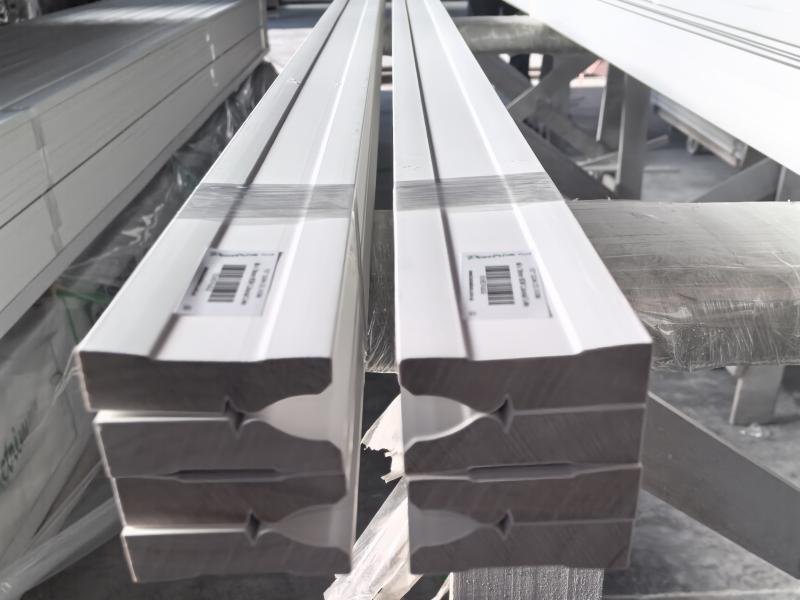
Finger-Jointed Moulding: Engineered for Paint-Grade Performance
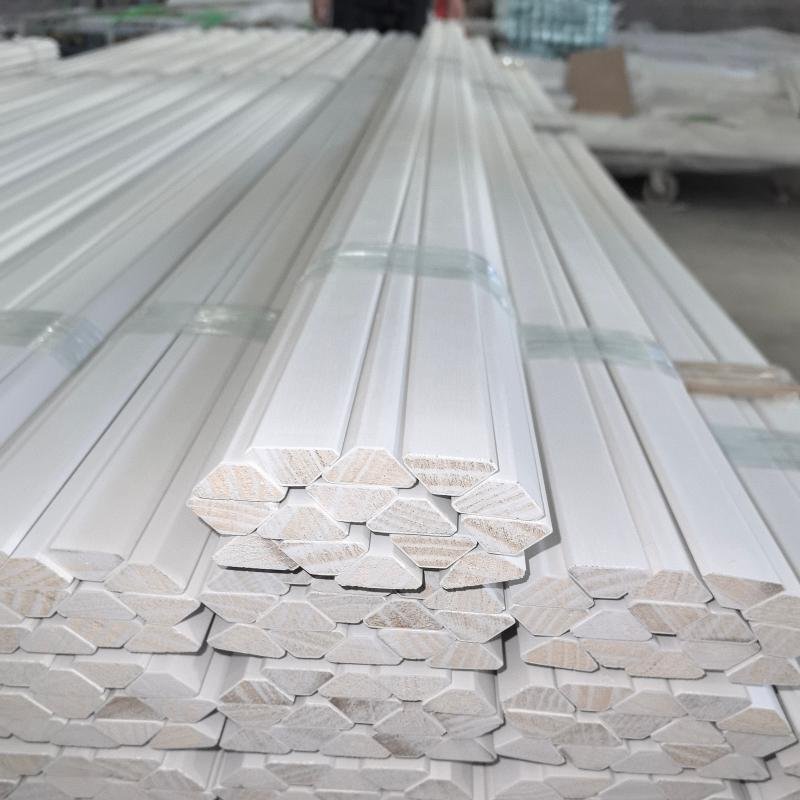
Short wood segments precision-cut, finger-profiled and bonded under controlled pressure -- producing a dimensionally stable, paint-ready moulding that uses raw material more efficiently than clear-length solid stock. Available in PVA (decorative interior) and PUR (structural door frame) adhesive systems, fully milled and coated in-house.
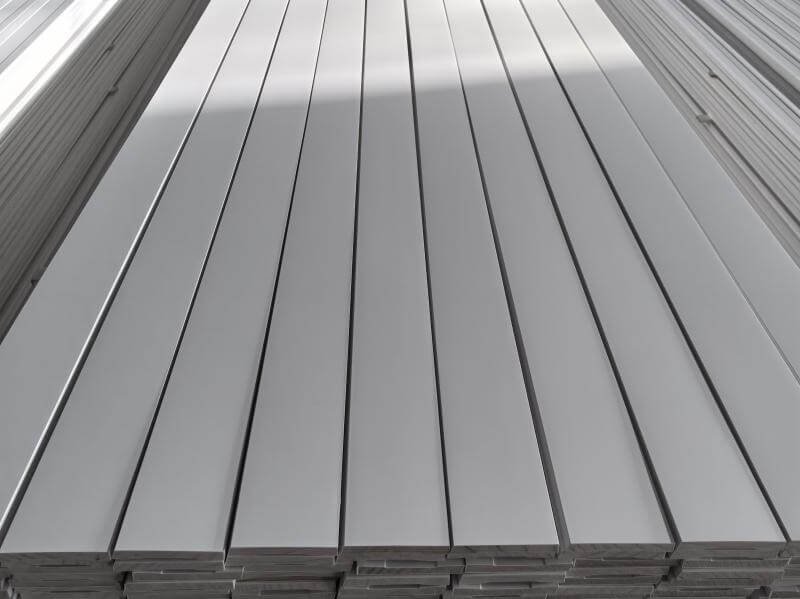
Paint-Grade Only
Finger joints are structurally sound but visually present under transparent finishes. This profile is engineered exclusively for primed or painted applications.
Two Adhesive Systems, Two Use Cases
Selecting the right adhesive system at the quoting stage avoids costly substitutions later. We'll recommend the appropriate system based on your application during the inquiry process.
System A
PVA Adhesive
- Bond Characteristic
- Strong dry-state bond; lower cost per linear foot
- Moisture Resistance
- Interior dry environments only
- Typical Applications
- Baseboard, chair rail, door casing, window stool, decorative interior trim
- Structural Load
- Not recommended for heavy load-bearing uses
System B
PUR Adhesive
- Bond Characteristic
- Retains full strength under moisture and temperature cycling
- Moisture Resistance
- Suitable for humidity-exposed zones and exterior-adjacent installations
- Typical Applications
- Door frames, split jambs, structural door component blanks
- Structural Load
- Suitable for hanging solid-core doors and load-bearing jamb assemblies
| Adhesive System | Key Characteristics | Recommended Use Cases |
|---|---|---|
| PVA Polyvinyl Acetate | Lower cost, strong dry-state bond; standard for decorative trim programs | Decorative interior mouldings -- baseboard, chair rail, door casing |
| PUR Polyurethane Reactive | Higher cost, retains strength when exposed to moisture; required for structural assemblies | Structural applications -- door frames, split jambs, load-bearing components |
Specification note: For door frame programs, we recommend specifying PUR adhesive as the default to account for long-term load cycling and humidity exposure -- particularly in North American climates with significant seasonal moisture variation.
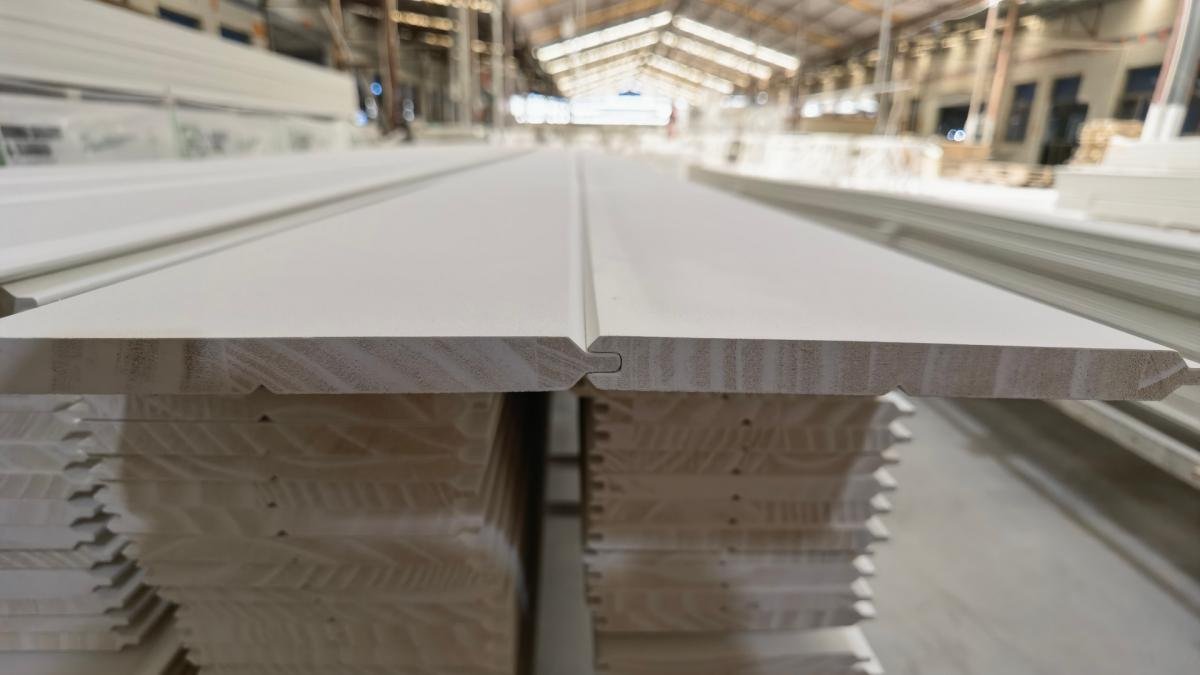
Joint Specification
Our finger-joint parameters are set by application grade, not by a single production standard. The tolerances below represent our standard production specifications for wholesale wood trim suppliers and wood trim manufacturers sourcing for consistent, repeatable programs.
-
Decorative-Grade Joint Spacing
8-12 mm finger spacing, optimised for surface consistency under primer and paint.
-
Structural-Grade Joint Spacing (Door Frame)
≥ 20 mm finger spacing, paired exclusively with PUR adhesive to meet structural load and moisture requirements.
-
Maximum Seam Gap -- Premium Grade
< 0.3 mm. Specified for programs requiring a tighter paint-ready surface tolerance.
-
Maximum Seam Gap -- Standard Grade
< 0.5 mm. Suitable for high-volume paint-grade decorative trim programs.
-
Joint Placement Rule
Finger joints are never positioned over knot areas. Our IQC team verifies segment quality prior to bonding to eliminate joint-on-defect occurrences.
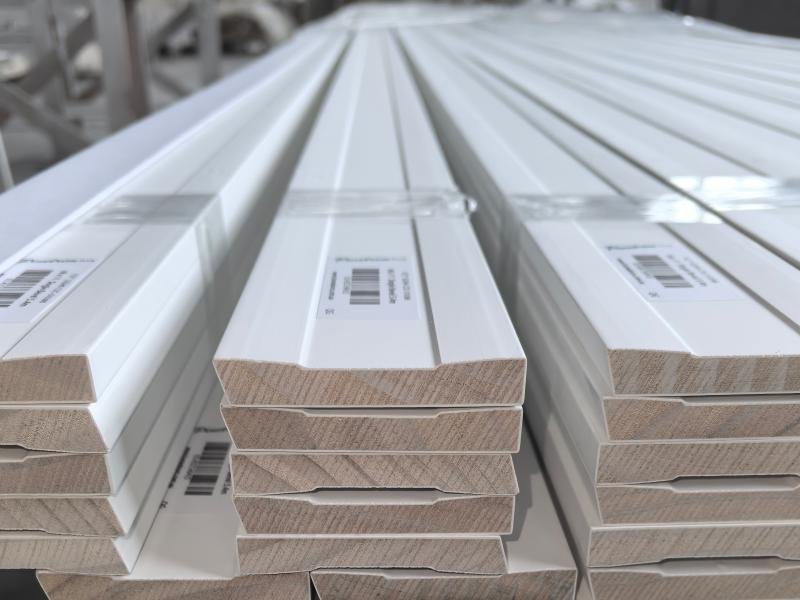
At-a-Glance: Specification Summary
| Parameter | Decorative | Structural |
|---|---|---|
| Joint Spacing | 8-12 mm | ≥ 20 mm |
| Seam Gap (Premium) | < 0.3 mm | < 0.3 mm |
| Seam Gap (Standard) | < 0.5 mm | < 0.5 mm |
| Adhesive | PVA | PUR (required) |
| Joint-on-Knot | Not permitted | Not permitted |
Where Finger-Jointed Isn't the Right Fit
We flag application mismatches during quoting rather than after production. The following limitations apply to finger-jointed moulding regardless of manufacturing quality.
-
Not Suitable for Stain-Grade or Clear-Finish Applications
Joints remain visible under transparent coating regardless of craftsmanship. If your program requires a stained or clear-lacquer finish, see our Solid Wood Mouldings instead.
-
PVA-Jointed Profiles Not Recommended for Heavy Structural Loads
Hanging solid-core doors or other heavy structural applications require upgrading to PUR adhesive. We will identify this requirement during the quoting stage and recommend the appropriate specification.
-
Species Compatibility Constraints
Certain species -- including cedar and redwood -- are difficult to finger-joint reliably due to natural tannins and extractives that interfere with adhesive cure. We'll confirm species suitability before accepting a specification.
For door frame and structural jamb applications, explore our purpose-engineered component range: See Door & Window Components →
Other Product Lines
Goodwood Mouldings manufactures six product lines from a single integrated facility. If finger-jointed moulding does not match your finish or structural requirement, the following alternatives may be more appropriate.
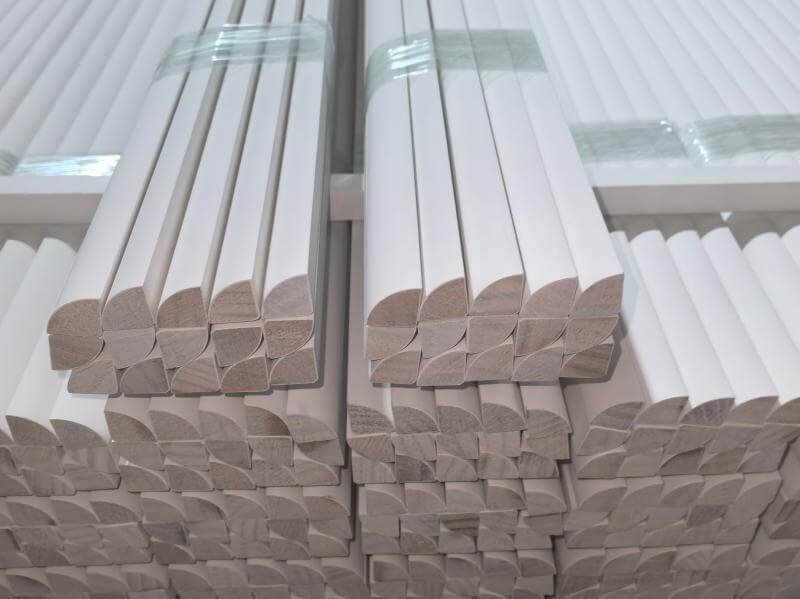
Solid Wood Mouldings
For stain-grade, clear-finish or premium paint-grade applications requiring clear-length stock.
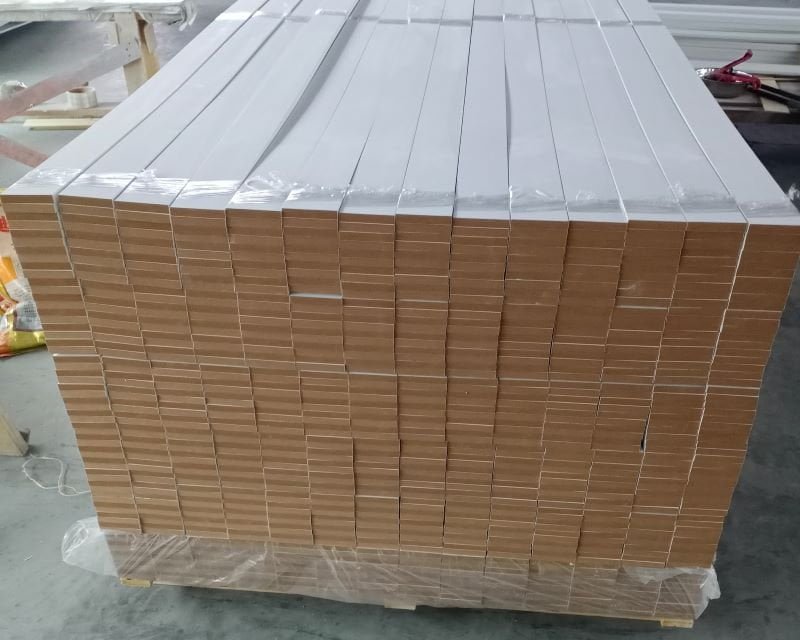
MDF Mouldings
Consistent grain-free surface, dimensionally stable -- ideal for interior paint-grade decorative programs.
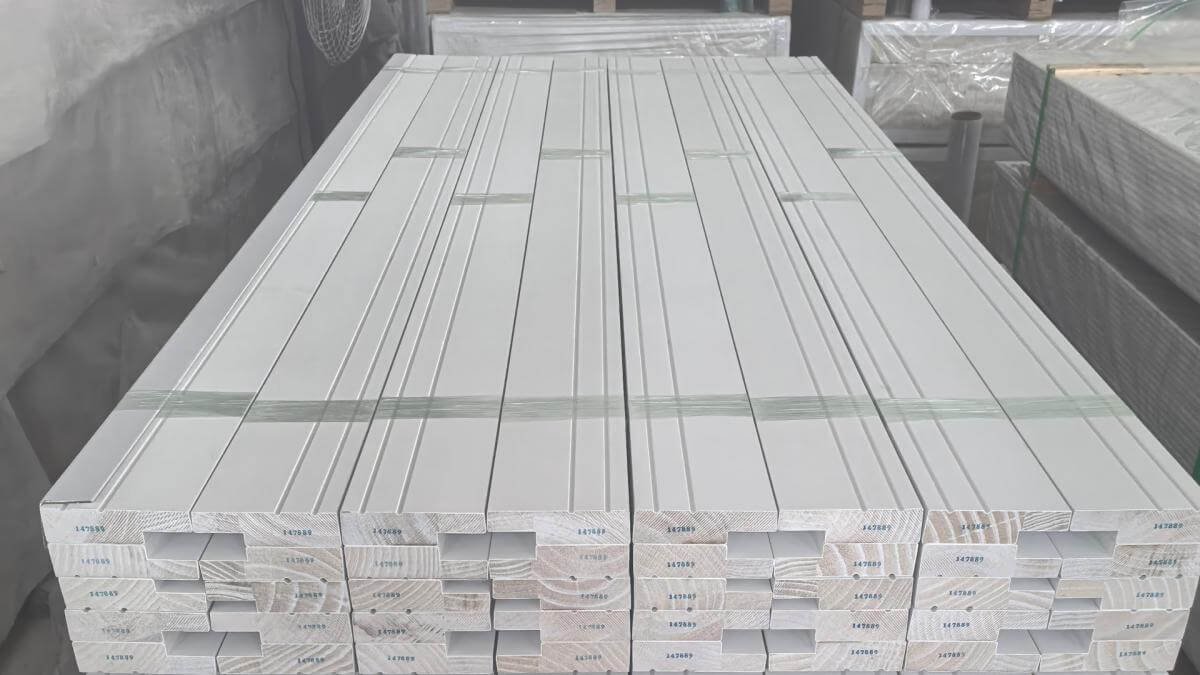
Door & Window Components
Engineered jambs, split jambs, door stop, brickmould and sill profiles for OEM door frame programs.
Building a Door Frame Program?
Whether you need a stable supply of decorative paint-grade trim or are specifying PUR-jointed structural components for a door manufacturing program, we can assess your requirements and provide a capability-matched quotation within a few business days.
- In Operation
- ~30 Years
- SKUs / Container
- 20-60
- Certifications
- 6 Active