Choosing a wood moulding (also spelled molding in the US) supplier is rarely a single decision — it's a series of smaller verifications that determine whether a partnership holds up past the first container. Goodwood Mouldings has operated as a wood moulding and architectural profile manufacturer in Xiamen, China since 1995, and this checklist reflects the questions we'd expect a serious buyer to ask any supplier, including us. Use it as a working document you can apply to multiple factories side by side, not as a sales pitch.
What Should You Actually Evaluate When Choosing a Wood Moulding Supplier?
Most experienced buyers evaluate suppliers across seven dimensions: price competitiveness, compliance documentation, quality consistency, on-time delivery rate, customization capability, communication responsiveness, and after-sales service. This is a general framework used across the building materials import trade, not something unique to any single manufacturer — but it's a useful structure because it forces you to look past the quote sheet.
Price is the easiest variable to compare and the least reliable one to decide on. A low unit price that arrives three weeks late, or arrives with a formaldehyde certificate that turns out to be expired, costs more than the number on the invoice suggests. The remaining six dimensions in this framework exist precisely because price alone doesn't predict whether a supplier relationship survives past the first order. The sections below walk through how to actually verify each of these dimensions rather than taking a supplier's word for them.
How Do You Verify a Supplier's Compliance Credentials Are Real?
Ask for the certificate numbers, not just the certificate names — CARB and FSC certifications are traceable to a registry, and a supplier who can't produce that traceability within a day or two is worth a second look.
Formaldehyde compliance is the certification most buyers focus on first, and for good reason: for products sold into the United States, CARB compliance isn't a marketing add-on — it's a legal requirement for composite wood products1. A supplier that treats it as optional, or can't explain the difference between CARB Phase 2 and the federal TSCA Title VI1 standard it aligns with, hasn't built compliance into their production process the way the regulation requires.
FSC certification works differently — it verifies that raw material can be traced back to a sustainably managed forest, and it matters most for buyers targeting LEED projects or government procurement in North America, or EUTR-sensitive purchasing in Europe. ISO 90012 isn't a product certification at all; it certifies the factory's quality management system, and large European distributors and building material chains typically require it as a baseline supplier qualification rather than a differentiator.
Goodwood Mouldings holds six certifications: FSC, CARB, EPA compliance, CE marking, ISO 9001, and E0/E1 formaldehyde standards — together covering the regulatory baseline for North American, European, and international buyers. Here's how each maps to a market requirement:
| Certification | Primary Market | What It Actually Verifies |
|---|---|---|
| CARB | United States | Legal formaldehyde emission threshold for composite wood products |
| EPA / TSCA Title VI | United States (federal) | Formaldehyde compliance at the federal level, aligned with CARB |
| FSC | Europe, North America | Raw material traceable to sustainably managed forestry |
| CE Marking | European Union | Mandatory marking for specific construction wood products under CPR |
| ISO 9001 | Global, especially large EU buyers | Factory-level quality management system, not a product certification |
| E0 / E1 | Europe | Formaldehyde emission grade for engineered wood panels |
A practical verification step: ask the supplier to send the actual CARB TPC certificate number and FSC Chain of Custody number, then check that the certifying body and expiration date match what they've claimed. This takes fifteen minutes and eliminates a category of supplier misrepresentation that's more common than buyers expect.
What Does "Full In-House Production" Actually Mean for Your Supply Chain?
A supplier that outsources coating or veneer sourcing introduces a handoff point where quality control responsibility becomes unclear — ask directly which production stages happen inside the factory versus with a subcontractor.
It's common industry practice for small and mid-sized moulding manufacturers to outsource coating lines and veneer procurement, keeping only milling and assembly in-house. This isn't inherently a problem, but it does mean quality issues can originate at a stage the factory doesn't directly control, and traceability gets harder when something goes wrong three months after delivery.
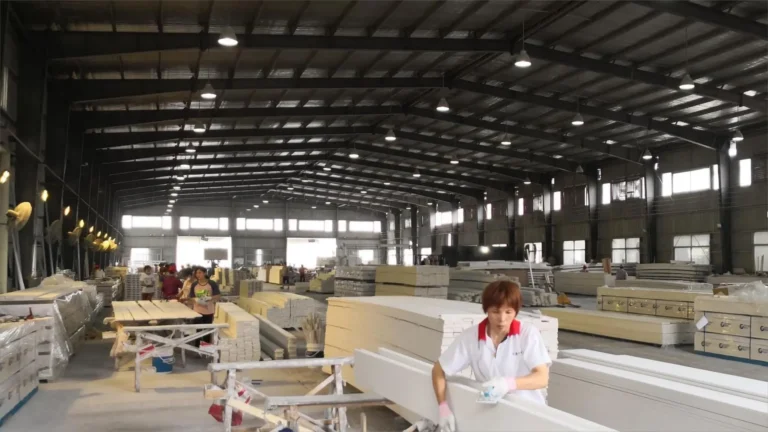
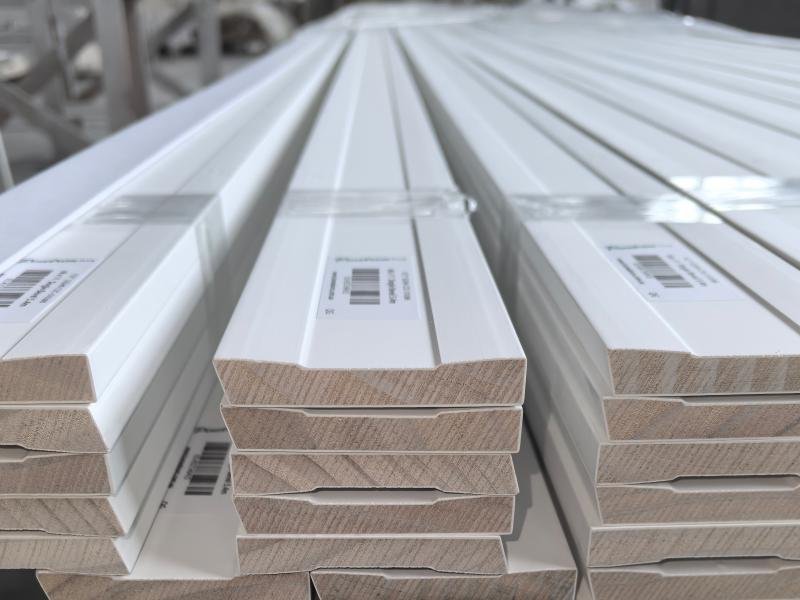
Goodwood Mouldings runs the full production sequence — raw timber processing, finger-jointing, veneering, coating, CNC finishing, and packaging — inside one facility, without subcontracting any stage. This is worth asking about specifically, because "we handle production" and "we handle every stage of production ourselves" are different claims, and only one of them gives you a single point of accountability if a batch doesn't meet spec.
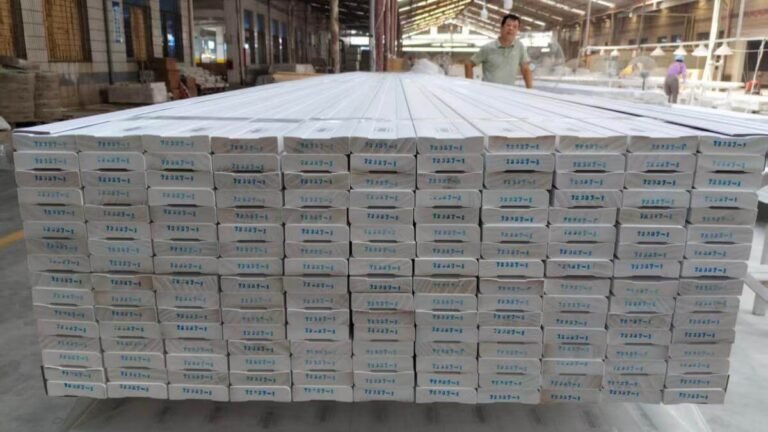
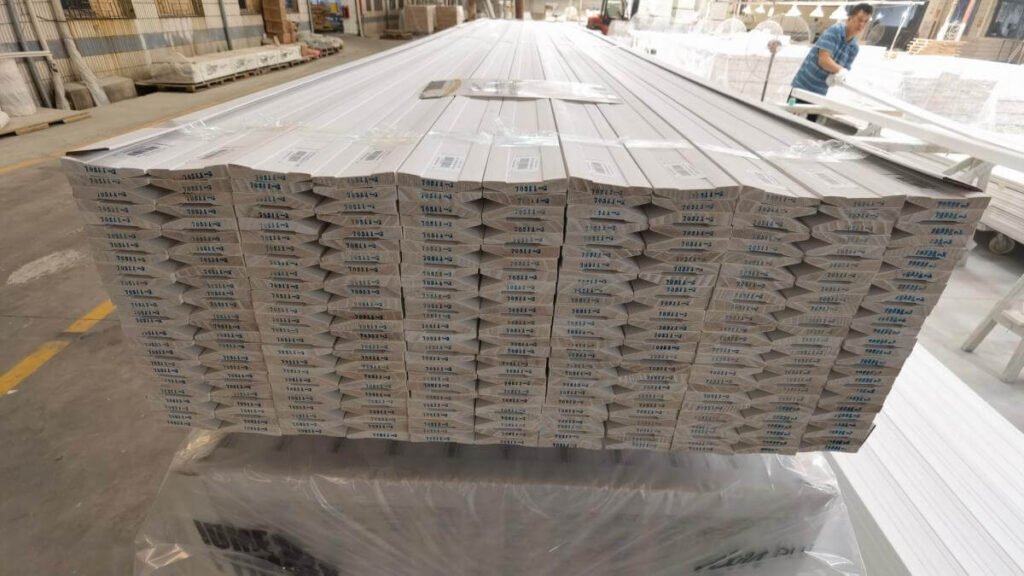
That accountability is only useful if it's backed by a real inspection system. The quality control structure to ask about is a three-stage process: incoming quality control on raw materials (IQC), in-process inspection during manufacturing (IPQC), and final inspection before shipment (FQC), combined with batch-level traceability records. If a supplier can't describe what happens at each of these three checkpoints, or can't produce a batch number for a specific shipment, the "full quality control" claim on their website isn't backed by process.
Can the Supplier Handle Your Order Volume, Mix, and MOQ Honestly?
Ask two separate questions: how many SKUs can be mixed into one container, and what's the minimum order size — the answers matter more together than either does alone.
For importers and distributors, the ability to mix multiple SKUs into a single container shipment directly affects working capital. A supplier limited to single-product containers forces you to either overstock on individual items or place smaller, more frequent orders at a cost penalty. Goodwood Mouldings supports flexible mixed loading of 20 to 60 SKUs per container, which is structured around how import distributors typically build their orders — a mix of products rather than a single item at volume.
The honest counterpart to that flexibility is the minimum order quantity. A full-container manufacturing model means the minimum order is a full container — typically a 20ft or 40ft standard unit — regardless of how many SKUs are mixed inside it. If your business needs less-than-container-load quantities or small trial orders, that constraint matters more than any certification on the wall, and it's worth surfacing before you get three emails deep into a quote negotiation. We'll return to this specific scenario, and others like it, later in this checklist.
Does the Supplier's Customization Capability Match Your Product Type?
Distinguish between three different customization claims — OEM (you supply the design), ODM (the factory supplies the design library), and profile reproduction — because a supplier strong in one isn't automatically strong in the others.
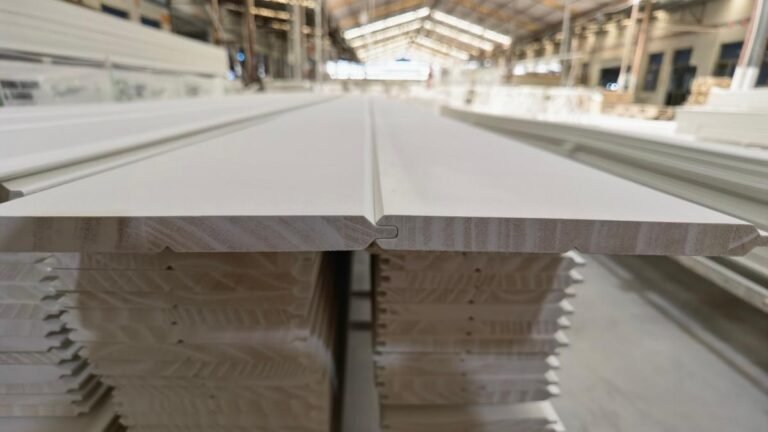
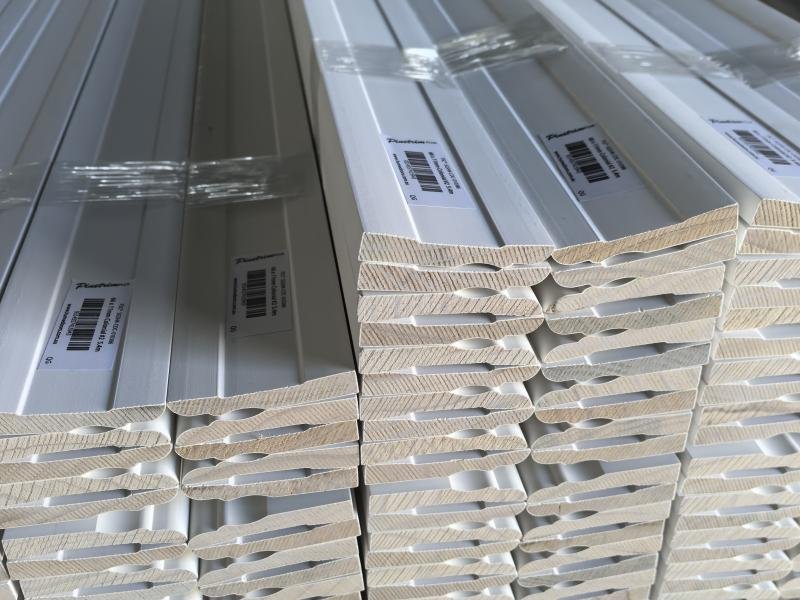
OEM and ODM development both depend on CAD/CNC precision milling, since custom profiles are cut from customer-supplied drawings rather than pulled from a standard catalog. This capability matters most to door and window manufacturers and moulding brand owners who need a specific cross-section replicated consistently across production runs, not just approximated.
A separate and often overlooked capability is discontinued profile reproduction — recreating a moulding profile after the original supplier has gone out of business, discontinued the product, or lost the tooling. Goodwood Mouldings has reproduction experience across more than 300 discontinued profiles, typically producing a sample within 3 to 7 working days. This matters disproportionately for buyers serving historic renovation or replacement trim markets in North America, where matching an exact legacy profile — not a close approximation — is the entire point of the order.
When evaluating customization capability, it's also worth asking about material-specific limitations before you commit to a product type. Solid wood moves with humidity and carries batch-to-batch color variation; finger-jointed moulding can't be used for clear-finish (stain-grade) applications because the joints remain visible under transparent coating regardless of manufacturing precision; MDF isn't suitable for exterior or persistently damp environments. A supplier who volunteers these limitations before you ask is generally more reliable on the numbers they do quote.
[This checklist focuses on evaluation criteria rather than material selection — buyers comparing solid wood, finger-jointed, MDF, and veneered options in detail will find a fuller technical breakdown in our upcoming material comparison guide.]
When Is a Full-Container Moulding Factory NOT the Right Fit for You?
A supplier who tells you when they're not the right fit is giving you more useful information than one who tells you they can handle everything — this section is deliberately built to help you self-screen before placing an inquiry.
Full-container manufacturing is not the right model for every buyer, and it's worth naming the scenarios where it isn't, rather than letting a mismatch surface after you've already invested time in a quote cycle:
- Small emergency restocking (less than one container). Full-container manufacturers carry a minimum order tied to container volume, which makes small urgent orders disproportionately expensive. A local distributor with on-hand stock is typically the faster, cheaper option here.
- Fully defect-free stain-grade finger-jointed moulding. Joint lines remain visible under clear or semi-transparent finish no matter how precise the joinery. If zero visible joints under clear coat is a hard requirement, select-grade solid wood is the appropriate product, not finger-jointed.
- True outdoor applications. Neither MDF nor finger-jointed moulding is designed for sustained outdoor exposure. Tropical hardwood or aluminum profile systems are the more suitable category for genuinely exterior use.
- Lead times under 21 days. Production plus ocean freight from China typically requires a minimum of 21 to 30 days. A local stocked warehouse is the realistic option for compressed timelines.
- Trial orders of one or two pieces per profile. Full-scale production processes aren't structured for single-piece sampling at that scale; a paid sample program (3–7 day turnaround) is the more appropriate path for testing a profile before committing to volume.
[A more detailed breakdown of these five scenarios — including suggested alternative sourcing paths for each — is covered in our companion article on when a full-container factory isn't the right fit.]
If your requirement falls into one of these categories, that's useful information now, not three weeks into a quote process.
How Should Different Buyer Types Prioritize This Checklist?
Not every dimension in this checklist carries equal weight for every buyer — a door manufacturer and a discontinued-profile buyer should read this list in a different order.
The relative priority of these evaluation criteria shifts depending on which of the following buyer categories you fall into:
| Buyer Type | Highest Priority | Secondary Priority |
|---|---|---|
| Door & window manufacturers | Customization precision, long-term batch consistency | Certifications (EPA, CARB, FSC) |
| Importers & distributors | Mixed-SKU container flexibility, MOQ fit | On-time delivery, private label support |
| OEM/ODM brand owners | Development capability, packaging and documentation support | Communication responsiveness |
| Project & contract buyers | Batch-to-batch consistency, phased delivery capability | CNC customization, compliance documentation |
| Discontinued-profile buyers | Reproduction turnaround speed | Sample accuracy against the original profile |
Use this table as a starting filter, then apply the earlier sections in more depth to whichever two or three dimensions matter most for your specific order.
Frequently Asked Questions
Is finger-jointed moulding suitable for stain-grade (clear finish) applications? No. Joint lines remain visible under clear or transparent coating regardless of manufacturing precision — this is a structural limitation of the finger-jointing process itself, not a quality issue specific to any one supplier. Select-grade solid wood is the appropriate choice when a completely joint-free clear-finish surface is required.
What's the actual minimum order quantity for a full-container wood moulding supplier? For a factory built around full-container manufacturing, the minimum order is one full container — typically a 20ft or 40ft standard unit — even when multiple SKUs are mixed inside it. Buyers needing smaller quantities should look to a local distributor with stocked inventory instead.
Can a wood moulding factory produce a trial order of just one or two pieces per profile? Generally no. Full-scale production processes aren't set up for single-piece runs. A paid sample program, typically with a 3–7 day turnaround, is the more realistic way to evaluate a profile before committing to a production order.
Does FSC certification mean 100% of a product's wood content comes from FSC-certified forests? Not necessarily. FSC Chain of Custody3 certification operates under either a 100% system or a Mixed system, and the Mixed system requires a minimum FSC-certified content threshold rather than full traceability of every input. It's worth asking a supplier which CoC system their certification falls under, since the two aren't equivalent.
How long does it typically take to reproduce a discontinued moulding profile? Based on Goodwood Mouldings' reproduction experience across 300+ discontinued profiles, sample turnaround is typically 3 to 7 working days from receiving the original drawing or a physical sample. This applies specifically to sample development, not full production lead time.
Whichever category best describes your business, the next step is putting a specific requirement in front of a supplier rather than a general inquiry:
- Door & window manufacturers → Ask about PUR-bonded door frame specs and long-term batch consistency records.
- Importers & distributors → Plan your mixed-SKU container and confirm MOQ terms before requesting a formal quote.
- OEM/ODM brand owners → Start a private-label development conversation with a specific profile or product line in mind.
- Project & contract buyers → Confirm batch moisture, ΔE color, and finish control targets in writing before the order is confirmed.
- Discontinued-profile buyers → Send the original profile drawing or a physical sample for a reproduction feasibility check.
Learn how the US federal government defines legal formaldehyde emission limits for composite wood products. ↩
Review the official requirements that define what an ISO 9001-certified quality management system must include. ↩
See how FSC's Chain of Custody claims differ between fully certified and blended material sources. ↩