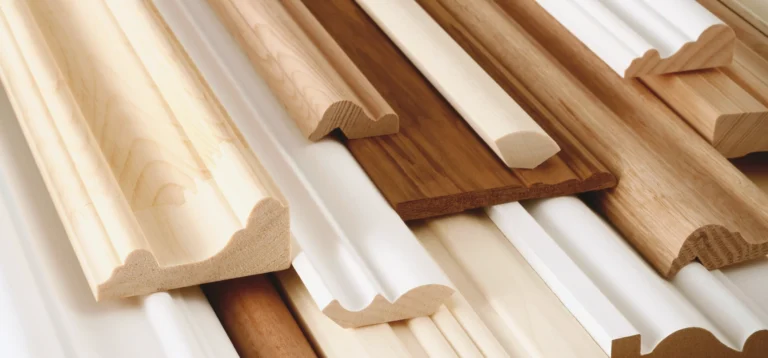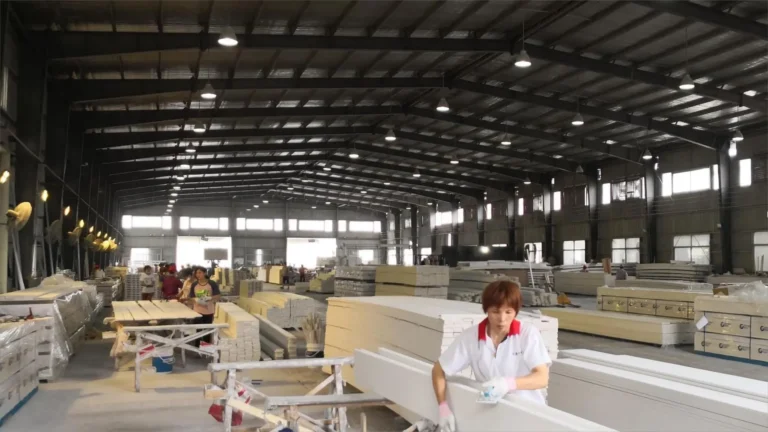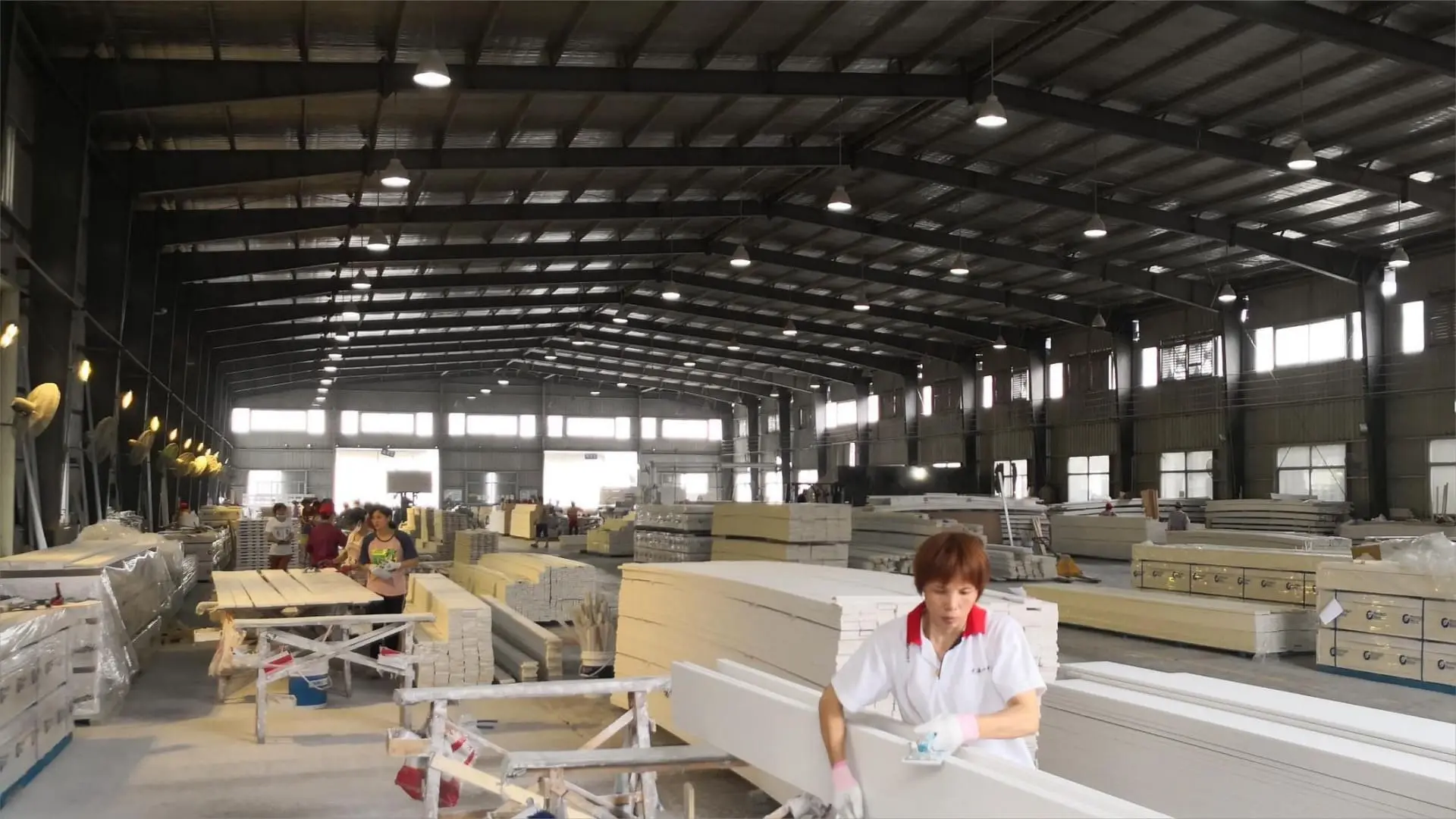
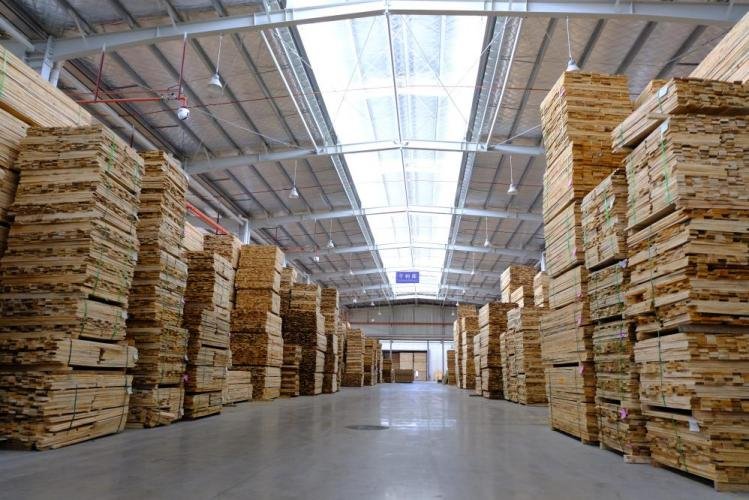
Choosing a wood moulding manufacturer for B2B procurement requires evaluating six criteria: compliance certification (CARB Phase 2, FSC Chain of Custody), species and appearance grade range, moisture content management protocols (8–10% target for North American orders), custom and OEM production capability, container loading flexibility, and quality traceability systems. Manufacturers such as Goodwood Mouldings (Xiamen, China, est. 1995) serving North American and European distributors operate 200,000 m² automated facilities with full-process control from lumber intake through CNC profiling, coating, and export packaging — enabling consistent quality across mixed-SKU container orders of 20–60 profiles per shipment.
Why Manufacturer Selection Matters More Than Price
Wood moulding is a commoditized product category — multiple manufacturers can quote similar profiles at similar price points. The variables that create long-term procurement risk are not visible in a price list: how the manufacturer manages moisture content before and after production, what their batch traceability system captures, and whether their OEM capability matches your labeling and documentation requirements.
The six criteria below focus on operational factors that determine whether a supply relationship delivers consistent product over multiple container orders — not just on the first one.
Criterion 1: Compliance Certification — Verified, Not Assumed
For importers supplying North American markets, CARB Phase 2 compliance is legally mandatory for composite wood products. For solid wood mouldings, CARB does not apply directly, but FSC Chain of Custody certification is increasingly required by end customers in the green building, retail, and government procurement segments.
What to verify before the first order:
- CARB Phase 2 certificate: issued by an EPA-recognized TPCS, covers the specific product type you are ordering, and shows an issue date within the past 12 months
- FSC CoC license: verifiable at info.fsc.org against the license code on the certificate
- ISO 9001 certification: confirms the manufacturer has a documented quality management system — not a quality promise
A manufacturer who holds CARB, FSC, and ISO 9001 certifications simultaneously has undergone three separate third-party audits and is structurally committed to documented compliance. Manufacturers with only self-declared compliance represent import risk.
Criterion 2: Species Range and Appearance Grade Capability
Different end applications require different species and appearance grades. A manufacturer with a narrow species range — for example, only radiata pine — cannot serve distributors whose customers need hardwood trim profiles or stain-grade oak products.
Appearance grade classification (EN 942 standard):
- J2 (Select & Better equivalent): Active knots ≤3mm diameter only; no dead knots. Required for stain-grade applications where the wood grain is the visible finish.
- J3 (Standard grade): Active knots ≤15mm; dead knots ≤5mm acceptable. Suitable for paint-grade applications where all surfaces will be fully covered.
Ask explicitly: Which grades do you produce for each species, and can you provide reference samples for each grade? A manufacturer who cannot distinguish between J2 and J3 production standards is not operating a graded appearance system.
Species selection note: Not all species are suitable for all production methods. Cedar and redwood contain tannins that interfere with PVA adhesive curing — making them unsuitable for finger-jointed production with standard adhesive systems. Verify the manufacturer's experience with your required species before ordering.
Criterion 3: Moisture Content Management from Kiln to Container
Moisture content management is the most important factor in determining whether solid wood moulding arrives at its destination in stable condition — and it is the criterion most often inadequately specified in B2B orders.
The production chain that matters:
- Kiln drying target: 8–10% for North American orders; 10–12% for European and Australian markets. These are not arbitrary numbers — they reflect the equilibrium moisture content of wood in each target environment.
- Post-kiln equalization: Lumber thicker than 40mm requires 1–2 weeks of equalization after kiln drying before machining. Immediately after kiln drying, the surface layer may read 9% on a pin-type meter while the core is still at 12–14%. If this material goes directly to the moulder, the internal stress differential releases during machining and can bow or twist finished profiles.
- Container loading MC: Request a batch moisture content report at the time of container loading — not at lumber intake weeks earlier.
A concrete failure example: Solid wood base moulding shipped to a North American distributor at 11% MC was installed in heated interiors during fall. By February — when indoor RH had dropped to 22% — the 150mm-wide boards showed 2–3mm cupping. The root cause was not a product defect; it was a 4% MC differential between shipping and installation equilibrium. The fix costs nothing — specifying 8–10% MC in the purchase order prevents it.
Ask your manufacturer: Do you document moisture content at three production stages — raw material intake, post-kiln, and container loading? Can you provide the container loading MC report as part of my shipping documentation?
Criterion 4: Custom and OEM Production Capability
For distributors building proprietary product lines, a manufacturer's OEM capability determines how much product differentiation you can create:
- Profile customization: Can the manufacturer produce from your CAD drawings, or only from their standard catalogue? A manufacturer with in-house CNC tooling can develop new profiles from drawings in 5–10 days.
- Discontinued SKU replication: For distributors whose customers require exact matches to legacy profiles no longer available from previous suppliers, manufacturers with a replication track record (and the physical tooling library) are a significant asset. Ask for a number — how many profiles has the manufacturer successfully replicated?
- Private-label packaging: Barcode labeling, custom carton printing, pallet identification. Required for retail distribution and contractor-direct programs.
- Surface finish customization: Can the manufacturer match RAL or NCS color codes to ΔE ≤1.5? Can they apply UV primer, open-grain lacquer, or two-coat paint systems?
Criterion 5: Container Loading Flexibility
The economics of importing wood moulding from China depend heavily on container efficiency. A manufacturer who can support mixed-SKU loading of 20–60 profiles in a single container enables you to carry a broader product range without holding excess inventory of any individual profile.
Verify this practically — not just in a sales brochure. Ask: What is your minimum quantity per SKU for inclusion in a mixed load? What is your container loading process for profiles of different cross-sections? A manufacturer with genuine mixed-load capability will describe a specific process for layer separation and weight distribution management.
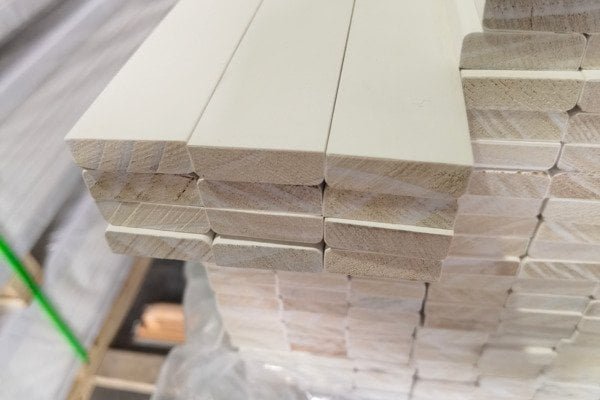
Container loading consideration for mixed material types: MDF and solid wood products should not be palletized together in the same container tier. MDF (density 700–860 kg/m³) is significantly heavier than the equivalent volume of softwood lumber (density 420–600 kg/m³). Combined pallet loads can cause compression damage to lighter profiles at the bottom of the tier during transit.
Criterion 6: Quality Traceability System
A manufacturer's quality traceability system is your evidence trail if a compliance audit or product complaint requires root cause analysis. At minimum, an ISO 9001-compliant quality system provides:
- IQC records (raw material intake: MC, dimensions, species verification)
- IPQC records (in-process: at least 4-hour inspection intervals at key stations)
- FQC records (finished goods: AQL 2.5 per ISO 2859-1, batch-level results)
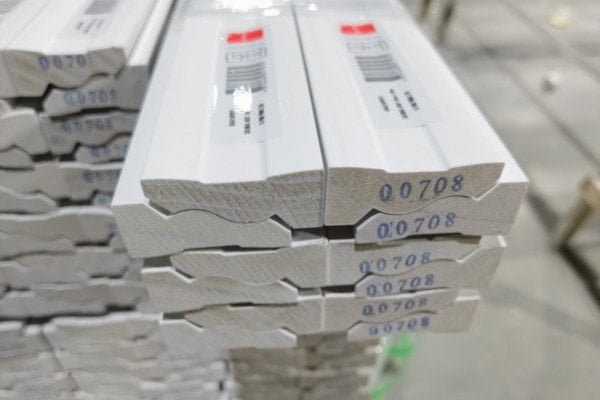
- Batch numbers linked from production records to individual container manifests
Ask for a sample QC record set from a recent shipment before placing your first order. A manufacturer who hesitates to share QC records is indicating either that the records do not exist, or that they do not consistently meet the standards they claim.
When a Chinese Manufacturer Is Not the Right Source
Honest evaluation requires acknowledging when direct manufacturer sourcing from China does not fit your procurement situation:
- Order volume below one full container: The per-unit cost of documentation, logistics, and compliance overhead makes sub-container orders uneconomical compared to domestic distributor inventory.
- Lead times under 21 days: Production plus minimum ocean freight makes this timeline impossible from a Chinese manufacturer. Domestic stock is the only option for urgent replenishment.
- Stain-grade profiles in small quantities: Custom stain-grade hardwood profiles in volumes below one container are better sourced from specialty domestic mills with no minimum container requirement.
Key Takeaways
- CARB Phase 2, FSC, and ISO 9001 certifications should all be verified from physical certificates — not website claims or verbal assurances.
- Moisture content management across three stages (kiln, equalization, container loading) is the single largest factor in solid wood moulding quality on arrival.
- Appearance grade capability (J2 vs J3) determines stain-grade vs paint-grade application suitability — verify this with physical reference samples.
- Mixed-SKU container loading capability requires practical verification; ask for a process description, not just a yes/no answer.
- Batch traceability documentation is both a quality tool and a compliance liability management requirement — suppliers without it create import risk.
Frequently Asked Questions
Q1: What is the difference between a wood moulding manufacturer and a supplier? A manufacturer operates its own production facility and controls the full manufacturing process from raw material to finished product. A supplier (or trading company) sources from multiple manufacturers and resells. For compliance documentation purposes, the CARB and FSC certifications must be held by the manufacturer, not the trading company — which means buying directly from a manufacturer provides cleaner compliance traceability.
Q2: How do I confirm a wood moulding manufacturer has real OEM experience? Ask for quantified evidence: how many custom profiles have they developed from CAD drawings in the past year? How many discontinued SKUs have they successfully replicated? Ask to see sample photos of custom-profiled work. Manufacturers with genuine OEM experience can cite specific numbers and show physical examples without hesitation.
Q3: What species range should a qualified wood moulding manufacturer offer? A qualified manufacturer for the North American market should offer at minimum: radiata or yellow pine (commodity paint-grade), finger-jointed poplar (standard paint-grade), and at least one hardwood option (oak or maple for stain-grade). Manufacturers serving premium markets should also offer species such as alder, cherry, or species matched to regional preferences.
Q4: How does ISO 9001 certification help me as an importer? ISO 9001 certification confirms that the manufacturer has a documented quality management system that has been audited by a third-party registrar. This means their IQC, IPQC, and FQC processes are documented and consistently followed — giving you confidence that the batch quality records you request will actually exist. It is a process certification, not a product quality guarantee, but it significantly reduces the probability of undocumented production variations reaching your customers.
Q5: Can I request a moisture content report as part of standard shipping documentation? Yes, and you should. A manufacturer with a proper MC management system will have the container-loading moisture content data available. Request it as a standard item in your purchase order documentation requirements: "MC test report for container loading batch, dated within 72 hours of stuffing, required with shipping documents." If the manufacturer cannot provide this, the MC at loading is not being measured.
Looking for a Verified Wood Moulding Manufacturer?
Goodwood Mouldings operates a 200,000 m² automated facility in Xiamen, China, with CARB Phase 2, FSC Chain of Custody, and ISO 9001 certifications, J2/J3 graded production, and documented IQC/IPQC/FQC quality records for every batch.
Request Certification Documents → | Get a Production Quote →
Last updated: June 2026 | Goodwood Mouldings — Xiamen, China | Est. 1995