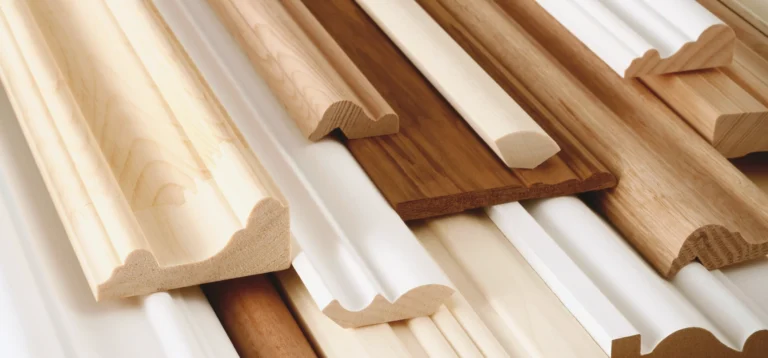
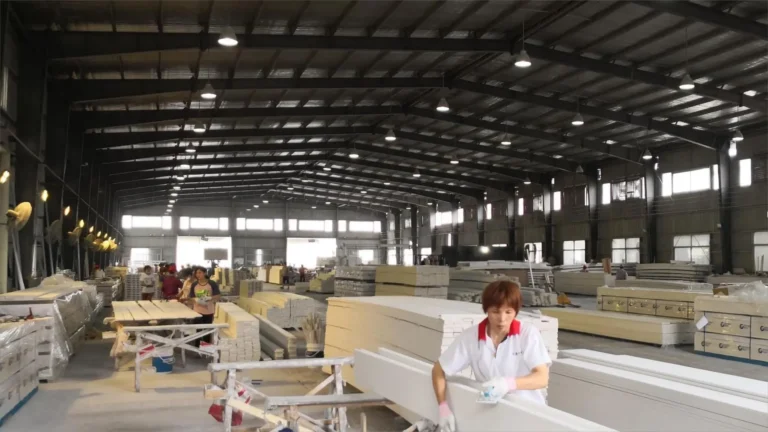
Solid wood moulding is milled from single-piece lumber and supports both stain-grade and paint-grade finishes, while finger-jointed moulding is manufactured by bonding shorter wood pieces end-to-end with interlocking cuts — a method that reduces material waste and cost but limits the product to paint-grade applications only. For B2B distributors and importers sourcing architectural trim from manufacturers such as Goodwood Mouldings (Xiamen, China, est. 1995), the choice between the two depends primarily on the end application's finish requirement, structural load, and the target market's moisture conditions — not price alone.
What Is Solid Wood Moulding?
Solid wood moulding is profiled architectural trim cut from a single continuous piece of lumber — the same material throughout its cross-section. Common species include radiata pine and yellow pine (cost-efficient, paint-grade dominant), poplar (lightweight, accepts paint well, common in North American markets), and hardwoods such as maple and oak (stain-grade applications, premium residential and commercial projects).
Solid wood mouldings are graded by appearance, following international standards such as EN 942 (European joinery timber). In practical B2B procurement terms: J2-grade (equivalent to Select & Better in North American grading) allows only small sound knots ≤3mm and is the standard for stain-grade applications. J3-grade allows knots ≤15mm and suits paint-grade applications where the surface will be fully covered.
The defining advantage of solid wood is finish flexibility: it is the only wood moulding type that can receive both transparent (stain/varnish) and opaque (paint/primer) finishes without visible structural artifacts from the manufacturing process.
What Is Finger-Jointed Wood Moulding?
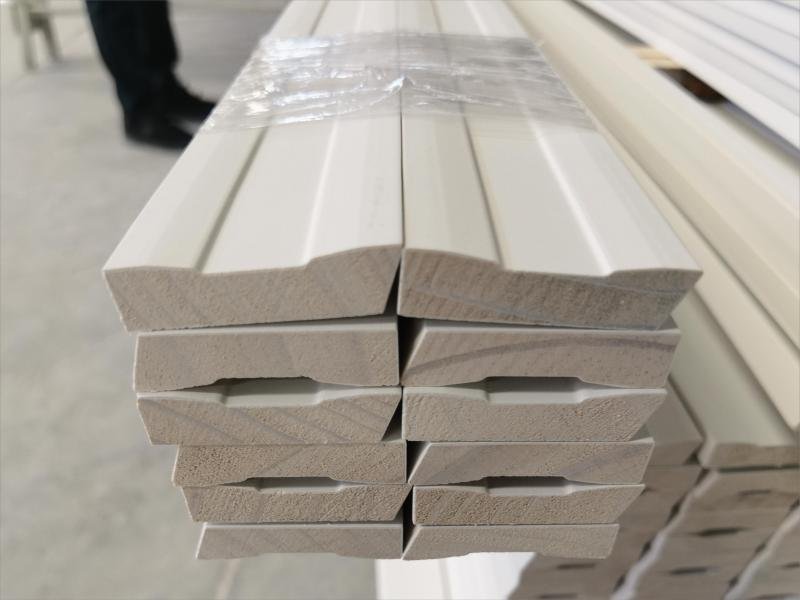
Finger-jointed moulding is produced by cutting interlocking "finger" profiles into the ends of shorter lumber pieces, then bonding them end-to-end under pressure to create continuous-length stock. The interlocking cuts — typically with a pitch of 8–15mm for decorative-grade profiles — dramatically increase raw material yield from lower-grade or shorter timber, making finger-jointed products 20–40% more cost-efficient than equivalent solid wood in raw material terms.
The adhesive type determines more than buyers typically realize.
Standard decorative-grade finger-jointed moulding uses PVA (polyvinyl acetate) adhesive. PVA-bonded joints achieve 80–90% of clear wood tensile strength in dry conditions — adequate for base moulding, casing, and interior trim that carries no structural load. However, PVA joint strength decreases significantly when exposed to repeated moisture cycling or sustained mechanical load.
Structural applications — specifically door frames and jambs paired with solid-core or solid-wood doors — require PUR (polyurethane reactive hotmelt) adhesive, with a minimum finger length of ≥20mm. PUR-bonded joints retain over 90% of their strength in wet conditions and resist the shear stress generated by a heavy door's repeated swing cycles. Manufacturers such as Goodwood Mouldings apply PUR adhesive as standard for all door frame profiles, rather than using decorative-grade PVA — a specification difference that prevents joint creep in load-bearing applications over time.
Technical Comparison: 6 Key Differences for B2B Buyers
Both product types serve B2B architectural trim markets, but they perform differently across six dimensions that matter to distributors and end-use buyers:
| Factor | Solid Wood Moulding | Finger-Jointed Moulding |
|---|---|---|
| Finish compatibility | Stain-grade AND paint-grade | Paint-grade only |
| Moisture stability | Moderate (varies by species and width) | Equal to or better than solid (wider cross-section) |
| Structural load (door frames) | Full suitability | Suitable with PUR adhesive only; confirm specification |
| Material cost | Higher (20–40% premium over FJ) | Lower |
| CARB Phase 2 compliance | Required for composite adhesive products | Required (contains adhesive binder) |
| Visible joint | None | Joints visible under transparent finishes |
A note on moisture stability in North American markets: Solid wood moulding shipped to North American distributors should arrive with a moisture content (MC) of 8–10%. Interior environments in the US and Canada during heating season can drop to 20–35% relative humidity — conditions that cause wood to lose moisture and contract. Wide-profile solid wood mouldings (≥90mm / 3.5 inches) without back relief cuts on the reverse face are particularly susceptible to cupping when MC drops by more than 2–3% after installation. Finger-jointed mouldings, being assembled from shorter pieces with staggered grain direction, tend to distribute this movement more evenly and show lower cupping rates in wide profiles.
![finger joint detail in wood moulding production] Finger joint detail: PUR adhesive application for structural door frame profiles
When Finger-Jointed Moulding Is NOT the Right Choice
This distinction is rarely stated clearly in supplier marketing — and yet it is the most important thing a distributor needs to know before specifying finger-jointed moulding to end customers.
1. Any stain-grade or transparent-finish application. Finger-jointed moulding cannot be used where the wood grain is visible in the final installation. The joint interfaces — even when machined to tight tolerances (<0.3mm gap) — are visible under transparent stains, varnishes, or open-grain oils. This is a structural limitation of the manufacturing process, not a quality variation between suppliers. No finger-jointed moulding from any manufacturer should be specified for stain-grade trim applications.
2. Door frames paired with heavy solid-core doors (>35 kg) — unless PUR adhesive is confirmed. In load-bearing door jamb applications, finger-jointed stock bonded with standard PVA adhesive carries a long-term shear risk. In one documented case, PVA-bonded finger-jointed door frame profiles used with a 55 kg solid hardwood door showed 0.5–1.0mm cumulative joint displacement after 18 months of regular use. Before specifying finger-jointed for structural door frame applications, confirm the adhesive specification with the supplier in writing.
3. Projects requiring tight color consistency across large areas. Because finger-jointed moulding assembles pieces from multiple cuts, paint-grade coatings may cure at slightly different rates at joint interfaces — leading to subtle tonal variations under raking light. For high-visibility applications such as full-wall paneling or continuous coffered ceilings, solid wood or MDF moulding typically delivers more consistent visual results.
4. Repeated moisture cycling environments. Laundry rooms, bathroom-adjacent installations, and similar environments with periodic humidity spikes are not appropriate for PVA-bonded finger-jointed mouldings. Specify PUR adhesive or consider MDF moisture-resistant grade as an alternative.
Specifying Wood Moulding for a Project or Distribution Order?
Goodwood Mouldings supplies both solid wood and finger-jointed profiles — with PUR adhesive available for door frame specifications — to B2B distributors and importers in North America, Europe, and Australia. CARB Phase 2 and FSC certification documentation provided as standard.
Request a Technical Quote → | View Wood Moulding Product Range →
Compliance and Certification for Both Product Types
Both solid wood and finger-jointed mouldings fall under formaldehyde emission regulations in North America and Europe — a detail that surprises some buyers who assume solid wood is automatically "chemical-free."
CARB Phase 2 (North America): Products containing composite wood components — including the adhesive binders in finger-jointed mouldings and any MDF-core elements — must meet California Air Resources Board limits under the Composite Wood Products regulation. For MDF cores over 8mm thick, the limit is ≤0.11 ppm formaldehyde (air chamber method). For hardwood plywood components, the limit is ≤0.05 ppm. At the federal level, TSCA Title VI mirrors CARB Phase 2 and applies to all US commerce since 2019.
FSC Chain of Custody (Global): Distributors and importers supplying green building projects increasingly require FSC CoC documentation from their moulding suppliers — confirming that the timber in the product traces back to responsibly managed forests. FSC CoC covers both solid wood and finger-jointed products; each requires separate certification through an accredited third-party body, with annual surveillance audits.
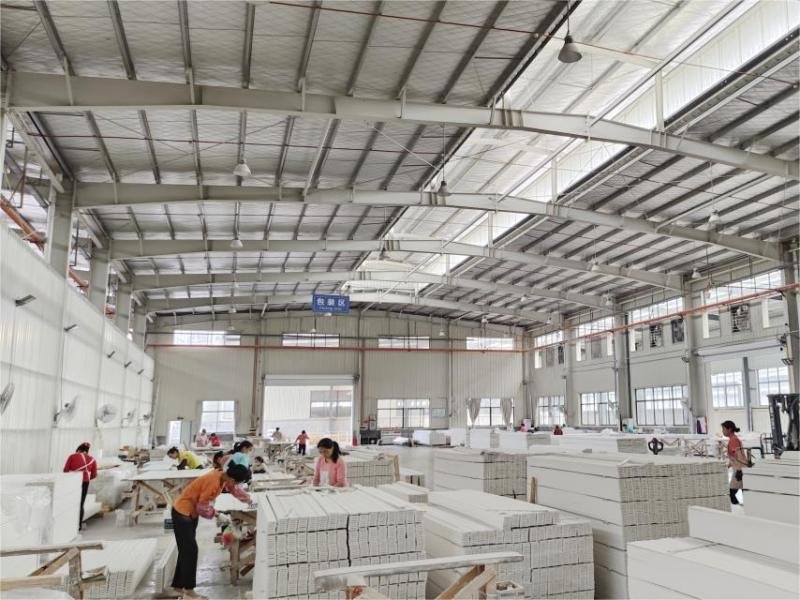
Goodwood Mouldings maintains both CARB Phase 2 certification and FSC Chain of Custody across its moulding product lines, supported by a full export documentation package — including Certificate of Origin (CO), Packing List (PL), and Commercial Invoice (CI) — as standard for all shipments from its 200,000 m² manufacturing facility in Xiamen, China.
How B2B Buyers Should Make the Specification Decision
A practical decision framework for distributors and importers evaluating solid wood versus finger-jointed for a specific order or product line:
-
Finish requirement first: If the end customer may apply stain or transparent finish — even as a future option — specify solid wood only. Finger-jointed cannot be retrofitted for stain-grade applications.
-
Structural load second: For door frame applications, confirm the door weight with the end customer. Doors exceeding 35 kg require PUR adhesive finger-jointed stock or solid wood jamb material. Do not assume the standard specification includes PUR.
-
Width and moisture environment: Solid wood profiles wider than 90mm destined for North American heated interiors should specify back relief cuts and a target MC of 8–10%. Ask your supplier for the MC test report at time of production, not just a general quality statement.
-
Budget and volume: For high-volume paint-grade applications (base moulding, casing in new construction), finger-jointed delivers equivalent painted performance at lower cost. The savings are real; the trade-off is the finish limitation.
For a comprehensive guide to evaluating wood moulding suppliers across these and other criteria, refer to: Wood Moulding Manufacturers: How B2B Buyers Choose the Right Supplier.
Key Takeaways
- Solid wood moulding supports stain-grade and paint-grade finishes; finger-jointed moulding supports paint-grade only — this is a structural limitation, not a quality variation between suppliers.
- Finger-jointed moulding for load-bearing door frames must specify PUR adhesive (≥20mm finger length), not standard PVA; confirm this in writing before ordering.
- North American distributors should verify a target moisture content of 8–10% for solid wood shipments, and request back relief cuts for profiles ≥90mm wide.
- Both product types require CARB Phase 2 compliance documentation for sale in North American markets — including finger-jointed mouldings with adhesive binders.
- Cost differences are real (finger-jointed 20–40% lower in raw material cost), but should not override application suitability requirements.
Frequently Asked Questions
Q1: Can finger-jointed moulding be used for stain-grade applications?
No. Finger-jointed moulding cannot be used for stain-grade or transparent-finish applications. The joint interfaces are visible under clear finishes regardless of manufacturing tolerances. This is a structural characteristic of the product type, not a quality issue specific to any supplier. Stain-grade trim requires solid wood.
Q2: What is the practical difference between solid wood and finger-jointed moulding?
Solid wood is milled from one continuous piece of lumber; finger-jointed moulding is assembled from shorter pieces bonded end-to-end. The main practical differences are: finish compatibility (solid wood: stain and paint; finger-jointed: paint only), cost (finger-jointed is typically 20–40% lower), and structural load capacity (requires PUR adhesive for heavy door frame applications).
Q3: Does finger-jointed moulding require CARB Phase 2 certification for the US market?
Yes. Finger-jointed mouldings contain adhesive binders that fall under CARB Phase 2 and TSCA Title VI regulations for composite wood products. Suppliers should provide a current CARB Phase 2 compliance certificate from an EPA-recognized third-party certifier (TPCS) for any composite wood product sold into the US market.
Q4: How does moisture affect solid wood moulding after installation in North America?
Solid wood responds to changes in ambient humidity by expanding (high humidity) and contracting (low humidity). In North American heated interiors — where RH can drop below 30% in winter — wide-profile solid wood mouldings (≥90mm) without back relief cuts can cup by 1–3mm across their width within 60–90 days of installation. This is normal wood behavior, not a defect, but it requires proper product specification and installation guidance from the distributor.
Q5: Which product type is more suitable for high-volume residential construction projects?
For high-volume new construction where surfaces will be painted, finger-jointed moulding is typically the preferred choice — it delivers the same painted performance as solid wood at lower material cost, with consistent dimensional stability. For custom or premium residential projects where stain-grade finishes are involved, or where visible wood grain is part of the design intent, solid wood is the appropriate product.
Ready to Source the Right Moulding for Your Market?
Request samples of both solid wood and finger-jointed profiles from Goodwood Mouldings — with PUR adhesive specification available for door frame applications. CARB Phase 2 and FSC documentation provided with every shipment.