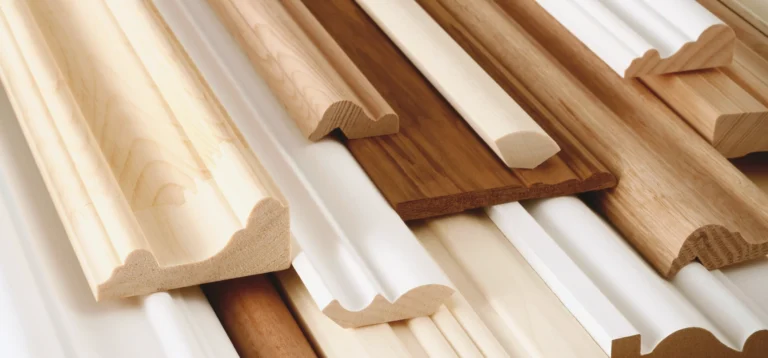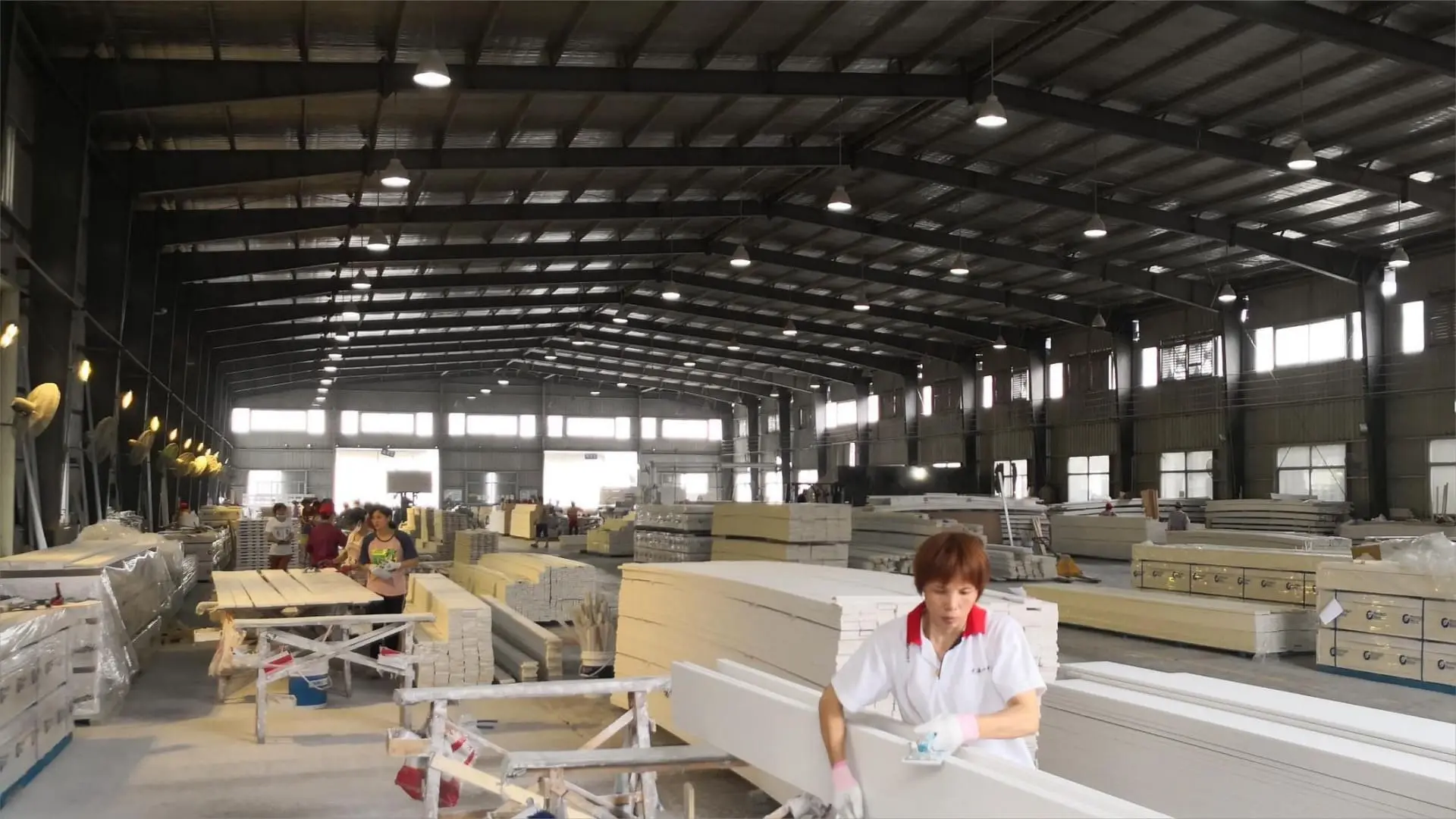
Sourcing moulding millwork from China involves six stages: supplier identification, compliance verification (CARB Phase 2, FSC, ISO 9001), sample evaluation, commercial terms negotiation, production quality inspection, and export logistics. B2B importers sourcing from manufacturers such as Goodwood Mouldings (Xiamen, China, est. 1995) typically start with mixed-container trial orders — loading 20–60 SKUs per container — to test product consistency and lead times before committing to full-volume repeat orders. Target moisture content for North American shipments is 8–10%; export documentation includes Certificate of Origin (CO), Packing List (PL), and Commercial Invoice (CI) as standard.
Why B2B Buyers Source Moulding Millwork from China
China-based wood moulding manufacturers supply a significant share of the architectural trim used in North American and Australian residential and commercial construction. The primary reasons are manufacturing scale, product range, and the ability to support mixed-SKU container orders that would be uneconomical from domestic mill suppliers.
However, sourcing from China requires a structured procurement process. Import compliance, product consistency across ocean freight distances, and documentation requirements create risks that a clearly defined workflow can eliminate. The six-step guide below reflects the actual procurement process used by experienced B2B distributors sourcing from Chinese millwork manufacturers.
Step 1: Identify and Shortlist Suppliers
Start with targeted searches on trade platforms (Alibaba, Global Sources, Made-in-China) combined with direct referrals from industry contacts or trade show contacts. Filter immediately for manufacturers — not trading companies — who list specific certifications in their company profile.
Shortlisting criteria at this stage:
- Does the supplier hold current CARB Phase 2 and FSC Chain of Custody certification?
- Do they list a minimum order in full container units (20ft or 40ft), not by piece count?
- Can they show product photos of finished goods — not raw material?
- Do they explicitly mention mixed-container (mixed-SKU) capability?
A manufacturer unwilling or unable to answer these four questions before a sample request is a poor use of procurement time.
Step 2: Verify Compliance Documentation
Compliance verification is non-negotiable before sample or commercial orders. Do not accept verbal assurances — request physical certificate copies and verify their validity online where possible.
North American imports require:
- CARB Phase 2 (composite wood products): Certificates must name a current EPA-recognized Third-Party Certifier (TPCS). For MDF cores over 8mm thick, the formaldehyde emission limit is ≤0.11 ppm (air chamber method). For hardwood plywood components, ≤0.05 ppm. Check certificate expiry dates — they require annual renewal.
- FSC Chain of Custody (if your market or end customers require it): Valid CoC certificates have a unique FSC license code (format: FSC-C######) verifiable at info.fsc.org.
- ISPM 15 compliance (packaging material): All solid wood packaging entering the US and Australia must carry the IPPC mark with HT (heat treatment) designation, confirming wood core reached 56°C for a minimum of 30 minutes.
For European imports, add: CE marking, E0/E1 formaldehyde classification, and country-specific customs documentation requirements.
Step 3: Request and Evaluate Samples
A sample order is your quality benchmark — treat it as a technical evaluation, not a sales interaction.
What to specify in a sample request:
- Exact profile drawing or reference code (if replicating an existing SKU)
- Surface finish: primed / raw / painted (specify RAL/NCS color code if applicable)
- Target moisture content: state 8–10% explicitly for North American orders
- Packaging: how you want it labeled, if testing private-label capability
What to evaluate on receipt:
- Dimensional accuracy: measure cross-section width and thickness at three points per sample piece (tolerance target: ±0.3mm width, ±0.2mm thickness)
- Surface quality: check for machining marks, pore filling consistency, paint adhesion
- Moisture content: use a pin-type moisture meter on site, or request the supplier's production moisture test report for the sample batch
- Certification confirmation: verify that the sample batch is from certified production
Standard sample turnaround from Chinese manufacturers is 3–7 business days. Custom profile development or replication of discontinued SKUs typically takes 5–10 business days depending on tooling requirements.
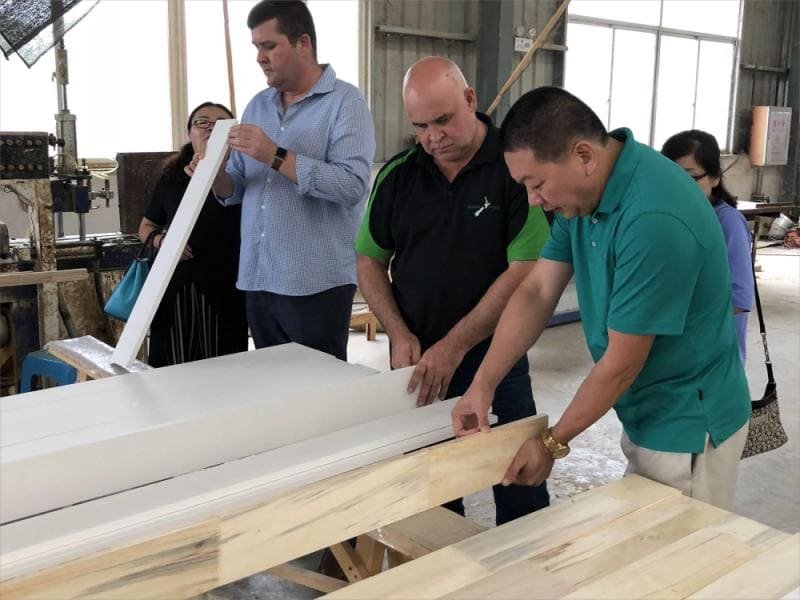
Step 4: Negotiate Terms and Confirm Specifications
Once samples are approved, move to commercial terms. Key parameters to negotiate and document in writing before placing a production order:
- Container loading plan: List all SKUs, quantities per SKU, and total linear meters per container. Confirm that the supplier can support your specific SKU mix.
- Production tolerance agreement: Confirm the accepted dimensional tolerance (±0.3mm standard; ±0.2mm for precision profiles) in the purchase order.
- Moisture content target: State the MC target and acceptable range in the specification sheet — 8–10% for North American orders. This should appear on the production order, not just in email.
- Lead time: Typical production + loading time from Chinese millwork manufacturers is 18–28 days from order confirmation. Add 12–18 days ocean freight to Los Angeles, or 18–22 days to Sydney. Total procurement lead time minimum: 30–46 days. Any supplier claiming under 21 days total for a new production run requires independent verification.
- Payment terms: T/T 30% deposit on order confirmation, 70% balance against Bill of Lading copy is standard for first orders. LC (Letter of Credit) is available from established manufacturers for larger volumes.
Step 5: Production Monitoring and Quality Inspection
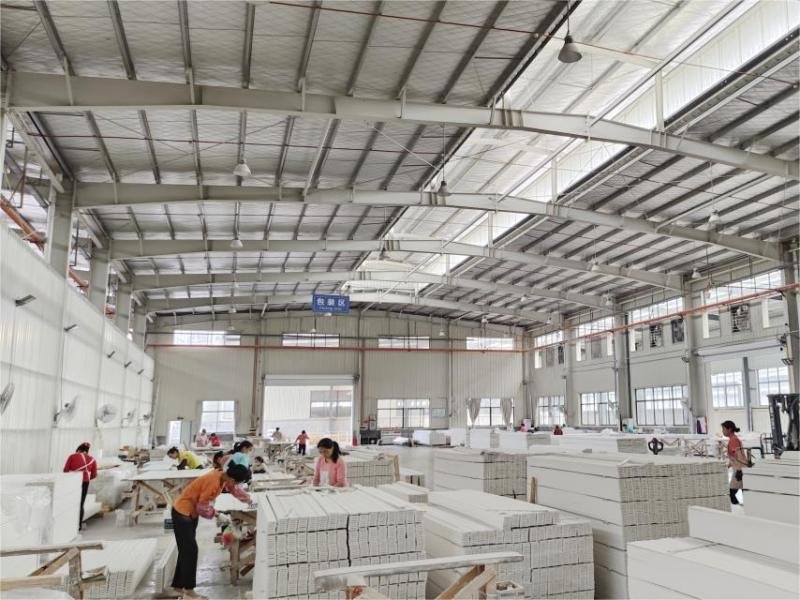
A third-party pre-shipment inspection (PSI) is strongly recommended for first orders and for orders exceeding $15,000 USD. Reputable manufacturers operating under ISO 9001 quality management systems maintain documented in-process quality control:
- IQC (Incoming Quality Control): Raw material (lumber, MDF) is checked on arrival for moisture content, dimensional conformance, and surface defects before entering production.
- IPQC (In-Process Quality Control): Key production stations — typically CNC profiling, coating, and packaging — are checked every 4 hours with results recorded by batch number.
- FQC (Final Quality Control): Finished goods are sampled at AQL Level 2.5 (ISO 2859-1) before packing. Under AQL 2.5, a batch of 1,200 pieces requires a sample of 125 pieces; the acceptable quality limit is 7 defects maximum. Non-conforming batches are held for 100% re-inspection.
Request the IQC/IPQC/FQC records for your batch as part of the shipping documentation package. Suppliers who cannot provide batch-level quality records are not operating a traceability system — which creates risk in import compliance audits.
Step 6: Export Logistics and Container Management
Container packing — what experienced buyers verify before departure:
Mixed-SKU container loading (20–60 different profiles per container) introduces packing complexity that directly affects product condition on arrival:
- Different cross-section sizes must be separated and layer-isolated. Narrow profiles stacked under heavy wide profiles will bow or crush during transit.
- MDF and solid wood products must not be placed on the same pallet. MDF is significantly denser (700–860 kg/m³ vs 420–650 kg/m³ for softwood), and combined loads can compress lighter profiles.
- Each SKU must carry its own batch number label — essential for receiving inspection and compliance traceability.
The container rain problem: On voyages from Xiamen to Los Angeles (12–15 days) or Sydney (18–22 days), temperature cycling as the vessel passes through tropical latitudes causes condensation to form inside the container — an industry phenomenon known as "container rain." Product packed without full PE film wrapping and moisture-absorbing desiccant sachets may arrive with surface moisture damage or raised grain on primed profiles.
Confirm with your supplier that: (1) desiccant strips or calcium chloride absorbers are placed inside the container, and (2) finished products are wrapped in sealed PE film — not just paper or cardboard cartons — before palletizing.
ISPM 15 packaging note: After the required heat treatment (56°C core temperature for 30 minutes), wooden pallets must be allowed to dry for a minimum of 48–72 hours before loading finished products on top. Pallets packed immediately after heat treatment release residual moisture that can transfer to the bottom layer of product. Request confirmation that your supplier follows a post-HT drying hold before loading.
When Sourcing from China Is NOT the Right Choice
Honest guidance requires acknowledging when direct China sourcing does not make sense for your procurement situation:
- Orders smaller than one full container (20ft): The per-unit logistics and documentation cost makes small orders uneconomical compared to buying from a domestic distributor's local stock.
- Lead times under 21 days: Production plus minimum ocean freight time makes it physically impossible for a Chinese manufacturer to deliver a production run in under 3 weeks. For urgent replenishment, domestic stock sources are the only option.
- No-inspection small trial orders: Requesting 5–10 pieces of each profile as a "trial" is better served by a formal paid sample program — production economics do not support micro-batch custom runs.
Key Takeaways
- The 6-step China sourcing process — identify, verify compliance, sample, negotiate, inspect production, manage logistics — applies to every order type regardless of volume.
- CARB Phase 2 certificate validity and FSC CoC license codes must be independently verified; verbal confirmation is not sufficient.
- Mixed-SKU container loading (20–60 profiles) requires detailed container packing specifications; MDF and solid wood must be palletized separately.
- Container rain is a real transit risk; PE film wrapping and desiccant placement inside the container are not optional for ocean freight shipments.
- Minimum total procurement lead time from China: 30–46 days. Factor this into inventory planning before placing orders.
Frequently Asked Questions
Q1: How do I verify a Chinese manufacturer's CARB Phase 2 certification? Request the certificate document and check the Third-Party Certifier (TPCS) name listed on it. Cross-reference the TPCS against the EPA's publicly available list of recognized CARB certifiers. The certificate should show the specific product categories covered, the facility address, and an expiry date within the past 12 months.
Q2: What is a realistic lead time for moulding millwork from China? Production takes 18–28 days from order confirmation for standard profiles. Ocean freight adds 12–18 days (US West Coast) or 18–22 days (Australia). Total minimum lead time is 30–46 days. Custom profiles, discontinued SKU replications, or new tooling requirements add 5–10 days to the production timeline.
Q3: What is the minimum order quantity for Chinese moulding manufacturers? Most manufacturers work on a per-container basis — one 20ft or 40ft container as the minimum. Manufacturers supporting mixed-SKU loading allow you to fill that container with 20–60 different profiles, making it possible to test a broad range without ordering full-container quantities of each SKU.
Q4: How should I specify moisture content when ordering? State the MC target in the purchase order specification sheet: 8–10% for North American heated interiors, 10–12% for European and Australian markets. Request the moisture content test report for the production batch as part of the shipping documentation. Do not rely on a general "quality commitment" without a measurable value.
Q5: Do I need a third-party inspection for every China order? A pre-shipment inspection (PSI) is strongly recommended for first orders and orders above approximately $15,000 USD. For established supplier relationships with a consistent quality track record, buyers often move to periodic inspections (every 3rd or 4th container). Never skip inspection entirely — product condition in container is not visible until arrival, and remediation after delivery is expensive.
Ready to Source Moulding Millwork from China?
Goodwood Mouldings supplies CARB Phase 2 and FSC-certified wood moulding profiles to B2B distributors and importers in North America, Europe, and Australia — with mixed-container loading of 20–60 SKUs and full export documentation as standard.
Last updated: June 2026 | Goodwood Mouldings — Xiamen, China | Est. 1995