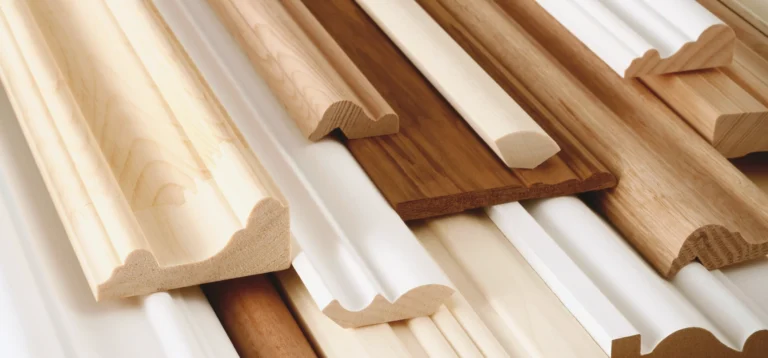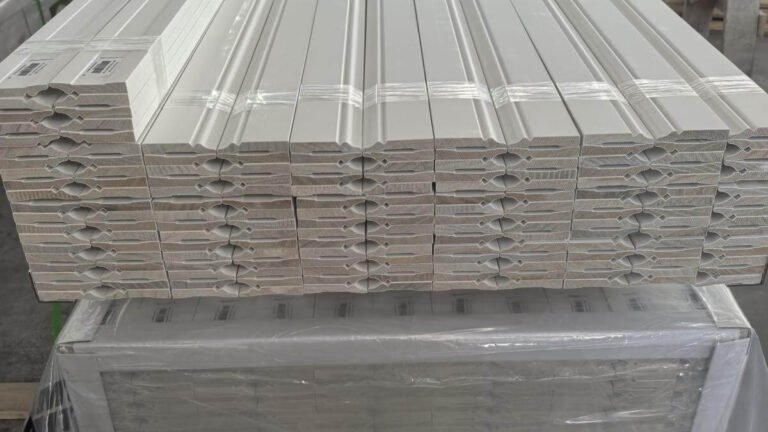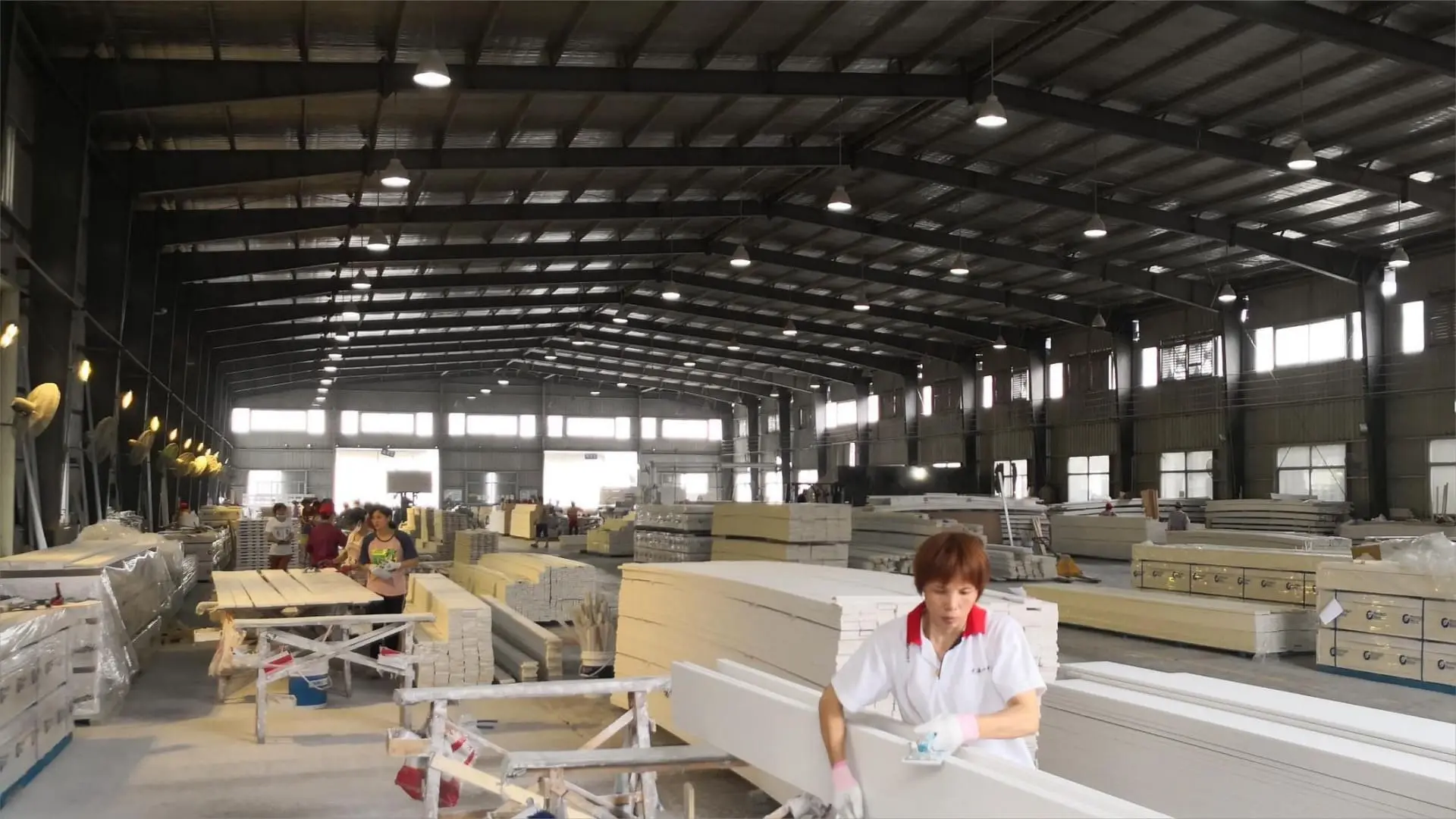
A moulding millwork supplier checklist should cover eight criteria: current CARB Phase 2 and FSC certification with verifiable third-party documentation; production capacity and confirmed lead times; mixed-SKU container loading capability (20–60 profiles per container); dimensional tolerance standards (±0.3mm width, ±0.2mm thickness); moisture content control protocols (8–10% target for North American orders); batch traceability and QC documentation (IQC/IPQC/FQC per ISO 9001); sample turnaround (3–7 business days standard); and private-label or OEM packaging capability. Evaluating a supplier like Goodwood Mouldings against these criteria before the first order eliminates the most common sources of B2B procurement failures.
Why a Structured Checklist Prevents Costly Mistakes
Most B2B procurement failures in the wood moulding supply chain are not random — they fall into three predictable categories: compliance documentation problems discovered at customs clearance, product quality inconsistencies that only appear after installation, and logistics failures caused by poor container packing specifications. All three are preventable with structured pre-order evaluation.
The eight criteria below reflect the specific failure points documented across years of B2B moulding supplier relationships. Each criterion is framed as a verifiable standard, not a subjective judgment.
Criterion 1: Current and Verifiable Compliance Certification
Ask for physical certificate copies — not website badges or verbal assurances.
For North American imports: CARB Phase 2 certification must name a currently EPA-recognized Third-Party Certifier (TPCS) and include the specific product categories covered. For MDF-core products over 8mm thick, the formaldehyde emission limit is ≤0.11 ppm (air chamber method); for hardwood plywood, ≤0.05 ppm. Certificate expiry must be within the past 12 months.
For FSC: Verify the FSC license code (format: FSC-C######) at info.fsc.org. An FSC badge on a website without a verifiable license code is meaningless.
Red flags: Suppliers who say they "can get certification if needed" or share expired certificates are indicating that compliance is not part of their standard production process. This is a supply chain liability.
Criterion 2: Production Capacity and Confirmed Lead Times
Request a written lead time commitment before placing an order — not an estimate. Standard production plus container loading from Chinese millwork manufacturers takes 18–28 days. Add ocean freight: 12–18 days to US West Coast, 18–22 days to Australia.
Ask specifically: What is the production lead time for my SKU mix at your current capacity? What happens to my order if your production line is at capacity when I place the order? A supplier who gives the same lead time regardless of order volume and timing is not managing their production schedule transparently.
Criterion 3: Mixed-SKU Container Loading Capability
For B2B distributors managing a product range across multiple profiles, the ability to mix 20–60 different SKUs in a single container is a critical logistics efficiency. Verify this capability at the quotation stage — not after placing the order.
Ask: What is the minimum quantity per SKU to include in a mixed load? How do you separate different profiles within the container to prevent transit damage? A supplier with genuine mixed-load experience will have an immediate, detailed answer.
Why this matters: Suppliers who can only ship single-SKU containers force you to carry disproportionate inventory of each profile, increasing carrying cost and obsolescence risk. Mixed-container capability directly supports your inventory efficiency.
Criterion 4: Dimensional Tolerance Standards and Documentation
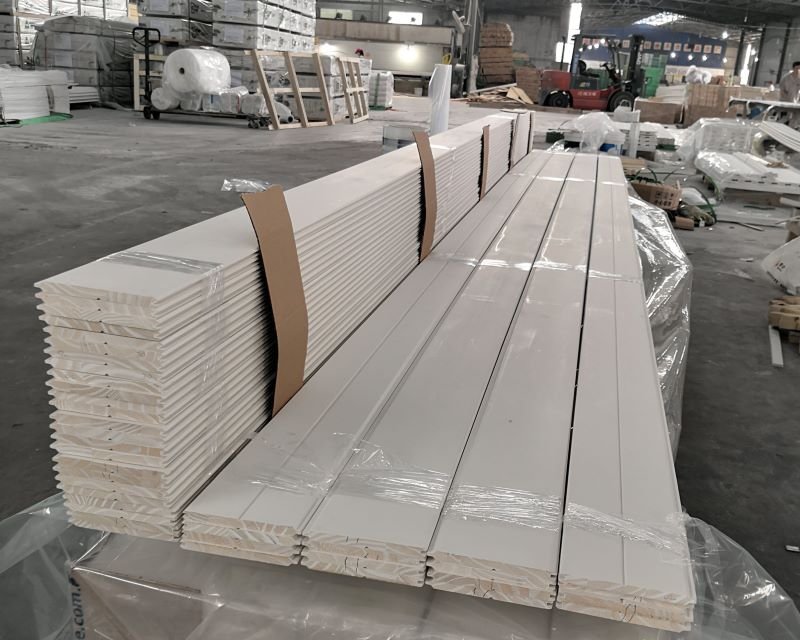
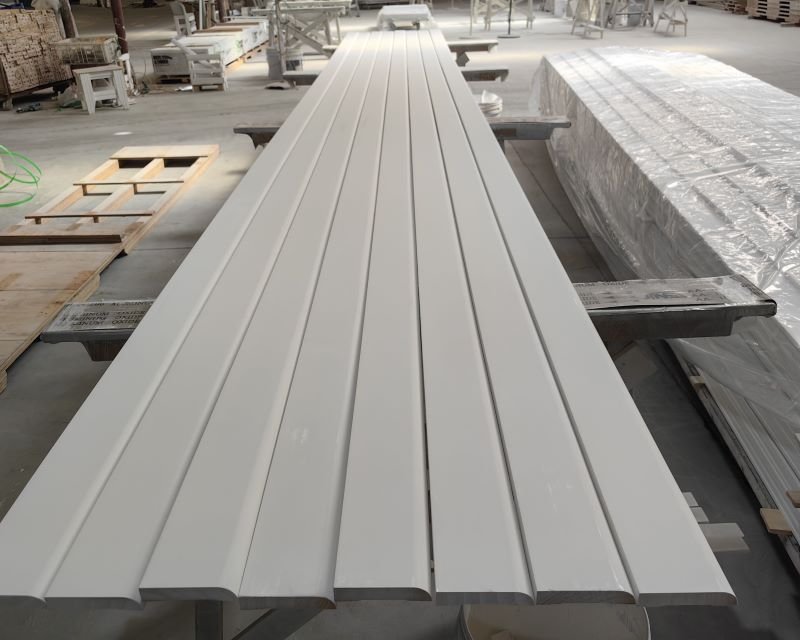
Request the supplier's internal dimensional tolerance standard in writing. Industry- acceptable tolerances for finished moulding profiles are ±0.5mm for width and thickness, but precision-grade suppliers should hold ±0.3mm width and ±0.2mm thickness after final sanding.
This matters specifically for: door frame components (where dimensional inconsistency creates installation problems across a project), replacement SKU orders (where new stock must match the dimensions of existing installed product), and engineered profiles for door manufacturers (where downstream machining depends on consistent input dimensions).
Criterion 5: Moisture Content Control and Documentation
State your required moisture content target in the purchase order specification — and ask the supplier to confirm they measure and document MC at production, not just at raw material intake.
Target ranges: 8–10% (±1%) for North American heated interiors (winter RH 20–35%); 10–12% for European and most Australian markets. Request a batch-level moisture content report as part of the shipping documentation package.
Why this is a checklist criterion rather than an assumption: In one documented case, solid wood base moulding (150mm wide × 18mm thick) shipped at 11% MC arrived to a North American distributor and was installed in heated interiors. After one heating season, the boards showed 2–3mm cupping across the width — caused by moisture differential between the installed face and the unfinished back face as indoor RH dropped to 22%. The supplier had not been asked to specify MC; the order placed no MC requirement. Ask for it in writing. Every time.
Criterion 6: Batch Traceability and QC System Documentation
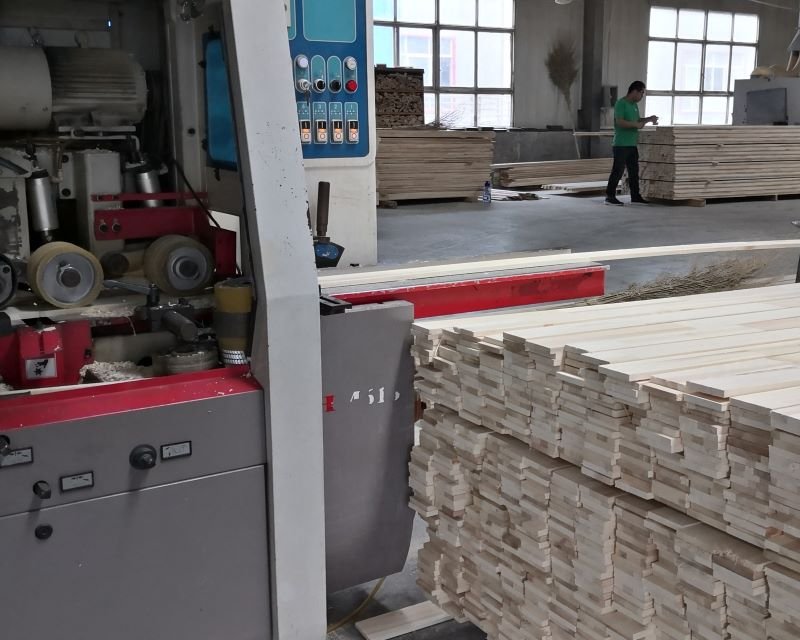
A supplier operating ISO 9001-compliant quality management will be able to provide:
- IQC records (raw material inspection at intake, including MC and dimensional checks)
- IPQC records (in-process checks at key production stations, minimum every 4 hours)
- FQC records (finished goods inspection at AQL Level 2.5 per ISO 2859-1)
- Batch numbers traceable from production records to shipping containers
Why traceability matters beyond quality: In the event of a US Customs compliance audit or an end-customer complaint requiring root cause analysis, batch traceability allows you to pinpoint exactly which production run produced the affected product. Suppliers without batch records cannot support this — which creates liability exposure for the importer.
Specifically for Australian imports, end-face sealing (water-based end sealer, 2 coats) on MDF products should appear as a standard FQC checkpoint, not a special request. Unsealed MDF end-faces in Sydney's coastal humidity can absorb enough moisture to swell by 8% at the cut ends within weeks — a defect mode that cannot be remedied after delivery.
Criterion 7: Sample Turnaround and Custom Profile Capability
Standard product samples should be available within 3–7 business days. This is a reasonable benchmark that indicates sufficient production scheduling flexibility for responsive procurement. Significantly longer lead times for standard samples suggest a supplier managing their own backlog at the expense of prospective buyers.
For custom profile development or discontinued SKU replication, 5–10 business days is standard depending on whether new tooling is required. Ask: Do you have experience replicating discontinued profiles from CAD drawings or physical samples? Manufacturers with a track record in this area will typically cite specific numbers — such as "300+ profiles replicated" — rather than giving a general capability statement.
Criterion 8: OEM / Private-Label Packaging and Documentation
For distributors building proprietary product lines, verify the supplier's OEM and private-label capability before the first sample:
- Can they apply your brand's barcode and label format to individual pieces?
- Can they customize carton printing, SKU codes, and pallet labeling?
- Do they provide full export documentation (CO, PL, CI) in your required format for your customs broker?
This criterion is lower priority for trial orders but becomes critical at volume — it is significantly more costly to retro-fit a labeling system after beginning a supply relationship than to specify it upfront.
Supplier Evaluation Summary Table
| Criterion | Verify By | Red Flag |
|---|---|---|
| 1. Compliance certification | Physical cert copies + online verification | Expired / unverifiable cert |
| 2. Lead time commitment | Written confirmation | Same estimate regardless of order |
| 3. Mixed-SKU loading | Specific capability + process description | "We can try" answer |
| 4. Dimensional tolerances | Written tolerance spec sheet | No written standard |
| 5. Moisture content control | MC target in PO + batch test report | No documentation offered |
| 6. Batch traceability | IQC/IPQC/FQC records on request | "We have quality control" |
| 7. Sample turnaround | 3–7 days standard, confirmed | >2 weeks for standard samples |
| 8. OEM capability | Label/carton sample + documentation format | Only generic packaging |
Key Takeaways
- Compliance certificates must be verified against third-party records, not taken at face value — an expired or unverifiable certificate is a customs clearance risk.
- Moisture content must be specified as a numbered value in the purchase order; a general quality commitment is not measurable and cannot be enforced.
- Batch traceability (IQC/IPQC/FQC + batch numbers) is both a quality tool and a compliance liability management tool — suppliers without it create downstream risk.
- Mixed-SKU container capability is an inventory efficiency enabler — verify it at the quotation stage, not after the purchase order is placed.
- End-face sealing on MDF products should be a supplier default for Australian orders, not a special request.
Frequently Asked Questions
Q1: How do I verify a CARB Phase 2 certificate is genuine? The certificate must name an EPA-recognized Third-Party Certifier. Cross-reference the certifier name against the EPA's online TPCS list. The certificate should show specific product categories, the manufacturing facility address, and an issue date within the past 12 months. If the supplier cannot provide an original certificate document, treat compliance as unverified.
Q2: What dimensional tolerance should I specify for door frame moulding profiles? For door frame components, specify ±0.2mm thickness and ±0.3mm width as the accepted tolerance. These tighter tolerances ensure that frame components fit squarely without shimming or site adjustment, which is critical for high-volume residential projects where installation labor cost is the largest variable.
Q3: Is AQL 2.5 inspection standard for all wood moulding suppliers? AQL 2.5 (per ISO 2859-1) is standard for suppliers operating an ISO 9001 quality management system. It means that for a batch of 1,200 pieces, 125 pieces are inspected and a maximum of 7 defects is acceptable. Not all suppliers operate to this standard — ask explicitly if you require it, and request to see FQC records from a recent shipment.
Q4: What is the standard export documentation package from a Chinese moulding supplier? A complete export documentation package includes: Commercial Invoice (CI), Packing List (PL), Bill of Lading (BL), Certificate of Origin (CO), CARB/FSC certification copies, and ISPM 15 treatment certificate for wooden packaging. Some destinations require additional phytosanitary certificates — confirm your customs broker's requirements before the shipment is loaded.
Q5: How important is private-label capability for a first order? Private-label capability is not critical for a trial order but becomes important at volume (typically when a product line enters retail distribution or when you want brand recognition on the product). Evaluate it during the supplier selection process so you are not locked into a supplier whose labeling system cannot scale to your requirements.
Evaluating Suppliers for Your Next Moulding Millwork Order?
Goodwood Mouldings is a CARB Phase 2 and FSC-certified moulding millwork manufacturer in Xiamen, China, with ISO 9001 quality management, batch traceability, and mixed-SKU container loading capability across all product lines.
Last updated: June 2026 | Goodwood Mouldings — Xiamen, China | Est. 1995