For nearly three decades, we have made wood mouldings (also spelled molding in the US) at our own factory in Xiamen, with every step from log processing to coating and packing done in-house. We also load mixed containers of 20–60 SKUs per container, which means one container can carry many different products with different risks. This is the story of one of those risks: an Australian importer's MDF door casing that arrived with swollen ends, what we found, and what we now do differently on every Australia-bound order.
What happened when an importer's MDF door casing arrived with swollen ends?
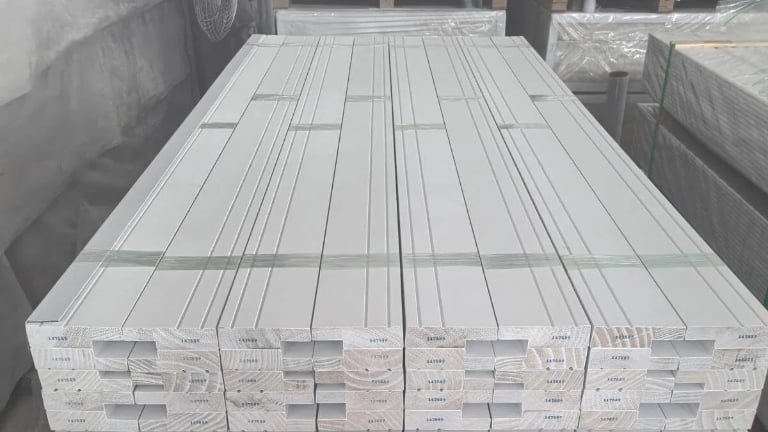
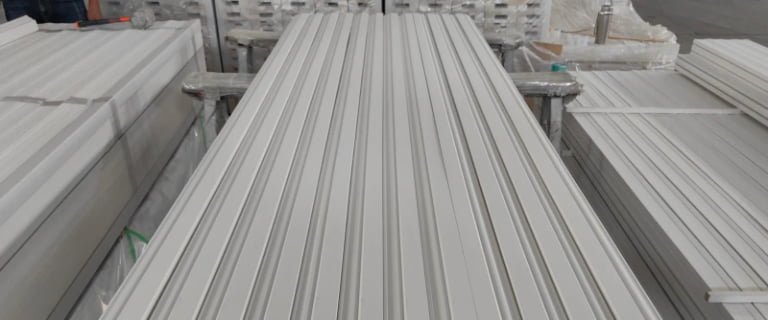
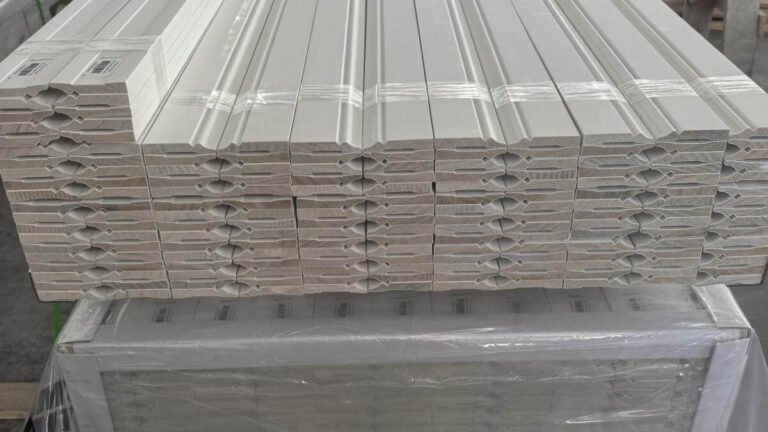
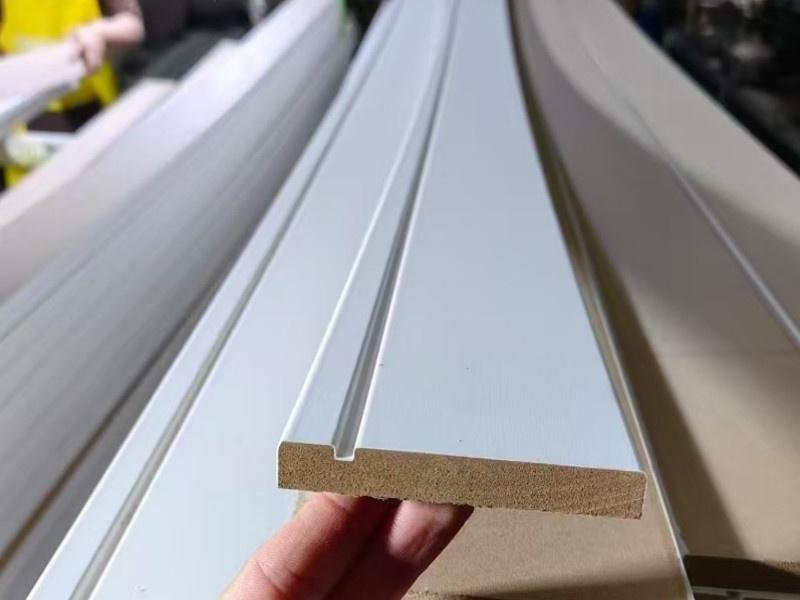
An importer in Australia reported that MDF door casing from one of our shipments had swollen at both cut ends, by roughly 8%. The product was standard-density, E0-grade MDF door casing (called architrave in Australia) in 3.0 m lengths, and the cut ends had not been sealed before shipping.
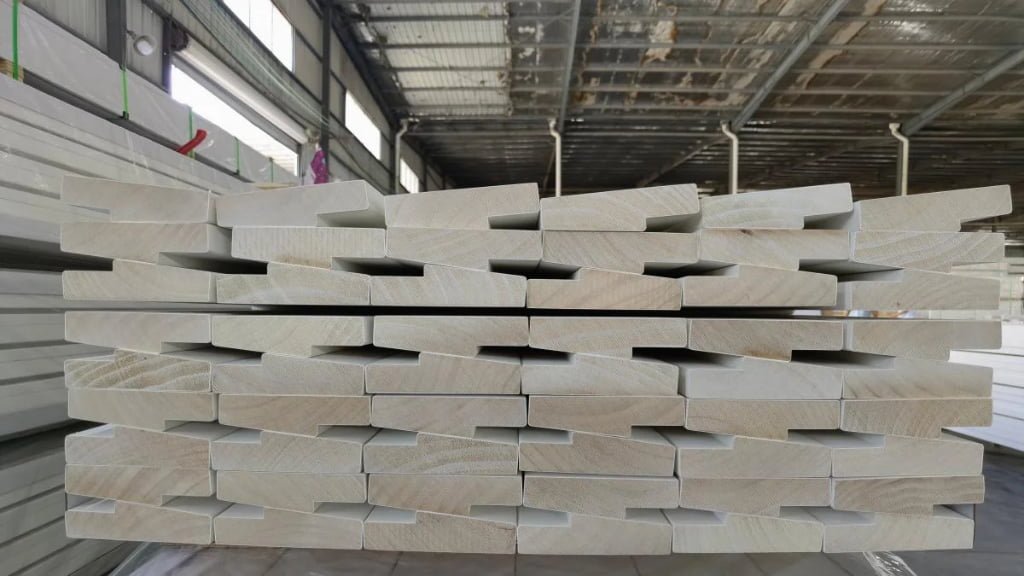
We want to be plain about that last detail. The casing left our factory with machined end faces that had no end-sealing treatment. At that time, we treated end sealing as something to agree with the customer, not as a default step. The importer's feedback showed us that this was the wrong way round.
A swelling of about 8% at the ends of a door casing is not cosmetic. Casing is cut to fit tightly around a door opening, so swollen ends mean joints that no longer close, ends that stand proud of the face, and extra time for the installer or a rejected length. For an importer who has already paid for freight and customs, the cost of that problem arrives long before any end customer sees it.
Why did only the cut ends swell, and what did we find?
The ends swelled because they absorbed water, and the water most likely came from rain on the final leg of the journey, between the port in Sydney and the importer's warehouse. The two cut end faces were exposed, and they took in moisture.
The reason the ends are the weak point is well known in our workshop. In our experience, a machined MDF face is the fastest route for water to enter the board, far faster than the coated surface. We cover that mechanism in detail in our technical article on why MDF moulding edges must be sealed, so we will not repeat it here. This article is about what happened and what we changed.
Two things from this case shaped our thinking:
- We control what happens up to our loading dock, not what happens afterwards. Ocean freight, port handling, trucking and warehouse receiving all involve other people, and weather does not check a shipping schedule. A product that only survives when every one of those steps goes perfectly is a product with a gap in its specification.
- The rain was the trigger, but the gap was ours. Unsealed end faces were a process step we had treated as optional, and closing that gap was our job, not the importer's.
What did we change after that complaint?
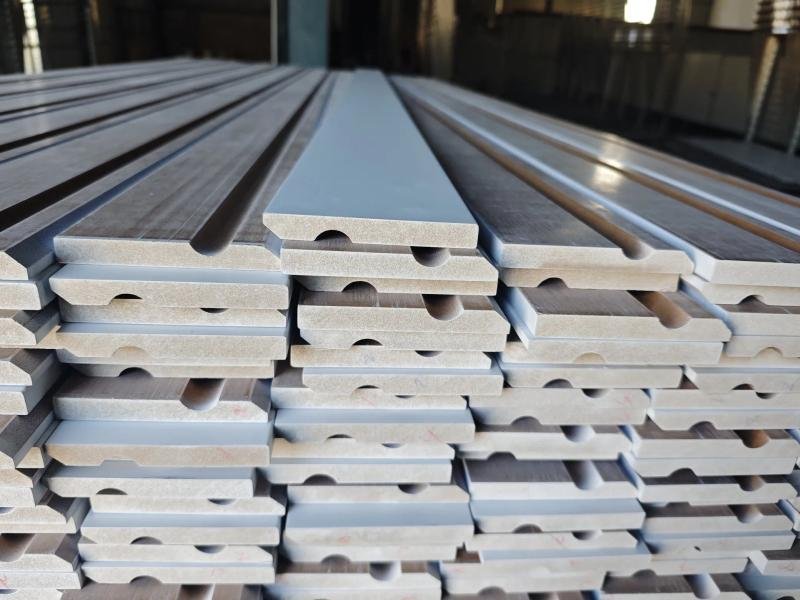
We made end sealing a mandatory step for all MDF products exported to Australia: two coats of water-based end sealer, plus a PE end cap, checked by QC before the container is loaded. The customer no longer has to ask for it.
Here is what the change consists of in practice:
- Two coats of water-based end sealer on both cut ends of every MDF length.
- A PE end cap over the sealed end for protection in transit and handling.
- A pre-shipment QC check that specifically confirms the end treatment is present. It is part of the checklist, not something left to a verbal instruction.
- Default, not an extra. Australia-bound MDF orders get this treatment without the buyer needing to request or negotiate it.
This is our internal rule, not an industry standard requirement. No standard we are aware of obliges a manufacturer to do this. We adopted it because this case showed us what happens without it. We would rather hold ourselves to a stricter rule than wait for the next complaint to prove the point.
What is our standard for Australia-bound MDF now, and what does it not cover?
Today, every Australia-bound MDF order is made to a defined specification: moisture-resistant MDF1 (MR grade), sealed ends, end caps and a QC check before loading. But end sealing reduces moisture uptake. It does not make MDF waterproof.
| At the time of this case | Our standard for Australia-bound MDF now | |
|---|---|---|
| End-face treatment | None applied | Two coats of water-based end sealer |
| End protection in transit | None | PE end caps |
| Pre-shipment QC check for end treatment | Not a required item | Required item on the checklist |
| Does the customer need to request it? | Effectively yes | No, it is the default |
| Board specification for Australian orders | Standard density, E0 grade | MR (moisture-resistant) grade, E0 grade |
To give a sense of what sealing is worth, our 24-hour soak comparisons show cut-edge thickness swelling of 10–25% for standard MDF, 5–12% for MR-grade MDF, and under 3% for MR-grade MDF with both end faces sealed. These are lab-style soak figures, not predictions of what will happen in a particular rainstorm. We quote them to show the direction of the effect, not as a guarantee.
Now the limits, because they matter as much as the improvement:
- MDF moulding is for dry interior use only. Even moisture-resistant MDF with sealed ends will suffer irreversible damage if it is left exposed to rain outdoors or kept in persistently high humidity.
- Sealed ends lower the risk; they do not remove it. A pallet left standing in heavy rain for a long period can still be damaged.
- New cuts need new sealing. If your team cuts a length to size on site or in the warehouse, the new end face is bare MDF. It needs sealing too, or it carries the same risk that we fixed at the factory.
- Storage still matters. Keep delivered MDF under cover, off the floor, and in the packaging until installation.
You can see the full range we make on our MDF moulding and architrave pages, and how we approach the Australian market on our Australia market page.
What should importers ask an MDF moulding supplier before the next container?
Ask how cut ends are treated for your destination, whether that treatment is part of the pre-shipment QC checklist, and how MDF is separated from other products in a mixed container. A clear, specific answer to each tells you whether the process is written down or just promised.
This case taught us that a supplier's answer to "is that included?" is more revealing than a certificate. These are the questions we would ask if we were the importer:
| Question to ask | What a specific answer sounds like |
|---|---|
| How are the cut ends of MDF treated for my destination climate? | Names the product, the number of coats, and whether end caps are used |
| Is the end treatment part of pre-shipment QC? | "Yes, it is a checklist item," not "we usually do it" |
| Do I have to request it, or is it the default for my market? | It is the default for that market |
| Are MDF and solid wood kept apart on the pallet? | Yes. In our practice they are never mixed on the same pallet, because the weight difference can deform MDF under load |
| Does every SKU carry its own batch number and moisture record? | Yes, so a problem can be traced to a batch after arrival |
| Does the spec sheet state the limits of use, such as interior dry areas only? | Yes, stated up front rather than after a complaint |
The mixed-container questions matter because that is where quality incidents are easiest to create. A container with dozens of SKUs holds products with different weights, sizes and moisture behaviour. We have written separately about how we manage that risk across a full container of up to 60 SKUs in our guide to mixing SKUs in one container.
The lesson we took from this importer's feedback is simple. A requirement that only exists when the customer asks for it is not a standard. After this case, end sealing for Australia-bound MDF stopped being a conversation and became part of how we build the order.
Frequently asked questions
Does end sealing make MDF door casing waterproof?
No. End sealing reduces how much moisture the cut ends take in, but MDF moulding remains a dry-interior product. Prolonged rain or persistently high humidity can still cause irreversible damage, even to moisture-resistant grades with sealed ends.
Why do the cut ends of MDF swell before the rest of the board?
Water enters fastest through machined faces, so unsealed ends take in moisture and swell before the coated surfaces do. Our technical article on why MDF moulding edges must be sealed explains the mechanism in full.
Do I need to ask for end sealing on an Australia-bound order?
Not with us. End sealing, PE end caps and the pre-shipment QC check are the default for every MDF product we export to Australia. This is our internal rule, not an industry requirement, so ask any other supplier what their default is.
Can MDF door casing be used outdoors or in constantly damp areas?
No. We recommend MDF moulding only for interior dry areas. If your project involves outdoor exposure or persistent damp, MDF is the wrong material, and we would rather tell you that before you order than after.
What should my team do with lengths cut to size after delivery?
Seal every new cut end. A cut made on site or in your warehouse exposes bare MDF, which carries the same moisture risk as an unsealed factory end.
Read the technical explanation: Why MDF Moulding Edges Must Be Sealed
Importing MDF door casing in a mixed container?
If you want end treatment, pallet separation and batch records settled before the container is booked, tell us your destination and your SKU mix. We will go through it with you. Plan your mixed-SKU container
Discover how European standards classify moisture-resistant MDF for humid interior conditions. ↩