For nearly three decades, we've shipped wood moulding (also spelled molding in the US) from Xiamen to distributors across humid coastal markets — and one of the most expensive lessons we ever learned had nothing to do with the profile itself. It came from a single unsealed cut edge. If you're sourcing MDF moulding for a market with high ambient humidity, the question you ask your supplier about edge sealing matters more than almost any other line item on your spec sheet.
Why Is the Cut Edge the Weakest Point on an MDF Moulding?
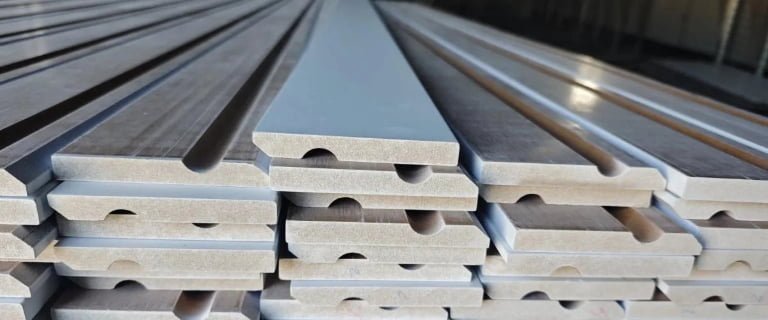
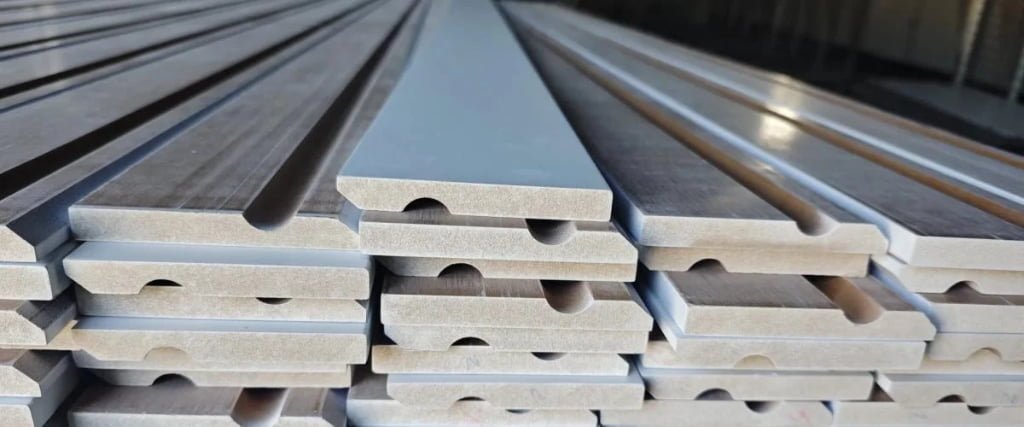
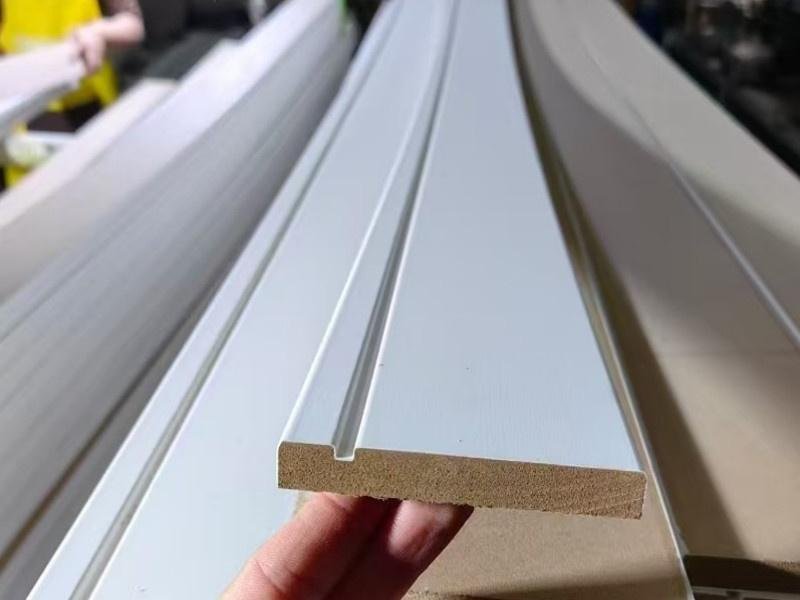
The cut edge of an MDF moulding is the fastest route moisture can take into the board. MDF is manufactured as a flat panel with a factory-sealed face and back, but once it's machined into a profile, the cross-section — the end grain, effectively — is raw fiber with no protective layer at all. In production, we think of this machined edge as a highway for water rather than a wall against it. The wood fibers and urea-formaldehyde resin binder that make up MDF absorb moisture readily once exposed, and unlike solid wood, there's no natural grain structure to slow that absorption down.
This matters most at the two ends of a length — door casing legs, jamb ends, any cut where the factory face has been removed to create a fitting length. If those ends sit unprotected in a humid warehouse, on a damp pallet, or exposed to rain during transit, they start drawing in water immediately.
What Happened When an Unsealed MDF Door Casing Reached an Importer's Warehouse
We had a case that taught us this the hard way. An importer ordered standard-density, E0-grade MDF door casing at 3.0m length, and the ends were not sealed before shipment. The shipment travelled from our port to Sydney and then on to the importer's warehouse — and somewhere in that final transport leg, the cargo was exposed to rain. The two unsealed cross-sections absorbed water directly, and by the time the product reached the warehouse floor, the ends had swelled by approximately 8%.
An 8% swell at the cut end isn't cosmetic. It changes how the piece fits against a door frame, it can crack the paint film at the joint, and it turns a clean install into a callback. The importer returned the affected batch, and we had to trace the failure back to a single missing process step: nobody had sealed the ends before the product left the factory.
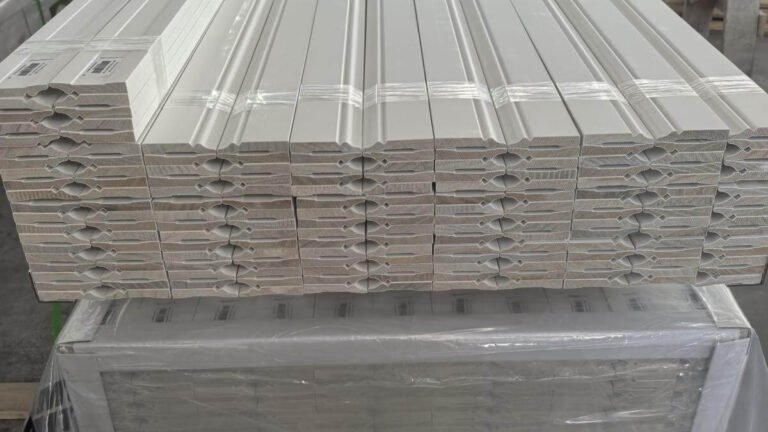
The fix was straightforward, but it changed how we run every Australia-bound MDF order since. We now apply a water-based end-sealing coating — two coats — to every cut end on MDF products destined for the Australian market, plus a PE end cap for physical protection during transit. This is an internal requirement we apply to our own Australia-bound orders, not an industry-wide standard — but it's now built into our QC checklist as a mandatory pre-shipment item, checked before any Australia order leaves the factory, whether or not the customer specifically asked for it.
How Much Does End Sealing Actually Reduce Moisture Uptake?
End sealing doesn't make MDF waterproof, but it substantially reduces how fast and how much moisture the cut edge absorbs. In 24-hour immersion testing, the difference between a sealed and unsealed edge is significant enough to change the outcome of a rainy transit leg or a damp warehouse floor.
| Edge Condition | 24-Hour Immersion Edge Swell |
|---|---|
| Standard MDF, unsealed cut edge | 10–25% |
| Moisture-resistant (MR-grade) MDF, unsealed cut edge | 5–12% |
| MR-grade MDF, cut edge sealed (double coat) | <3% |
The numbers make the case on their own: even moisture-resistant board, left unsealed at the cut, still absorbs meaningfully more water than a standard board that's been properly end-sealed. The grade of the board matters less than what happens to the edge after it's cut. That's the detail that's easy to overlook in a spec conversation focused on density and formaldehyde class, and it's exactly the detail our return shipment exposed.
We'd also note that "sealed" isn't a single fixed outcome — coating thickness, number of coats, and cure time before packing all affect how much protection the seal actually provides. A single thin coat applied and packed immediately behaves very differently from two full coats given time to cure. This is part of why we treat it as a checklist item with a defined process, not a one-line spec.
Where MDF Moulding Belongs — And Where It Doesn't
MDF moulding is built for dry, indoor environments — it is not, and should never be treated as, an exterior or persistently wet-area product. Even moisture-resistant (MR) grade MDF1 has limits. Long-term exposure to outdoor rain, or to sustained high humidity above roughly 85% relative humidity, causes internal structural breakdown in the fiberboard that end sealing cannot prevent. Edge sealing protects a cut edge during transit, storage, and normal indoor service — it does not turn MDF into an exterior-grade material.
This is a limitation we think is worth saying plainly rather than glossing over. If a project calls for genuine outdoor exposure — an entry threshold facing weather, a covered but open veranda, anything with regular direct rain contact — MDF moulding, sealed or not, is the wrong material choice. That's true of any supplier's MDF, not a shortcoming specific to one factory's process. For those applications, solid wood with appropriate exterior coating systems, or a non-wood profile, is the more honest recommendation.
For everything within MDF's actual working envelope — interior door casing, skirting, architrave, cove moulding in normal indoor humidity ranges — properly sealed cut ends are the difference between a product that performs as specified and one that comes back on a return shipment eight months later with an 8% swell nobody can explain from the invoice alone.
What This Means for Your Next Order
If you're importing MDF moulding into a coastal or high-humidity market, end sealing is a question worth asking at the quoting stage, not discovering after a return shipment. Ask specifically: are cut ends sealed before packing, how many coats, and is it standard on every unit or only on request? The answer tells you more about how a factory actually runs its QC process than almost anything else on the spec sheet.
Planning a mixed-SKU container for a humid-climate market? Plan your mixed-SKU container with our team and confirm which of your MDF line items need end-sealing as a standard, not an add-on.
Frequently Asked Questions
Does moisture-resistant (MR) MDF still need end sealing? Yes. MR-grade MDF resists moisture better than standard MDF, but it is not sealed at the cut edge by default. Our immersion data shows unsealed MR-grade board still absorbs 5–12% at the edge in 24 hours — sealing is still the step that gets it under 3%.
Is end sealing an industry-wide requirement for MDF moulding? No. End sealing on every cut is an internal process we apply to our own Australia-bound MDF orders based on a return shipment we traced back to unsealed ends. It is not a mandated industry standard, so it's worth confirming directly with any supplier whether it's standard practice or only done on request.
Can MDF moulding be used outdoors if the edges are sealed? No. End sealing protects the cut edge during transit, storage, and normal indoor use — it does not make MDF suitable for outdoor exposure or sustained high humidity above roughly 85% RH. MDF moulding is designed for dry, indoor environments only.
Why did our MDF door casing swell after it already passed inspection at the factory? Swelling from unsealed edges typically happens after the product leaves the factory — during ocean transit, port handling, or warehouse storage — not before. A batch can look perfect at final inspection and still absorb moisture at an unsealed cut edge days or weeks later, which is why the sealing step matters more than a one-time inspection pass.
Does a higher-density MDF need less edge protection than standard density? Density and moisture resistance are related but not the same thing. A higher-density board is not automatically moisture-resistant — MR-grade formulation is what controls water uptake, and even MR-grade board benefits significantly from a sealed cut edge.
See how moisture-resistant MDF grading standards define its intended humidity range and application limits. ↩