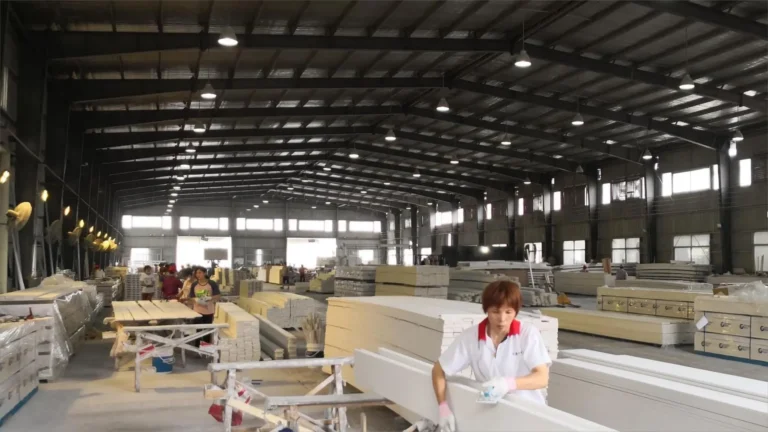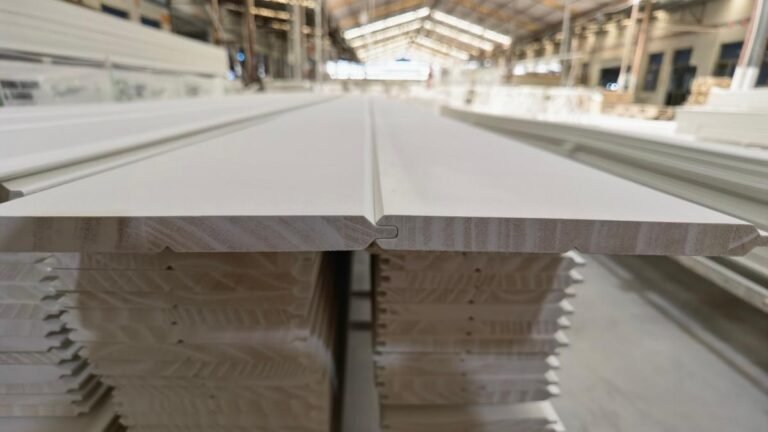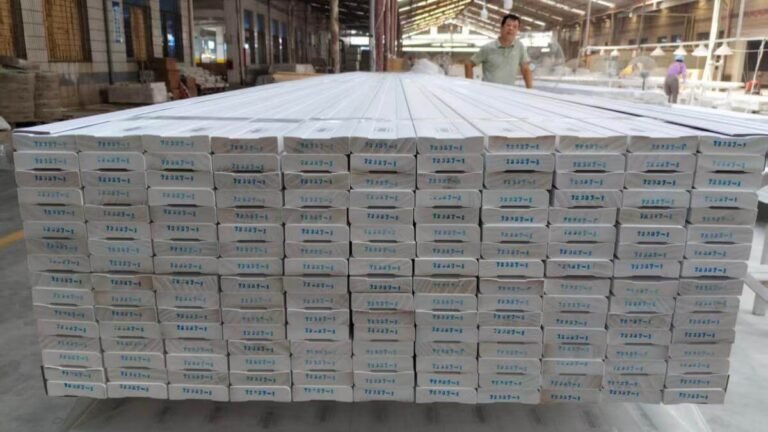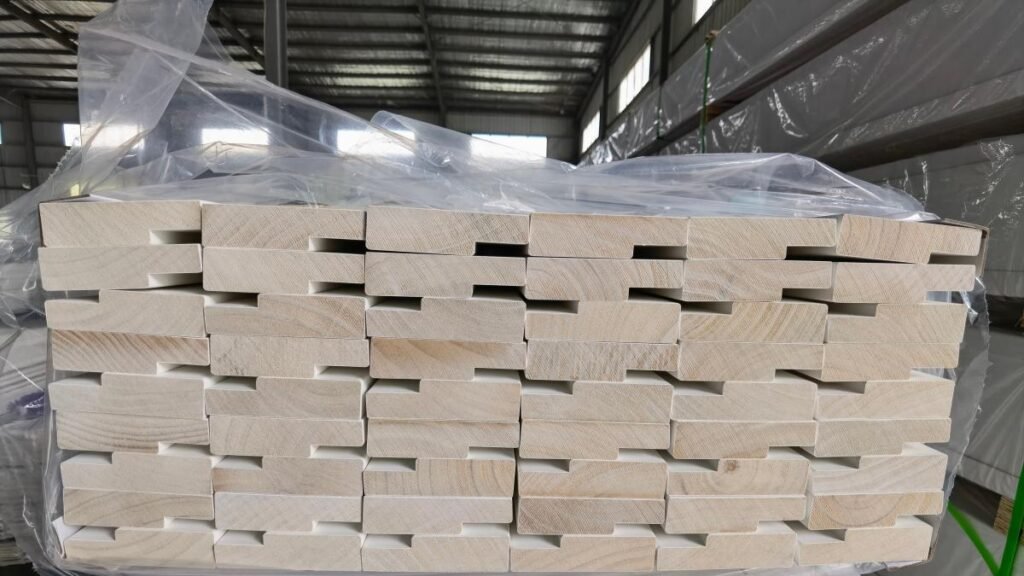
We have made wood moulding (also spelled molding in the US) in Xiamen since 1995, and our 200,000 m² production base now handles everything from log processing to final packing in-house. Nearly three decades of production have taught us that the complaints worth studying are the ones that arrive months after a container has been unloaded. This is one of them: a wide solid wood baseboard that showed visible cupping about three months after installation.
What exactly did the distributor report?
A North American distributor told us that wide solid wood baseboard we had supplied showed visible cupping about three months after installation. The product was a 150mm × 18mm solid poplar baseboard, primed, shipped at 11% moisture content. The measured distortion was roughly 2.5mm of cup across the board's width.
| Item | Detail |
|---|---|
| Product | Solid poplar baseboard, 150mm wide × 18mm thick |
| Finish | Primed |
| Moisture content at shipment | 11% |
| Time to complaint | About 3 months after installation |
| Symptom | Cupping of roughly 2.5mm |
The reported problem appeared about three months after installation, once heating had lowered indoor humidity. That timing is what makes this kind of failure expensive for a distributor: by the time the problem shows, the product is already installed.
What did we find when we traced it back?
The cause was two decisions that were ours, not the installer's: we shipped at 11% moisture content, and we supplied a wide solid board with no back relief cut. Together they left the board unable to cope with the dry indoor air of a heated North American home.
Here is the chain as we reconstructed it:
- Once heating started, indoor relative humidity in the building dropped to about 22%.
- The boards, shipped at 11%, settled toward roughly 7% moisture content.
- A board that moves from 11% to about 7% moisture content has lost around four points of moisture, and in this case that produced a shrinkage differential of more than 3%.
- With no back relief cut to relieve the stress, the board resolved it by bending, which showed up as about 2.5mm of cupping.
We want to be direct about the responsibility. It would have been easy to file this as an installation or storage problem, and in some cases that is the real answer. Here it was not. The moisture target and the profile design were both set at our factory, so the fix had to be made at our factory as well.
We deliberately leave out the wood-science explanation of why moisture loss turns into cupping. That mechanism is covered in our technical article, Why Your Solid Wood Baseboard Warped Within 3 Months. This article is about what happened and what we changed.
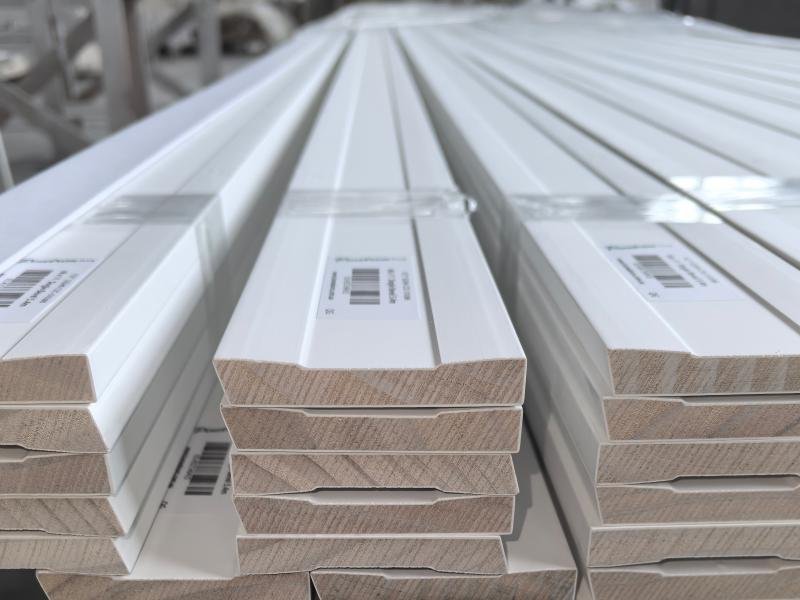
What did we change afterwards, and what is the standard now?
For North American orders, every solid wood profile 90mm wide or more now gets a back relief cut, and our shipping moisture target dropped from 11% to 9% (±1%). Both changes are written into our production rules and apply to North American orders of this type, not only to the distributor who raised the complaint. You can read more about how we run inspection in our quality control process.
| Before | After | |
|---|---|---|
| Back relief cut on wide solid wood profiles | Not applied | Mandatory: 1–2 grooves, 3–4mm deep |
| Shipping moisture content target | 11% | 9% (±1%) |
| Applies to | The product in this case | North American orders, solid wood profiles ≥90mm wide |
A few points about how we describe these changes, because they are easy to misread:
- These are our internal rules, not industry-standard requirements. We adopted the rule because our own shipment showed what happens without it.
- The new 9% (±1%) target sits inside the 8–10% kiln-drying range we work to for North American shipments, where heated indoor air in winter is dry. Published guidance on recommended moisture content for interior wood1 is a useful cross-check for any supplier's number. European and Australian shipments use a higher range, and the reason is climate, not preference.
- A back relief cut reduces the risk of cupping. It does not remove the tendency of solid wood to move with humidity, and we do not claim it does.
The lesson we took from this is short enough to fit on a shop-floor sign: a back relief cut is not an optional extra for wide solid wood baseboard in North America; it is the factory default.
Does a back relief cut solve everything? What are the limits of solid wood baseboard?
No. Solid wood moulding moves with humidity because wood is hygroscopic and exchanges moisture with the surrounding air2, and no processing step eliminates that. For solid wood baseboard 90mm wide or more, dimensional change in a North American heated home in winter can reach 0.5–2.0mm, depending on species, starting moisture content and installation conditions.
If you are weighing solid wood against other materials, these are the limits we would want you to know before ordering:
- Movement cannot be designed out. We can cut the risk with lower moisture content and back relief, but a board that lives in a heated house will still change dimension through the seasons.
- Natural colour varies between batches. The same species from different batches will not match exactly. If a project needs very tight colour consistency (ΔE below 1.0), a painted profile is a better choice than clear-coated solid wood.
- Cost is higher. Solid wood moulding of the same size typically costs 30–80% more than MDF moulding. For a paint-grade project where price is the main driver, MDF or finger-jointed moulding is often the more sensible specification.
Those alternatives have limits of their own. MDF moulding is for dry interior areas only, and finger-jointed moulding is suited to paint-grade applications, not clear finishes. Which material fits which job is a separate question, covered in our guide to choosing between solid wood, finger-jointed, MDF and veneered moulding.
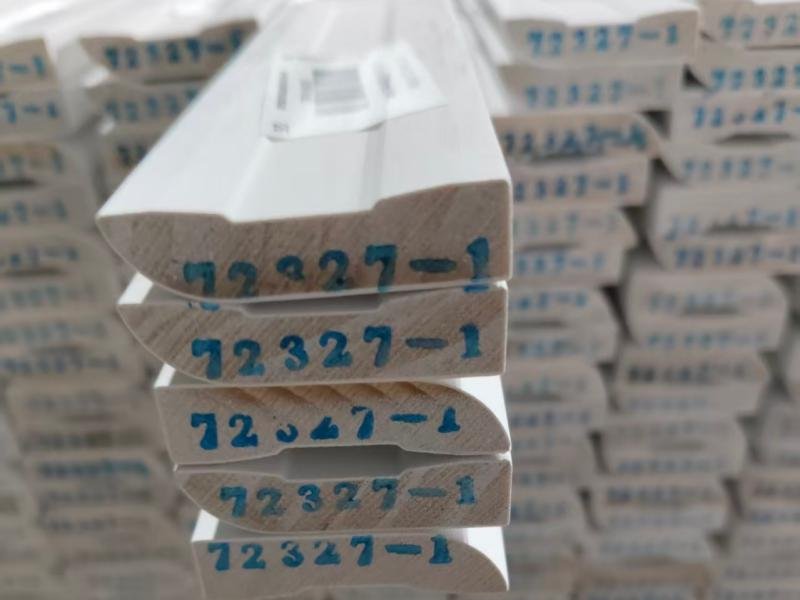
What should a distributor ask any supplier before ordering wide solid wood baseboard?
Ask for numbers and for the rule behind them. A supplier who can state a shipping moisture target, say how it is recorded, and explain how wide profiles are handled has probably met this problem before. A supplier who answers "it's kiln dried" has told you very little.
These are the questions we would ask if we were on your side of the table:
- What is the moisture content target at shipment, and is it recorded per batch? For North American destinations, our own target is 9% (±1%).
- Are wide solid wood profiles supplied with a back relief cut? Ask specifically about profiles 90mm and wider, and ask how many grooves and how deep.
- What is the indoor climate where the product will be installed? A heated house in a cold region and a coastal home are different problems, and the moisture target should reflect which one you are shipping into.
- Is the rule written into the supplier's production process, or decided order by order? A rule that depends on someone remembering it will eventually be forgotten.
- What does the supplier say solid wood cannot do? Any honest answer will include seasonal movement.
The first two answers are now fixed in our production rules: 9% (±1%) moisture content at shipment, and a back relief cut on every solid wood profile 90mm or wider in North American orders.
Related reading: For the wood science behind this case, see Why Your Solid Wood Baseboard Warped Within 3 Months. For a side-by-side comparison of all four material types, see Solid Wood, Finger-Jointed, MDF or Veneered: How to Choose the Right Moulding.
Planning a container of wide solid wood baseboard?
If you import or distribute into a heated-home market, send us the profiles you are considering, the destination region and the typical installation climate. We will confirm the shipping moisture target and back relief specification for each profile before you commit, and we can build them into a mixed-SKU container alongside your other lines.
Plan your mixed-SKU container with our importer and distributor team →
Frequently Asked Questions
Why did the solid wood baseboard cup after installation in a heated home?
In our case, the boards shipped at 11% moisture content and dried toward about 7% once heating lowered indoor humidity to around 22%. That moisture loss produced a shrinkage differential above 3%. With no back relief cut, the board bent, giving about 2.5mm of cupping. The full mechanism is in our technical article on baseboard warping.
Does a back relief cut stop solid wood baseboard from moving?
No. A back relief cut reduces the risk of cupping in wide profiles, but it does not stop solid wood from expanding and contracting with humidity. For solid wood baseboard 90mm wide or more, dimensional change in a heated North American home in winter can reach 0.5–2.0mm. Back relief and a lower moisture target manage that movement; they do not remove it.
What moisture content do you ship solid wood baseboard at for North America?
Our current target for North American orders is 9% (±1%), inside the 8–10% kiln-drying range we work to for that market. This is our own internal rule, adopted after the case described above, and not an industry-standard requirement. European and Australian shipments use a higher range because indoor climates there are more humid.
Is solid wood baseboard the right choice for every project?
No. Solid wood moulding typically costs 30–80% more than MDF moulding, and its natural colour varies between batches. If a paint-grade project is driven by price, MDF or finger-jointed moulding is often more sensible. If a project needs tight colour consistency (ΔE below 1.0), a painted profile suits it better than clear-coated solid wood.