Sourcing a wholesale moulding factory that ships what its brochure promises isn't as simple as it looks — how do you actually tell a stable long-term supplier from one that leaves your container half-empty at the dock?
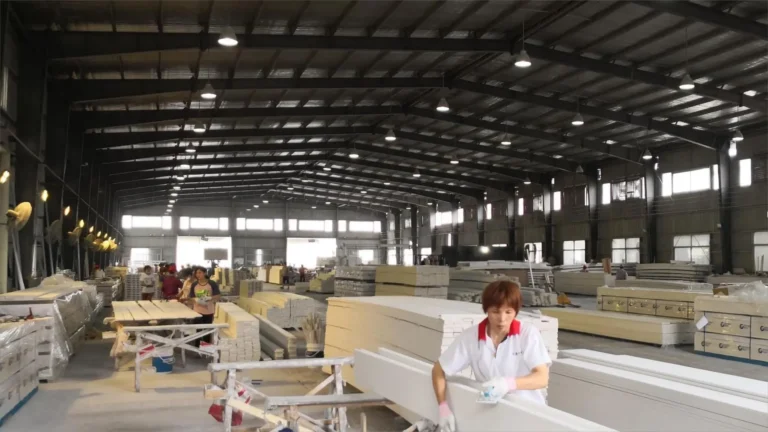
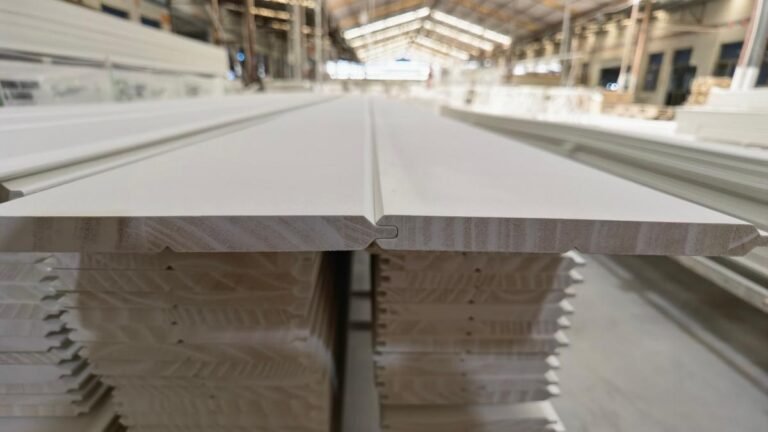
We are Goodwood Mouldings, a wood and timber moulding manufacturer operating a roughly 200,000 m² factory near Xiamen, China, since 1995. We supply solid wood, finger-jointed, MDF and veneered mouldings, plus door casing and frame semi-finished components, to door and window manufacturers, building material importers, and trim brands worldwide.
What Does a Wholesale Wood Moulding Manufacturer Actually Need to Prove Before You Trust a Full-Container Order?
You're about to commit a container's worth of budget to a factory you've never walked through — what actually tells you it can deliver, batch after batch?
To guarantee consistency, we hold six international certifications (FSC, CARB, EPA, CE, ISO 9001, and E0/E1) and run the full production process entirely in-house — from raw log processing through finger-jointing, veneering, coating, CNC finishing, and packing.
We don't outsource any stage of production. For a wholesale buyer, that matters more than it sounds: when every process step sits inside the same factory, batch-to-batch consistency, lead-time predictability, and full traceability are all easier to control than when steps are split across subcontractors.
Certification is the other half of the trust equation. We hold six international certifications, each tied to a specific market requirement:
| Certification | Primary Market | What It Confirms |
|---|---|---|
| CARB | United States | Formaldehyde compliance for composite wood products entering the US market |
| EPA / TSCA Title VI | United States | Federal-level formaldehyde compliance, aligned with CARB |
| FSC | Europe & North America | Raw material traceability to sustainably managed forests |
| CE Marking | European Union | Market access for specified construction wood products |
| ISO 9001 | Global | Factory-wide quality management system |
| E0 / E1 | Europe | Formaldehyde emission grade for engineered wood panels |
We don't treat any of these as our own invention — CARB, FSC, CE, ISO 9001 and the E0/E1 grading system are all industry-wide standards administered by independent bodies (carb.ca.gov, fsc.org, iso.org, epa.gov). What we control is whether our production actually meets them, batch after batch, not just at the time of the original audit.
If you want a deeper checklist for vetting a factory before you commit to a full container, we've laid out the specific questions to ask in our Factory Vetting Checklist.

Which Type of Buyer Is Our Wholesale Supply Chain Actually Built For?
Door and window factories, importers, and trim brands all buy moulding for different reasons — so how do you know which supply model actually fits your business?
We serve three buyer types directly: door and window manufacturers who need finger-jointed door frame components, building material importers who need mixed-SKU container loads, and wood moulding brand owners who need OEM or private-label production behind their own name.
Door & Window Manufacturers
If you run a door or window factory in North America, Europe or Australia, moulding isn't a one-off purchase — it's a recurring input tied to a fixed product line. This is the buyer relationship we're built to sustain over the long term: once a manufacturer brings us on as a supplier, the relationship typically runs five to fifteen years, because switching suppliers on a matched product line carries real cost and risk for the buyer, not just for us.
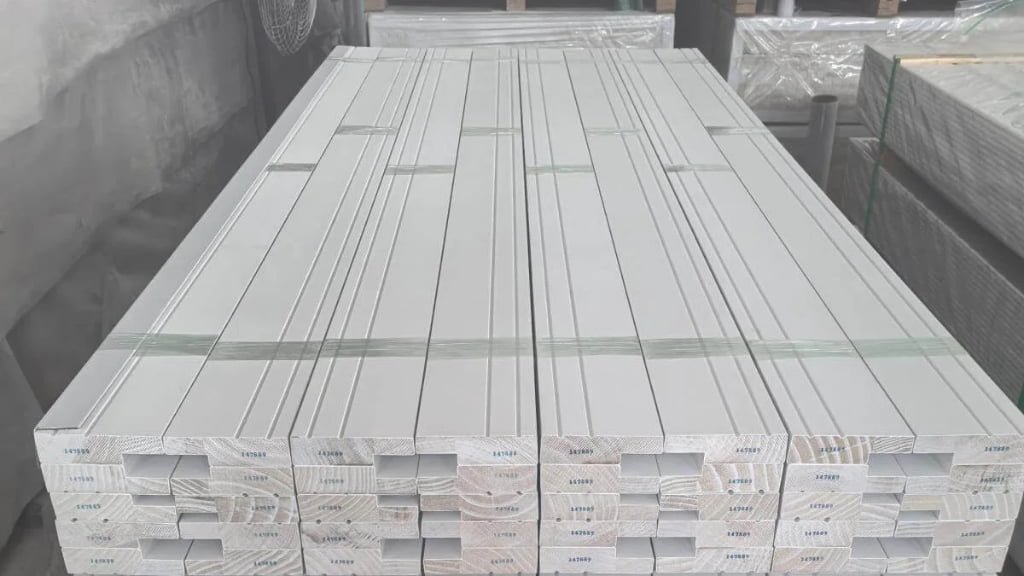
That kind of relationship depends on things a one-off order doesn't test: consistent batch colour, predictable lead times, and the ability to reproduce a discontinued profile years after the original tooling is gone. We supply finger-jointed door casing and door frame semi-finished components built for exactly this kind of repeat, long-term supply relationship.
If door and window frame moulding is specifically what you're sourcing, view our dedicated overview of Finger-Jointed Door Frames.
Building Material Importers & Distributors
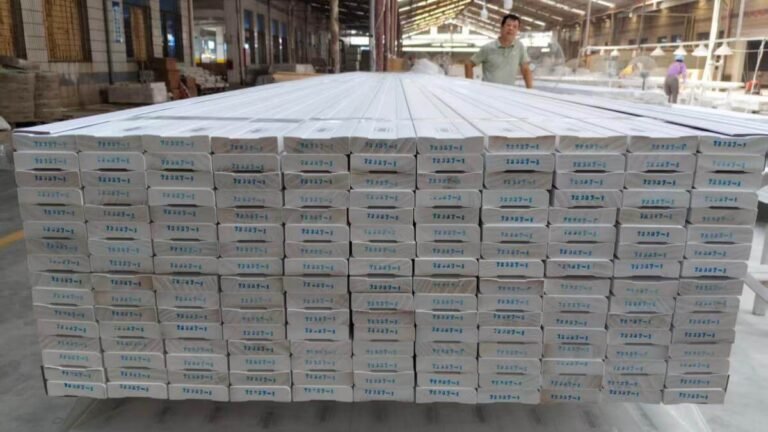
If you're an importer or distributor, the math behind a container rarely works around a single product. We support flexible mixed-SKU loading — typically 20 to 60 SKUs in a single container — which lets you build a container around your actual sales mix instead of ordering in bulk on one profile and hoping it moves.
This matters most for the inventory side of your business: instead of tying up warehouse capital in a narrow product range, a mixed container lets you hold a broader catalog with the same freight spend. It's a direct answer to the core pressure most importers carry — stock breadth versus cash tied up in inventory.
For a closer look at our skirting and architrave range built around this kind of mixed-load ordering, see our Wholesale MDF & Timber Skirting.
Wood Moulding Brand Owners (OEM / Private Label)
Not every trim brand in North America, Europe or Australia owns a factory. If you have a brand and a distribution network but no production capacity behind it, we function as the manufacturing side of that business — producing under your specification, packed and labelled for your brand, without your name ever touching our factory floor.
This is a distinct relationship from either of the two buyer types above: it's less about a fixed recurring SKU list and more about ongoing product development, private-label packaging, and supply consistency behind a label that isn't ours.
If OEM or private-label production is what you're evaluating, our OEM & Private-Label Manufacturing page covers this model in more detail.

What Happens Inside Our Factory Before Your Order Ships?
A batch of moulding can look perfect sitting in the warehouse and still crack three months after installation — so what actually determines whether it holds up?
Moisture content is the leading cause of moulding defects. Our kiln-drying targets are matched to the destination market — roughly 8–10% for North America and 10–12% for Europe and southern Australia — because each climate calls for a different starting point.
Moisture doesn't behave the same way at every stage of production, and treating it as a single checkpoint is how defects slip through. We manage it across three distinct stages:
| Stage | Moisture Content |
|---|---|
| Incoming green lumber | 40–80% (freshly felled wood can exceed 100%) |
| Air-drying stage | Down to 20–25% before kiln entry |
| Kiln target — North America | 8–10% |
| Kiln target — Europe | 10–12% |
| Kiln target — Southern/coastal Australia | 10–12% |
| Kiln target — Queensland & humid regions | 12–14% |
A number on a moisture meter at the kiln door doesn't tell the whole story. Wood has what we internally refer to as a "shell-core gap" — the surface dries faster than the core. On solid timber blanks thicker than 40mm, the surface can read within spec while the core is still 3–5% higher. If that stock is machined immediately, without a 1–2 week equilibration period, the stress released by cutting can bow or crack the finished piece. This is a factory-floor detail, not something a spec sheet usually captures.
It's also the root cause behind one of the most common complaints we see from North American buyers: solid wood moulding developing a slight cup 60–90 days after installation. Almost without exception, the cause traces back to moulding shipped at a moisture content of 12–14% arriving into a North American winter heating environment, where indoor humidity often drops below 30%. The wood loses moisture fast, and that mismatch — not a manufacturing defect — is what shows up as warping months later.
We go into this failure mode, and how we've adjusted our own shipping targets in response to it, in Moisture Control & Warping Prevention.

Is Goodwood the Right Fit If You Need a Complete Door & Window System?
If you searched for a wood moulding manufacturer expecting hardware-integrated doors and windows delivered as one system, is that actually what you'll get here?
No. We manufacture solid wood, finger-jointed, MDF and veneered mouldings, plus door casing and door frame semi-finished components and CNC-routed profiles — not PVC profiles, aluminium profiles, or complete hardware-integrated door and window systems.
This distinction matters, because "moulding" and "frame" get used loosely in the industry. In our factory, "door frame" means a finger-jointed or solid wood semi-finished structural component — a product you or your downstream customer will still fit with hardware, glazing, or hinges as part of your own assembly process. It's a configuration element that reduces on-site labour for whoever installs it, not a finished, glazed, hardware-fitted door or window unit.
Our product line runs across four base materials — solid wood, finger-jointed, MDF, and natural or engineered veneer. If your project needs full aluminium or PVC window systems, or a complete hardware-integrated door and window assembly, that falls outside what we produce, and we'd rather tell you that directly than have you find out after your container ships.
If you're specifically sourcing high-end solid wood profiles, our Design-Grade Hardwood Mouldings page covers that range. For CNC-profiled cornice and coving work, see Custom CNC Timber Cornices.
Conclusion
Trusting a wholesale wood moulding factory you haven't visited comes down to verifying actual capabilities, not just reading brochures. Whether you're a manufacturer building a long-term supply relationship, an importer optimizing a mixed-SKU container, or a trim brand looking for OEM production, a stable partnership requires:
- Verified Scale & Standards: A proven factory history and independent international certifications (FSC, CARB, CE, etc.).
- 100% In-House Production: Complete control over lead times and quality without relying on subcontractors.
- Climate-Specific Moisture Control: Kiln-drying targets specifically matched to your destination market to prevent post-installation warping.
- Clear Manufacturing Boundaries: Transparency about what we produce (wood, MDF, veneered components) and what we don't (PVC, aluminium, complete hardware systems).
The right fit starts with knowing exactly what's inside the container before it leaves our factory.
FAQ
Q1: What is Goodwood Mouldings' typical minimum order quantity? We supply primarily through full-container-load (FCL) orders, and within a single container we support mixed loading of roughly 20 to 60 SKUs, which lets importers and distributors build a container around their actual sales mix rather than a single product line.
Q2: Which certifications does Goodwood Mouldings hold? We hold six international certifications: FSC, CARB, EPA (TSCA Title VI), CE, ISO 9001, and E0/E1 formaldehyde emission standards, covering the core compliance requirements of the US, European, and Australian markets.
Q3: Does Goodwood Mouldings supply complete door and window systems? No. We manufacture wood-based moulding products — solid wood, finger-jointed, MDF, and veneered mouldings, plus door casing and door frame semi-finished components and CNC-routed profiles — not PVC profiles, aluminium profiles, or complete hardware-integrated door and window systems.