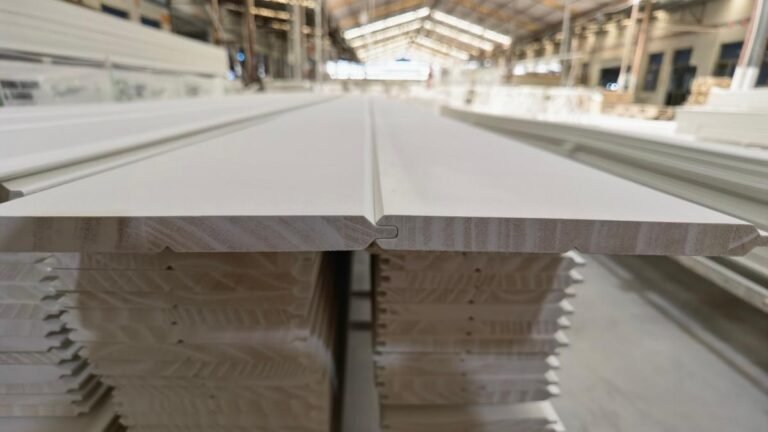
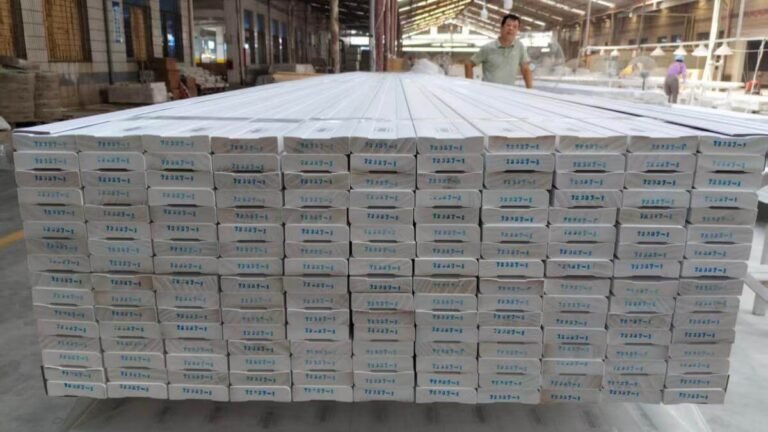
A painted pine moulding (also spelled molding in the US) can look flawless on the day it ships and still develop yellow stains months later. After close to three decades of making mouldings, with coating done in our own factory rather than outsourced, we know how this happens. The cause is resin, not poor paint. The fix is one specific step, done in one specific order, and this article explains both.
What is knot bleed, and why does it appear months after painting?
Knot bleed is pine resin seeping out of a knot and pushing through the paint film as a yellow or brown oil stain. It shows up after the finish looks perfect, so inspection at delivery cannot catch it. In our experience it appears 6 to 18 months after coating.
Some pine knots contain resin pockets, which are small reservoirs of pine resin. Painting a knot does not empty the pocket. The resin can keep moving toward the surface long after the paint has cured, and eventually it breaks through the film and leaves a stain.
This is why knot bleed is so confusing for buyers. A shipment can pass inspection, sit in a warehouse, go up on a wall, and only then show yellow spots. By that point the stain is easy to blame on the paint, the installer or the supplier's "quality".
Two things make it more visible:
- Time. The 6–18 month window is long enough that the problem often appears well after delivery and acceptance.
- Heat and sun. Sun-facing, high-temperature installation surfaces make bleed more likely, and paint-industry guidance likewise links resin oozing through a coating under heat or sun1 to yellowish staining after a few months. A moulding on a shaded interior wall may stay clean, while the same profile beside a sunny window develops spots.
The most useful thing to understand is that a flawless finish on arrival tells you nothing about knot bleed. What matters is what happened at the knot before the first coat went on.
Why doesn't ordinary primer stop resin from coming through?
Ordinary primer does not reliably block resin from a knot. The correct treatment is to seal each knot location first with a shellac-based primer2, which isolates the resin path, and only then apply a water-based or solvent-based primer over it. The sealing step cannot be skipped, and the order cannot be reversed.
The shellac layer has to go on first, directly over the knot, so that it isolates the resin path before any other coating sits on top. Reverse the order and that protection is lost.
Here is the sequence we follow:
| Step | What is applied | Where | Purpose |
|---|---|---|---|
| 1 | Shellac-based primer | Knot locations | Isolates the resin path so it cannot travel into the paint layers |
| 2 | Water-based or solvent-based primer | Over the sealed knots and surface | Standard primer layer, applied only after the knots are sealed |
| 3 | Finish coat | Full surface | Final appearance; on primed white mouldings, applied by the customer on site |
I want to be clear about what this is. The sequence above describes our own coating practice, not an industry standard. We are not quoting a rule that every supplier follows, and that is the reason it is worth asking about. Two mouldings can look identical on the day they ship and behave very differently a year later, depending on whether this step was done and in what order.
We also do not treat it as an optional upgrade. Skipping it removes one step from the process, and the consequence shows up later, with the buyer, as stains on installed goods.
Which mouldings are exposed to knot bleed, and how do knot grades matter?
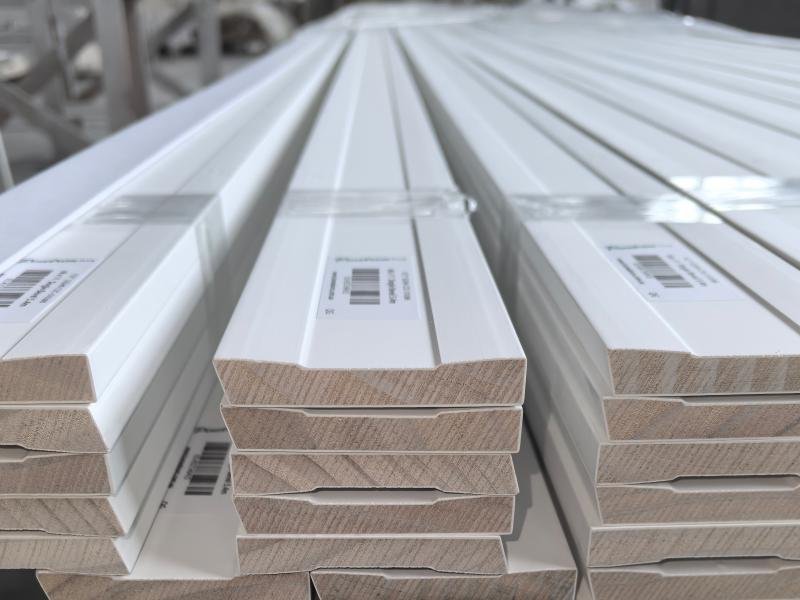
Any pine moulding that contains knots is exposed, including paint-grade solid wood and finger-jointed profiles. Knot grade tells you how large and what type of knots to expect, so it affects how many knot locations need sealing. It does not replace the sealing step.
We grade appearance using J-grades that follow the approach of EN 9423, the European standard for grading timber in joinery by appearance quality:
| Grade | Knot limits | Typical use |
|---|---|---|
| J2 (premium) | Live knots ≤3 mm; dead knots not permitted | Stain-grade solid wood mouldings |
| J3 (standard) | Live knots ≤15 mm; dead knots ≤5 mm | Paint-grade solid wood mouldings |
| J4 (economy) | No strict knot limits | Finger-jointing feedstock, engineered uses |
Paint-grade means knots are allowed. A J3 moulding is expected to contain them, so the coating process has to deal with them, not hope they are absent.
Finger-jointed mouldings add another point. Even when the base material is paint-grade, the position of knots in the finished piece cannot be precisely controlled after finger-jointing. So for finger-jointed profiles, sealing knots wherever they fall is part of the process rather than a special case.
The grade and the sealing method are two separate questions. A supplier can quote you J3 and say nothing about how knots are treated before painting, and that silence is where problems begin.
What should you ask a supplier about knot sealing before ordering?
Ask whether knots are sealed with a shellac-based primer before the standard primer goes on, and whether that step is a fixed part of the process. Also tell the supplier if the mouldings will be installed on sunny or hot surfaces, since those are the conditions where bleed is most likely.
A short checklist you can use with any pine moulding supplier, including us. You can also see how our quality control process is organised.
- Is there a dedicated knot-sealing step before the standard primer? A vague answer such as "we prime everything" does not tell you whether knots were sealed first.
- Is that step in the standard process, or done only on request? A step that only happens when someone asks is easy to miss on a mixed order.
- Which knot grade is being quoted? Check it against the table above, and match it to how the moulding will be finished.
- Have you told the supplier where the mouldings will be installed? Sun-facing and high-temperature surfaces deserve a conversation before the order, not after.
What sealing does not do
Sealing knots manages knot bleed, but it does not turn a paint-grade moulding into a knot-free one. Knots remain in the wood, and we would rather say that plainly than let a sealed knot be mistaken for a perfect one.
If your project cannot tolerate knots at all, paint-grade pine is the wrong material. Even J2 solid wood, the strictest grade in the scheme above, may still contain a few small live knots. For a fully clean display surface, choose select-grade solid wood or a veneered moulding on an engineered base. And if the profile is finger-jointed, remember that its knot positions cannot be predicted, so it suits paint-grade work with sealed knots but not zero-tolerance ones.
Knot bleed is one of several material behaviours that decide which moulding type fits a project. For the full comparison, see how to choose between solid wood, finger-jointed, MDF and veneered mouldings.
The takeaway
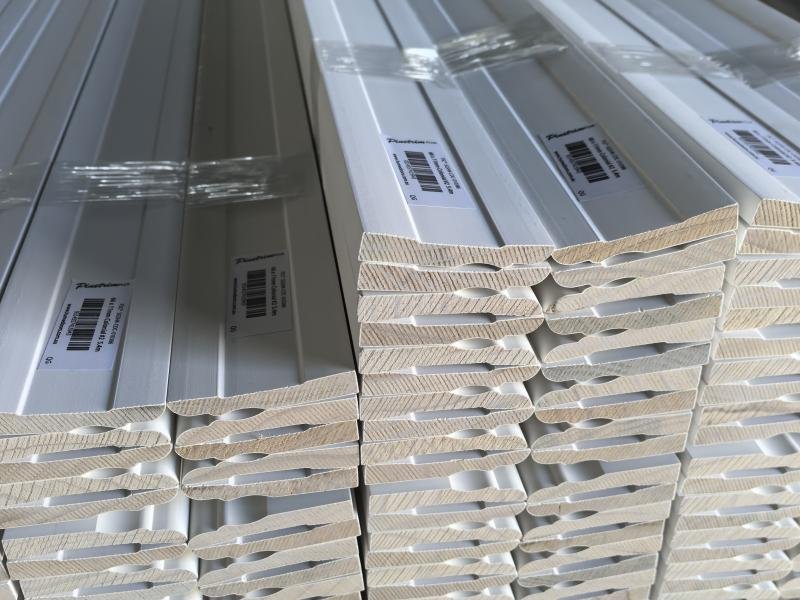
Knot bleed is a resin problem with a coating-process answer. Sealing knots with a shellac-based primer before the standard primer is the step that matters, and the order is not negotiable. Ask about it before you order, because a moulding that looks perfect on delivery will not show you whether it was done.
Planning a container of painted pine mouldings?
We support mixed containers of 20–60 SKUs. Send us the profiles you need and where they will be installed, especially any sun-facing or high-temperature surfaces, and we will go through the knot grade and our knot-sealing process against your project before you order.
Plan your mixed-SKU container →
Frequently asked questions
Does painting over a knot stop it from bleeding?
No. Paint does not empty the resin pocket, so resin can keep moving toward the surface and break through the film 6–18 months later. Knots need to be sealed with a shellac-based primer first, and the standard primer goes on only after that.
Can I spot knot bleed problems when a shipment arrives?
Not from the finish alone. Bleed typically appears 6–18 months after coating, so a moulding that looks perfect on delivery may still stain later. The reliable check is to ask the supplier, before ordering, whether knots are sealed before priming.
Does a higher knot grade mean there will be no knot bleed?
No. A grade such as J2 limits the size and type of knots, but even J2 solid wood may still contain a few small live knots. Grade and knot sealing are separate questions, so ask about both.
Can finger-jointed mouldings avoid knots?
Not reliably. After finger-jointing, the position of knots in the finished piece cannot be precisely controlled. Finger-jointed mouldings are suited only to paint-grade work, and projects with zero tolerance for knots should use select-grade solid wood instead.
What if my project cannot tolerate any knots?
Do not use paint-grade pine. Choose select-grade solid wood, or a veneered moulding on an engineered base for a fully clean display surface.
Read how heat and sun can push resin through a finished coating, and what the staining looks like. ↩
See how professional painters pre-seal knots with shellac before priming, and where the method has limits. ↩
Find out how EN 942 approaches grading timber by appearance, including how knots are classified. ↩