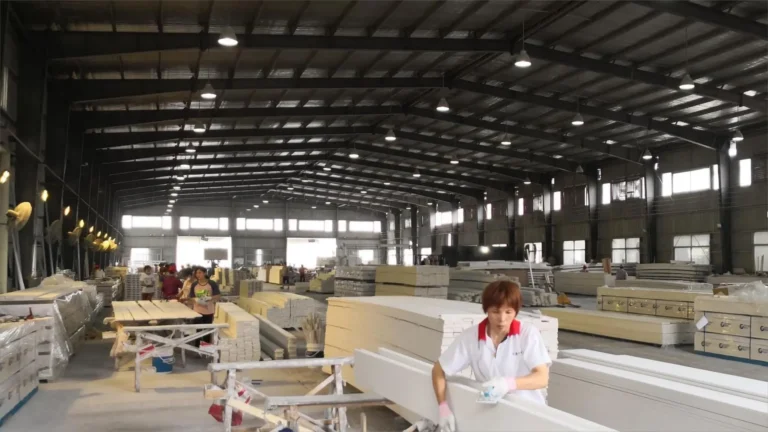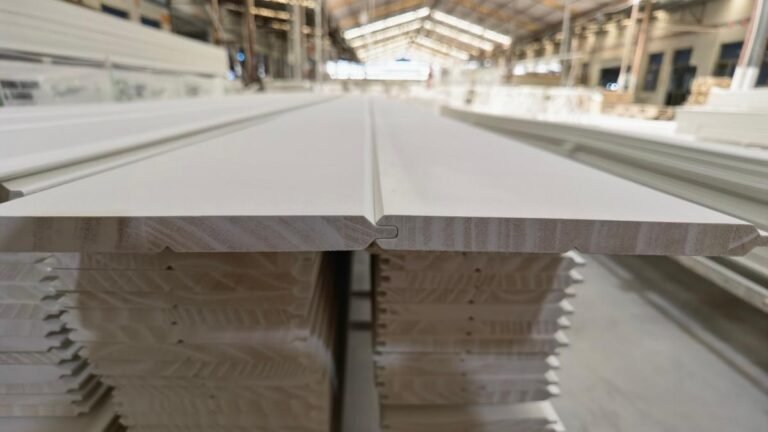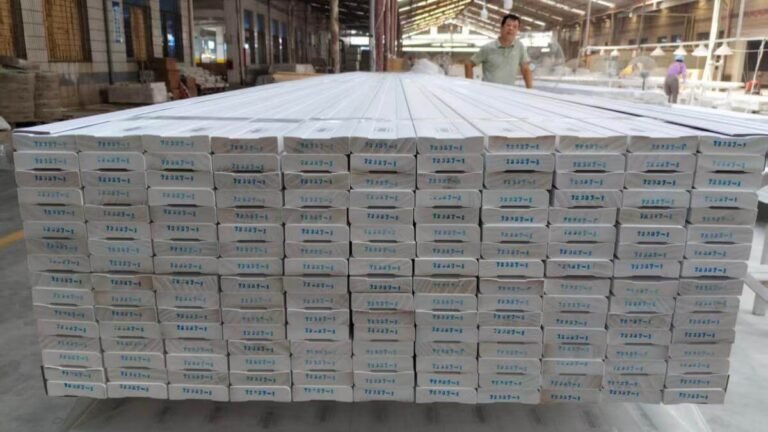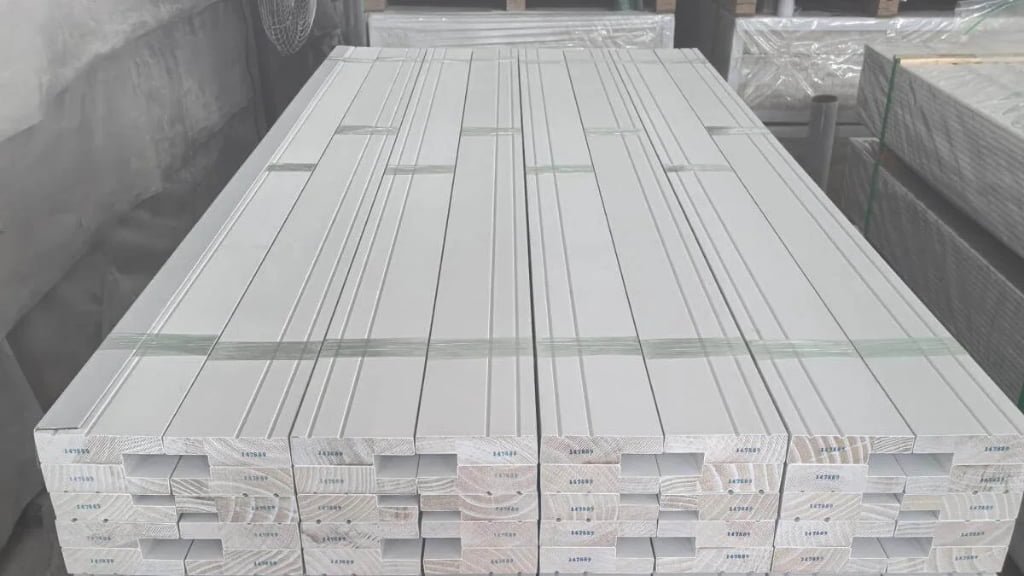
A moulding (also spelled molding in the US) can pass every visual check at our factory and still fail on your job site. The cause is often not the paint you applied, but how the primer underneath it cured months earlier in a cold workshop.
We have been manufacturing wood mouldings since 1995, and because coating is done in-house, we see how seasonal conditions on the finishing line affect the final result. This article explains what happens to a UV primer when the workshop gets cold, what we do about it, and what you should ask any supplier before a winter production run.
Why does workshop temperature matter for a UV primer?
A UV primer cures best at a workshop temperature of 20–28°C. Below 15°C, the UV initiator (the chemical that starts curing under the lamp) loses activity, and parts of the coating can under-cure even though the line runs at normal speed and the surface looks finished.
This is easy to miss because UV curing1 looks temperature-proof. Under the lamp, our UV primer cures in under 3 seconds. That speed suggests a process that is not sensitive to conditions. In our experience it is: the fast cure hides the fact that the chemistry underneath depends on temperature.
What actually goes wrong below 15°C?
The main failure is weak adhesion at the edges. In our experience, when the UV initiator is sluggish, the edge areas of the profile cure incompletely. The primer then bonds less firmly to the wood than it should.
We assess this with the ISO 2409 cross-cut test2, which cuts a lattice into the coating and checks how much of it separates from the surface. It is an empirical test rather than a direct adhesion measurement, but it is the method we use to compare primer results. On its rating scale, GT0 is the best result and higher numbers mean more coating comes away. In cold conditions, the cross-cut rating of our primer can drop from GT0 to GT2. The failure shows up later, when your customer applies a topcoat and the coating lifts or peels.
This is why we treat winter as a separate production condition rather than a small variation on summer.
| Workshop temperature | UV primer behaviour | Typical cross-cut result (ISO 2409) |
|---|---|---|
| 20–28°C | Optimal curing window | GT0–GT1 |
| Below 18°C | Our internal switch trigger (see next section) | Protected by adhesion layer |
| Below 15°C | Initiator activity falls; edges may under-cure | Can drop to GT2 |
Note: GT0–GT1 is the standard range for our primer systems. The GT2 figure reflects what we observed when cold-cure problems occurred.
What do we do differently when the workshop drops below 18°C?
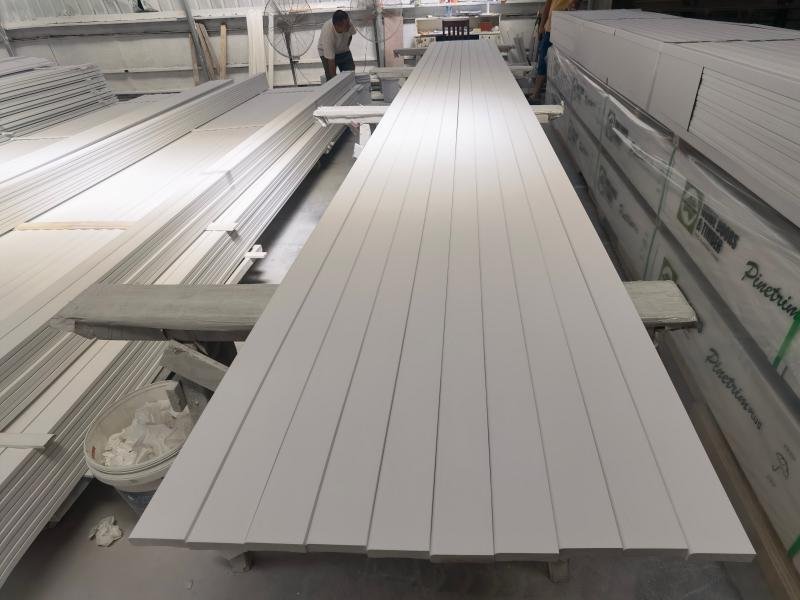
When the workshop temperature falls below 18°C, our line automatically switches to adding one coat of waterborne primer as the adhesion layer in place of the UV primer. This is our internal rule, not an industry standard requirement. We set it so that winter production does not compromise the adhesion layer.
The 18°C trigger is deliberately higher than the 15°C point where we see adhesion problems begin. That 3°C gap is a safety buffer: we would rather switch too early than discover a cure problem after the moulding has been coated.
The waterborne system has a different working range, as this comparison shows:
| Parameter | UV primer | Waterborne primer | Solvent-based primer |
|---|---|---|---|
| Dry film thickness | 80–120 µm | 50–80 µm | 60–100 µm |
| Cure time | <3 seconds (under UV lamp) | 1–2 hours (at 25°C) | 30–60 minutes |
| Cross-cut result (ISO 2409) | GT0–GT1 | GT0–GT1 | GT0–GT1 |
| Suitable substrates | Solid wood, finger-jointed, MDF | Solid wood, MDF | Solid wood, finger-jointed |
| Lower temperature limit | 18°C | 10°C | 5°C |
Two details in this table matter for winter. First, waterborne primer's lower limit of 10°C sits well below our 18°C trigger, so the switch leaves a wide margin. Second, all three systems are rated GT0–GT1 in the cross-cut test, which is why a switch between them can protect the result rather than change it.
What should a buyer ask a supplier about winter coating control?
If you are buying moulding for a project with a tight finishing specification, ask about winter coating control before the order is confirmed, not after a problem appears. Four questions are enough to tell a documented process from a general assurance:
- At what workshop temperature do you change your coating procedure? A supplier with a real rule can give you a number. Ours is 18°C.
- What do you switch to, and why? The answer should name a specific system and explain its role.
- How do you verify adhesion? Look for a named test method such as the ISO 2409 cross-cut test2, not just "we check it."
- Is batch-level inspection documented? Our quality control runs in three stages: incoming inspection (IQC), in-process inspection (IPQC) and final inspection (FQC), with batch management and full traceability.
What this approach does not solve
We want to be direct about the limits of this approach.
A waterborne adhesion layer is a way to keep quality stable, not a performance upgrade. UV primer cures in under 3 seconds; waterborne primer takes 1–2 hours at 25°C. Winter switching therefore adds a slower step to the coating sequence, which is a real trade-off in the process.
Temperature is also only one variable. Substrate moisture content, coating thickness and surface preparation can also affect coating performance. A cold workshop can cause a cure problem, but not every coating problem is a temperature problem, and we do not treat it as one when we investigate.
The takeaway for buyers
UV primer is fast and performs as rated when it is cured within its temperature window, and the risk in winter is a failure that shows up only after your customer paints over it. A supplier who can tell you the trigger temperature, the fallback system and the test method has thought about this. One who cannot has probably not had to.
Frequently asked questions
Does a UV primer cure properly in a cold workshop?
Not reliably. UV primer performs best at 20–28°C. Below 15°C, the initiator loses activity and edge areas can under-cure, which can lower the cross-cut rating from GT0 to GT2. Under our internal rule, we switch to a waterborne adhesion layer when the workshop falls below 18°C.
If UV primer cures in under 3 seconds, why does temperature matter?
Speed under the lamp does not guarantee a complete cure in cold conditions. Below 15°C, edge areas can under-cure even when the line runs at normal speed, and the weakness appears later when a topcoat is applied.
Is waterborne primer a downgrade from UV primer?
In our parameter data, both systems are rated GT0–GT1 in the cross-cut test. They differ in other ways: waterborne primer cures in 1–2 hours at 25°C against under 3 seconds for UV, has a thinner dry film (50–80 µm against 80–120 µm), and works down to 10°C rather than 18°C. We use it as a winter adhesion layer to keep quality stable, not as an upgrade.
Is the 18°C switch an industry standard?
No. It is our internal production rule. We set it 3°C above the 15°C point where we see adhesion problems begin, so that the switch happens before cure quality is at risk.
Does a cold workshop explain every coating adhesion problem?
No. Temperature is one variable among several, and other factors such as substrate moisture and surface preparation can also affect coating performance. We look at all of them when investigating a complaint.
Planning a winter production run?
If your project has a defined finishing specification and delivery window, send it to us before the order is confirmed. We will confirm how our winter coating control applies to your batch, including the trigger temperature, the fallback system and the inspection records available.
Confirm our batch finish control target for your project →
Have a general question first? See our FAQ.