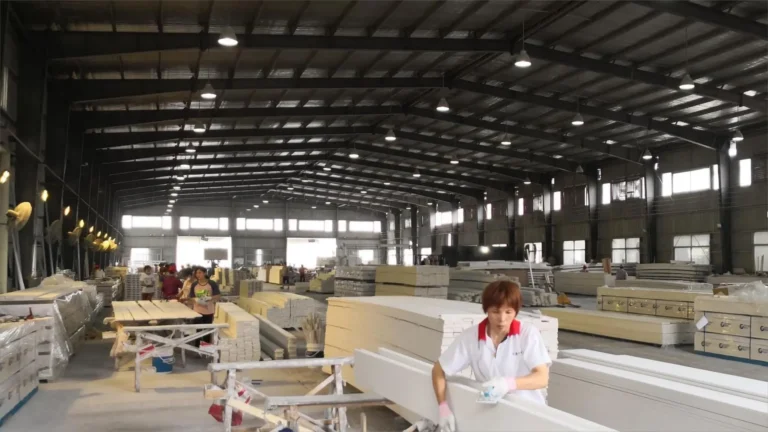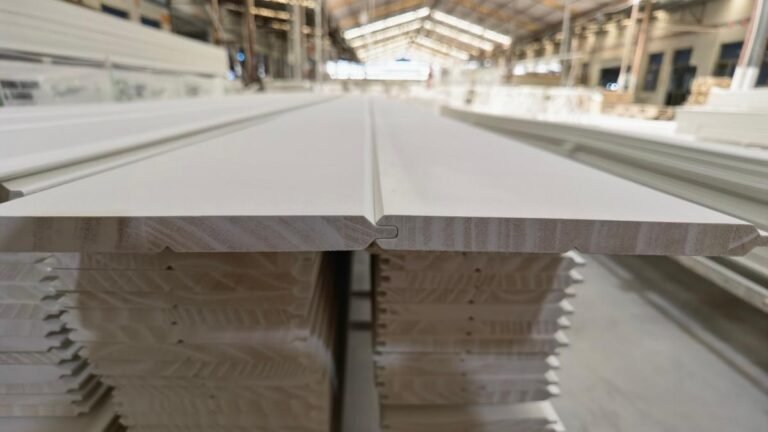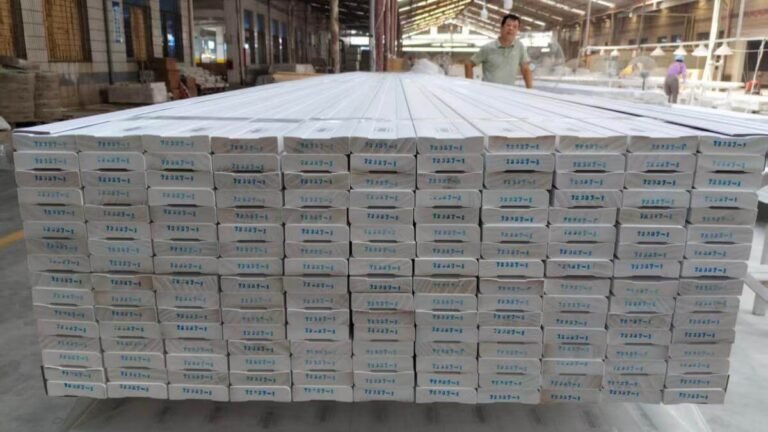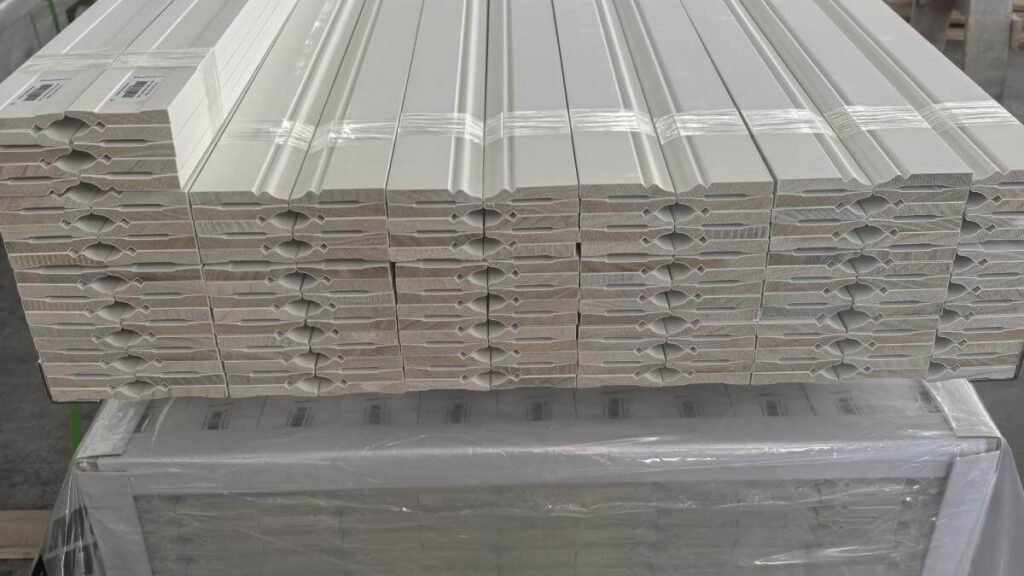
For nearly three decades, Goodwood Mouldings has been kiln-drying, finger-jointing, and CNC-profiling wood mouldings (also spelled molding in the US) from our 200,000 m² production facility in Xiamen, China. In that time, we've learned that a passing moisture content reading on a shipping document is not the same thing as a moulding that will stay flat after installation. This is one of the most common — and most misunderstood — questions we get from importers and project buyers: the paperwork said the moisture content was fine, so why did the solid wood baseboard still cup three months after it went in?
The short answer is that moisture content isn't a single number — it's a moving target that changes at different depths inside the wood, and it keeps changing after the product leaves our factory. Here's what's actually happening.
Why does moisture content "pass" at the kiln but still cause problems later?
A single moisture content reading taken at the surface of a board does not tell you what's happening in the core — and that gap is where most warping problems start. Wood moisture content moves through three distinct stages before it becomes a finished moulding, and the target changes depending on which market the product is headed to.
| Stage | Moisture Content | What's Happening |
|---|---|---|
| Incoming raw log | 40–80% (freshly felled timber can exceed 100%) | Natural moisture content before any processing |
| Air-drying | Reduced to 20–25% before entering the kiln | Gradual, uncontrolled moisture loss |
| Kiln-dried target — North America | 8–10% | Matches dry, centrally heated indoor winter conditions |
| Kiln-dried target — Europe | 10–12% | Matches relatively higher indoor humidity |
| Kiln-dried target — Australia (southern/coastal) | 10–12% | Milder, more humid coastal climate |
| Kiln-dried target — Australia (Queensland/tropical) | 12–14% | Warmer, higher-humidity regions require a higher target to avoid over-drying |
Notice that these targets aren't universal — a moisture content that's correct for a project in Brisbane would be too high for one in Minneapolis. A supplier quoting a single "our moisture content is X%" figure without asking where the product is going is already skipping a step that matters.
What is the "shell-core moisture differential" nobody tells you about?
A board can measure "passed" at the surface while its core is still 3–5% wetter — a gap we call the shell-core differential, and it's the single most overlooked cause of post-installation warping we see. Wood dries unevenly. The outer shell loses moisture faster than the core, especially in solid wood stock thicker than 40mm. A moisture meter reading taken at the surface — which is how most quick checks are done — can show a perfectly acceptable number even while the center of the board is still holding significantly more water.
This is not something you'll find explained in a textbook. It's a detail that only shows up once you've processed enough thick stock to see what happens when you skip the next step: if that board is machined and cut immediately after coming out of the kiln, without a 1–2 week equalization period, the stress release from cutting into a board with an uneven internal moisture profile can cause the finished piece to bow or crack — even though it "passed" moisture testing on paper. We build this equalization window into our own process specifically because we've seen what happens when it's skipped.
Three ways moisture content actually gets checked in production:
| Method | Characteristics | Best Used For |
|---|---|---|
| Pin-type resistance meter | Fast on-site reading, ±2% accuracy, suited to MC below 30% | In-process production checks |
| High-frequency capacitance meter | Non-destructive, reads through the surface | Already-coated or veneered products |
| Oven-dry weighing method (AS/NZS 1080.1)1 | Certification-grade accuracy, destructive test | Final confirmation on export batches |
If a supplier can only tell you which single number they use, but not which method produced it or where on the board it was taken, that's worth asking about before you place an order.
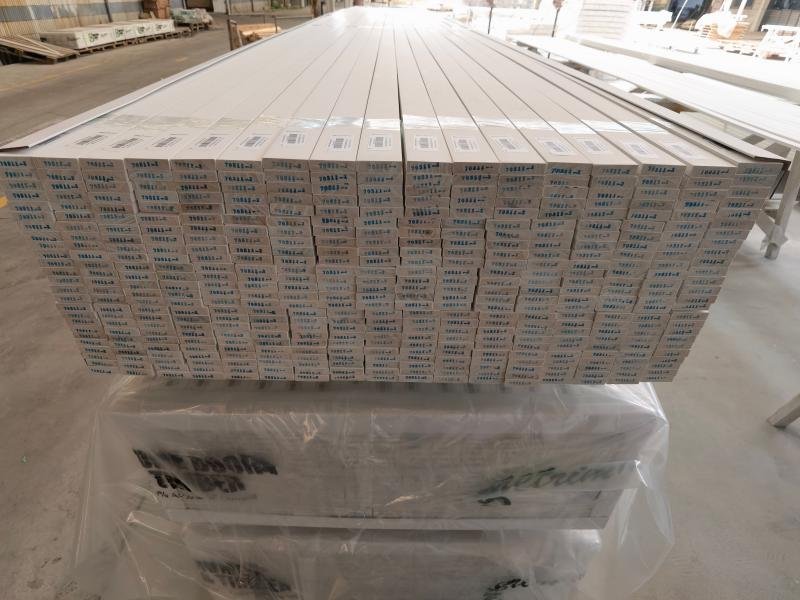
Why do North American solid wood mouldings warp specifically 60–90 days after delivery?
Almost all of the North American warping complaints we've traced back start with the same pattern: moulding shipped at a slightly elevated moisture content meets a North American winter heating season, and the wood loses moisture faster than it was designed to. North American homes with central heating routinely see indoor relative humidity2 drop well below 30% in winter. If a moulding left the factory at, say, 11–14% moisture content rather than the 8–10% target built for that climate, it will keep shedding moisture after installation — and the back face (the side not exposed to finish or air movement) dries at a different rate than the front, producing differential shrinkage. The 60–90 day window matches roughly how long it takes a heated home to reach its driest winter conditions after the heating season begins.
We've seen this play out directly. A North American distributor reported a 150mm-wide × 18mm-thick solid poplar baseboard, primed, shipped at 11% moisture content, cupping noticeably about three months after installation. Once we traced it, the cause was clear: winter indoor humidity in the installed home dropped to around 22% RH, pulling the moisture content of the board down to roughly 7%. That differential shrinkage — combined with the fact that the board had no back relief groove — produced roughly 2.5mm of cupping across the width.
This is why width matters as much as moisture content. Solid wood mouldings wider than 75mm (3 inches) without a back relief cut have a significantly higher chance of this kind of movement, because there's more surface area to shrink unevenly and nothing to relieve the internal stress as it happens.
The improvement we made from that case is now standard on our side: every solid wood moulding wider than 90mm shipped to a North American order gets one or two back relief grooves cut 3–4mm deep, and our export moisture content target for those orders was tightened to 9% (±1%). To be clear, this is our own internal specification, developed after tracing this failure mode back to its source — it is not a universal industry requirement, and not every supplier applies it. It's simply the standard we now hold ourselves to on wide-width North American orders.
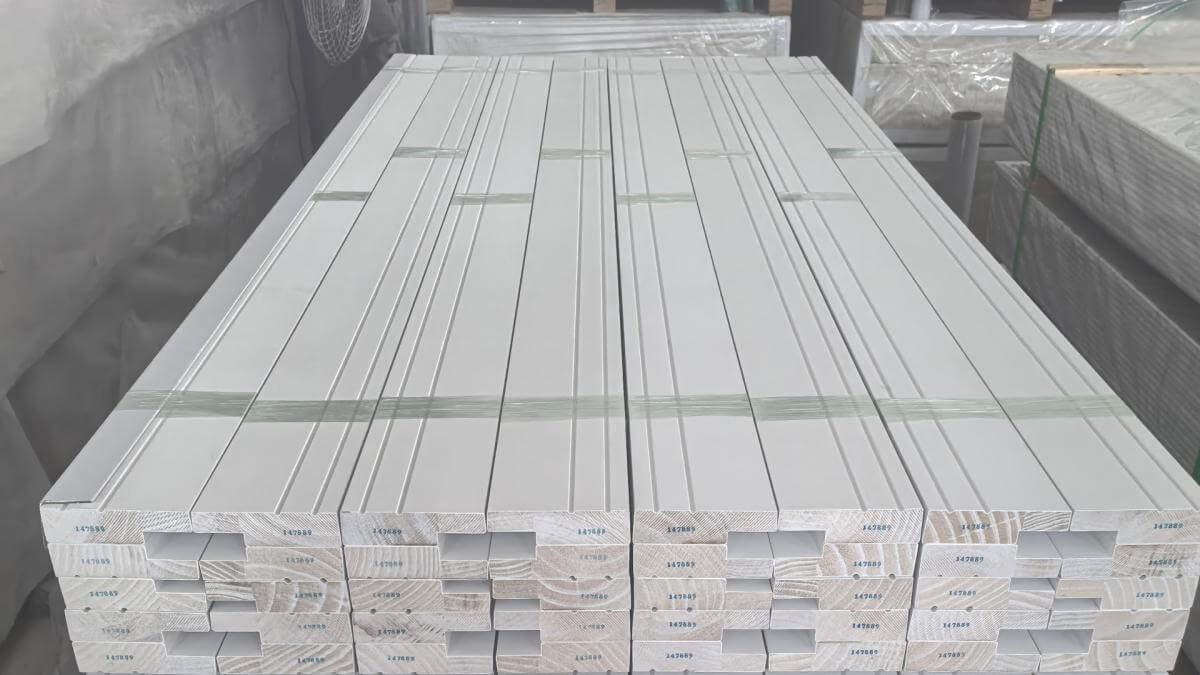
Is solid wood always the right call — and what should you ask your supplier?
Solid wood will always expand and contract with humidity changes — that's a physical property of the material, not a defect in how it was manufactured, and no amount of processing eliminates it entirely. For mouldings 90mm and wider installed into a North American winter heating environment, a dimensional change of 0.5–2.0mm is a realistic range even with correct sourcing, drying, and back relief detailing — the variables are species, starting moisture content, and site conditions at install. Solid wood also typically costs 30–80% more than an equivalent MDF profile, which matters if the project doesn't specifically need the appearance or feel of real timber.
None of this means solid wood is the wrong choice — for many stain-grade and premium applications, it's the option that gives the closest match to a real timber look and feel. But it does mean the conversation with a supplier shouldn't stop at "what's your moisture content." Worth asking instead: What moisture content target is set for my destination market? Is that number taken at the surface or verified with a destructive test on the batch? Does the profile get a back relief groove above a certain width? And is there an equalization period built into processing thick stock before it's cut to final dimension?
Those are the questions that actually predict whether a moulding will still be flat in six months — not just whether it passed a single reading on the way out the door.
Confirm our batch moisture control target for your project. If you're specifying solid wood mouldings for a North American, European, or Australian project, talk to our team about the moisture content target, back relief detailing, and testing method we'll apply to your order before production starts.
Frequently Asked Questions
Does a moisture content certificate guarantee a moulding won't warp? No. A certificate typically reflects a surface reading taken with a fast, non-destructive method. It doesn't capture the shell-core moisture differential inside thicker stock, or what happens to the wood after it reaches a different climate than the one it was dried for.
Why does warping tend to show up months after installation rather than right away? Because the wood is continuing to lose moisture to match its new environment — most commonly North American winter heating, which can take 60–90 days to reach its driest conditions after the heating season starts. The movement happens gradually as the moulding's internal moisture content catches up to the surrounding air.
Do all solid wood mouldings need a back relief groove? Not all — but mouldings 75mm (3 inches) and wider are at meaningfully higher risk of visible cupping without one, and we treat 90mm and above as the threshold for making it standard on our North American orders.
Is a higher moisture content always the cause of warping? It's the most common cause we've traced in North American winter climates specifically, but it's not the only variable — species, board width, grain orientation, and installation conditions (like whether the moulding was stored in a conditioned space before fitting) all play a role.
Is MDF or finger-jointed moulding a safer choice than solid wood for dimensional stability? Both are generally more dimensionally stable than solid wood because they don't move with humidity the same way, though each has its own trade-offs in appearance and application. If dimensional stability is the top priority for a project, it's worth discussing product type — not just moisture content — with your supplier.