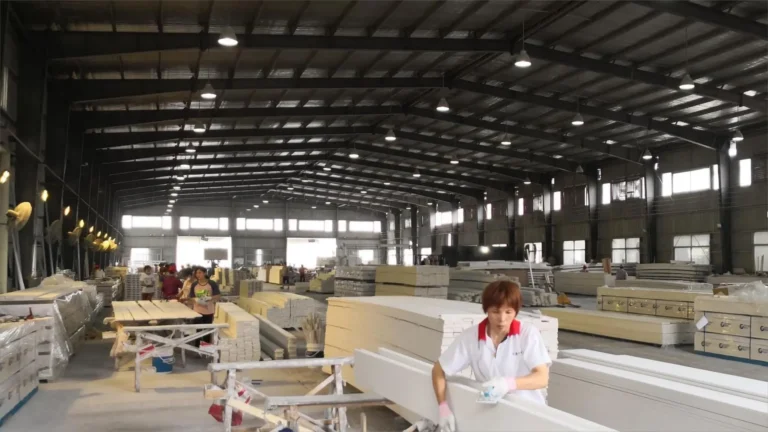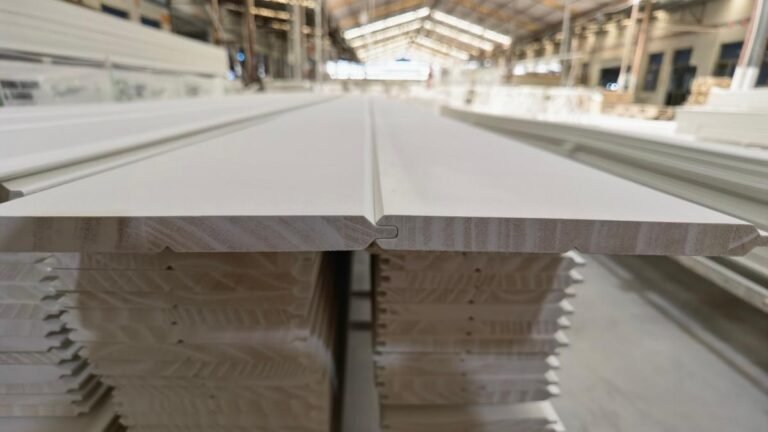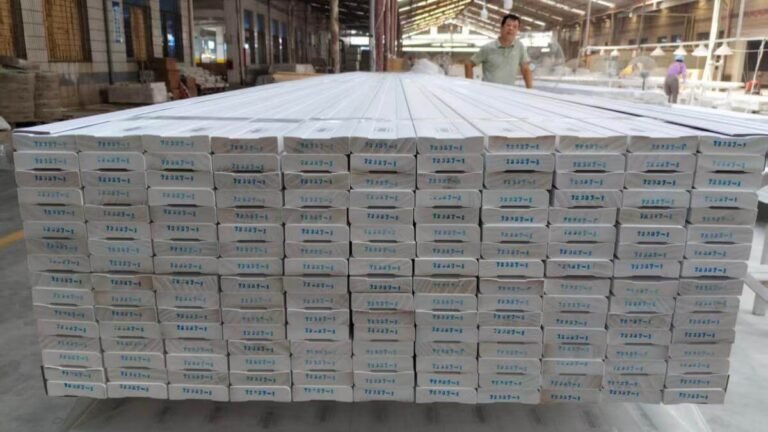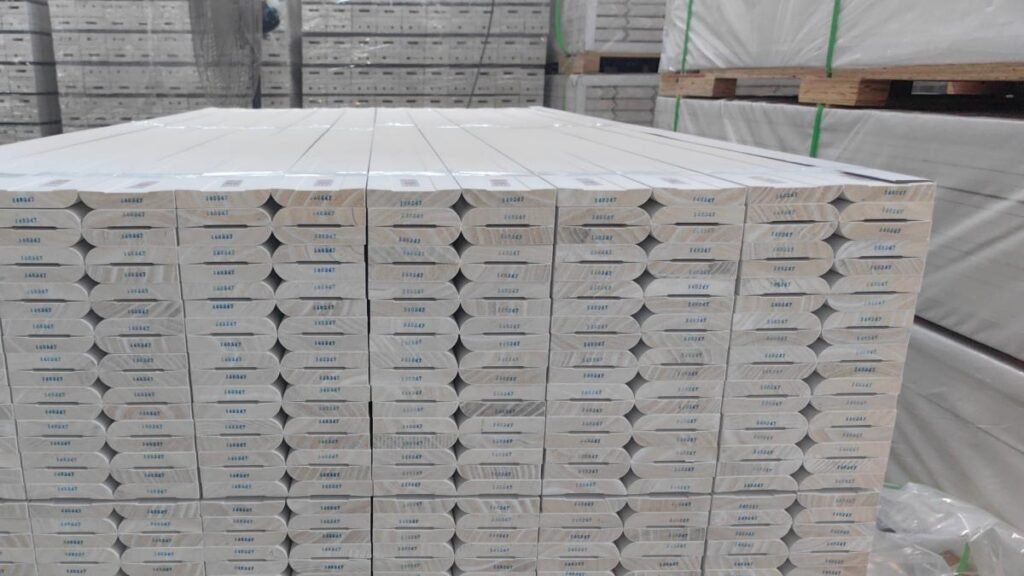
Most importers treat ISPM 15 as a customs checkbox: if the pallet carries the stamp, the paperwork is done. Goodwood Mouldings was founded in 1995 and runs a 200,000 m² production base in Xiamen, China. What we see in export packing is that the stamp answers one question, whether the wood packaging is safe to cross a border. It leaves another unanswered: whether the moulding (also spelled molding in the US) sitting on that pallet arrives dry. This article separates the two and lists what to ask before a container ships.
What does ISPM 15 actually require for wood packaging?
ISPM 15 is an international phytosanitary standard1. It requires solid wood packaging, such as pallets, crates and dunnage, to be treated and marked with an approved stamp. Its purpose is to stop pests travelling inside raw wood. It does not certify the condition of the goods placed on top of that packaging.
Two treatment routes are recognised under the standard:
- Heat treatment (HT): the wood core reaches 56°C and holds it for 30 minutes2.
- Methyl bromide fumigation (MB): a chemical treatment that is also recognised under ISPM 15. We do not recommend it, and heat treatment is the route you should expect from a supplier.
The destination markets we ship to all expect compliant wood packaging:
| Market | Wood packaging requirement | Additional note |
|---|---|---|
| North America (US/Canada) | ISPM 15 (HT or MB mark) | — |
| European Union | ISPM 15 | — |
| Australia3 | ISPM 15 | Confirm current import conditions before booking |
Rules change and enforcement varies by port, so confirm current requirements with your customs broker before booking. Treat this table as a starting point, not a substitute for that check. Market-specific details are on our United States, Canada and Australia market pages.
Does a stamped pallet mean your moulding arrives dry?
No. A stamped pallet means the pallet was treated against pests. After heat treatment, pallet moisture content can rise by 2–4%, and if product is packed onto a pallet that has not dried, that moisture can transfer through the contact surface into the bottom layer of moulding.
We learned this on the packing floor. ISPM 15 compliance is a phytosanitary standard, not a dryness guarantee.
The reason it matters comes down to how tightly moisture is managed in the product itself. Our shipping moisture content targets are 8–10% for North America and 10–12% for Europe and Australia, each with a ±1% tolerance. These are our own targets, not an ISPM 15 requirement and not a universal industry standard. A freshly treated pallet that sits 2–4 percentage points wetter than the product it carries works against a tolerance that tight. The bottom layer is where the contact is, so that is where the risk concentrates.
Here is what the stamp does and does not tell you:
| Question | Does the ISPM 15 stamp answer it? |
|---|---|
| Was the pallet treated against pests? | Yes |
| Is the treatment method an approved one? | Yes |
| What is the pallet's moisture content at packing? | No |
| Is the moulding's moisture content within target? | No |
| Is there moisture transfer between pallet and bottom layer? | No |
None of this means a stamped pallet is a problem. A pallet that has been treated and then allowed to dry properly is exactly what you want. The point is that the stamp cannot tell you which of those two situations you have.
What should you ask a supplier about wood packaging before the container ships?
Ask five questions: how the packaging was treated, how long it dried before packing, what separates it from the bottom layer of product, whether moisture records exist per SKU, and which destination rules the supplier has actually checked. A supplier who answers all five with specifics has thought about the whole chain, not only the stamp.
- Which treatment was used, and is the mark clearly applied? Heat treatment is the route to expect. If the answer is fumigation, ask why.
- How long does treated packaging dry before product is packed on it? In our experience, treated pallets need at least 48 hours to dry before packing. A supplier who cannot state an interval is probably not managing one.
- What separates the bottom layer of product from the pallet? A physical barrier between the two reduces moisture transfer. Ask what it is and whether it is standard or optional.
- Is moisture content recorded per SKU batch? In a mixed container, every SKU should carry its own batch number and moisture record. That is what allows you to inspect and trace on arrival, and it is part of what our ISO 9001 batch management requires of us.
- Has the supplier checked your destination's current rules? Import conditions for wood packaging differ by country and change over time, so a supplier should be able to tell you which version they checked and when.
These are the questions we expect buyers to put to us, and we would rather answer them before shipment than after arrival.
Does pallet treatment add lead time, and who shouldn't order on a rush?
Yes. Packaging treatment and drying time sit inside a schedule that, from production through sea freight, takes 21–30 days at the fastest. That is one reason Goodwood is not the right supplier if your need is urgent.
We would rather tell you this plainly than win an order we cannot serve well:
- If you need goods in under 21 days, a local stockholding distributor is the better choice. No amount of expediting on our side changes the production and ocean transit time.
- If your volume is under one container, we are also not the best fit. Our minimum order is a full container (20ft or 40ft), and smaller quantities are poor value for you.
For planned replenishment, where the container is booked weeks ahead, treatment and drying are scheduled in from the start. That is the profile we are built for: importers and distributors who plan ahead and care that the stamp and the moisture content both hold up on arrival.
Planning a container where both need to hold up? Plan your mixed-SKU container with us and ask us how we handle packaging treatment, drying and batch moisture records for your destination.
Frequently Asked Questions
Does an ISPM 15 stamp mean my moulding will arrive dry?
No. The stamp shows the wood packaging was treated and marked against pest risk. It says nothing about the pallet's moisture content or the moisture content of the moulding on it. Ask your supplier about drying intervals and per-batch moisture records.
Does ISPM 15 apply to the moulding itself?
ISPM 15 covers wood packaging such as pallets, crates and dunnage, not the goods inside. Importing countries can still set their own conditions for wood-based products4, so confirm requirements with your customs broker before booking.
Is methyl bromide fumigated packaging still ISPM 15 compliant?
Yes. MB remains a recognised ISPM 15 treatment2, and the mark carries its own code. We do not recommend it, and heat treatment is the route we expect for shipments.
Is the 48-hour drying interval an ISPM 15 requirement?
No. ISPM 15 sets treatment and marking requirements. The drying interval is our own practice, based on what we have seen on the packing floor. It is not an industry standard.
Can you supply a rush order or a small trial quantity?
Not well. Production plus sea freight takes 21–30 days at the fastest, and our minimum order is a full container. For urgent or sub-container needs, a local stockholding distributor is the better choice.
Read the IPPC's own description of what ISPM 15 covers and what it does not. ↩
See how heat treatment and methyl bromide programmes are administered for ISPM 15 marking. ↩
Check how Australia's biosecurity rules incorporate ISPM 15 for imported solid wood packaging. ↩
Read Australia's FAQ on which wood packaging ISPM 15 applies to. ↩