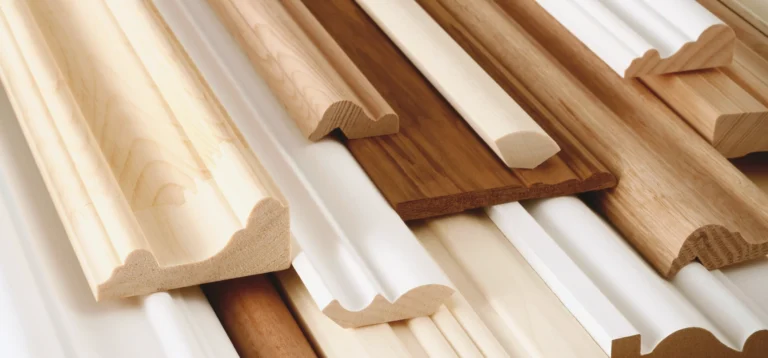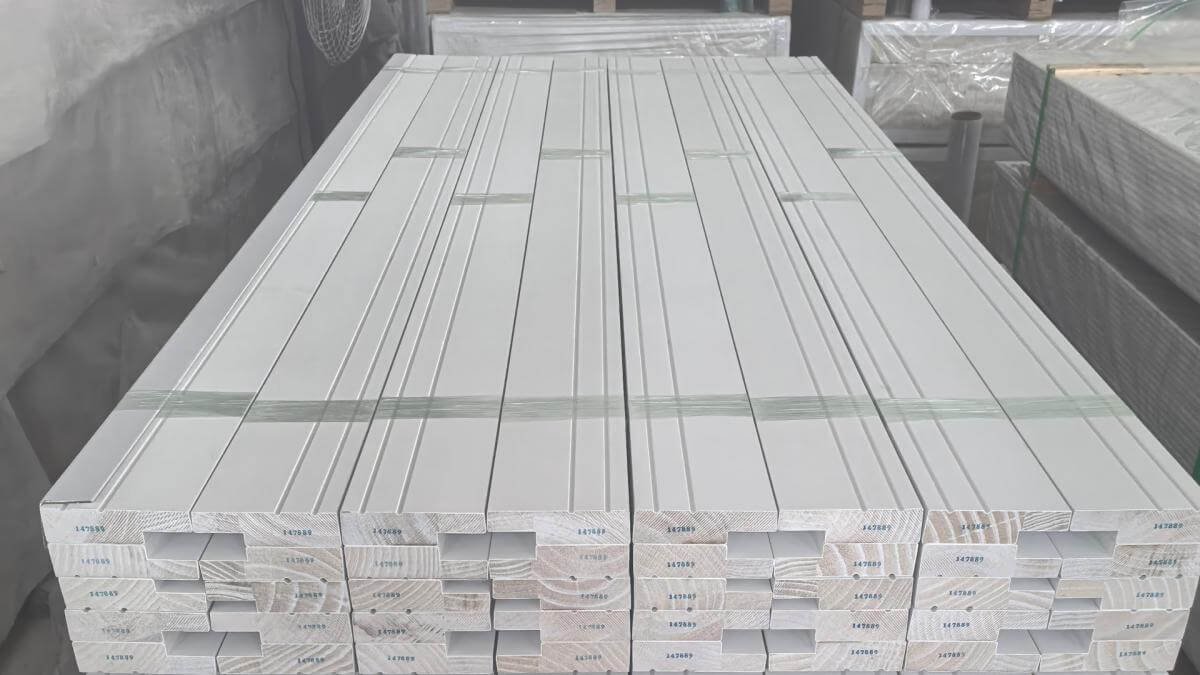
For nearly three decades, we've manufactured wood mouldings from a 200,000 m² facility in Xiamen, China — and in that time, we've seen the sourcing side of this business from every angle: as a factory fielding buyer questions, and as a supplier watching what separates a smooth partnership from a costly mismatch. If you're evaluating wood moulding suppliers for the first time, or reconsidering an existing one, the questions below are the ones that actually predict whether a relationship will work.
Search "wood moulding suppliers" and you'll mostly find product catalogs — thousands of profiles, dimensions, and price lists. That's useful once you already know who you're buying from. It doesn't help you figure out which supplier to trust in the first place. This guide is meant to fill that gap.
What Type of Supplier Do You Actually Need?
Before comparing certifications or catalogs, it helps to know what kind of supplier you're actually looking at. In this industry, three roles get blurred together constantly:
- Manufacturers run their own production — drying, jointing, veneering, coating, CNC machining — under one roof.
- Trading companies source from multiple factories and resell, often without disclosing which factory actually made your order.
- Distributors hold local inventory and resell manufacturer stock, which is fine for standard items but rarely offers customization.
For one-off small orders, a trading company or local distributor may be perfectly adequate. But if you're planning long-term supply, private-label packaging, or custom profiles, working directly with a manufacturer matters — you get direct visibility into production timelines, quality control, and the ability to adjust specifications without a middleman relaying (and sometimes distorting) your requirements. Look for suppliers who describe themselves clearly as a wood moulding manufacturer rather than a general trading company, and ask directly which entity will be listed on your commercial invoice.
Certifications That Actually Matter (and How to Verify Them)
Almost every supplier's website lists a wall of certification logos. The problem isn't whether they exist — it's whether they're current, and whether they actually apply to your target market. A few that matter most:
- CARB Phase 2 (or the equivalent federal TSCA Title VI) is a legal requirement for composite wood products sold in the US, not an optional upgrade. For MDF over 8mm thick, the formaldehyde emission limit is ≤0.11 ppm.
- FSC Chain of Custody certifies that raw material can be traced to sustainably managed forests. It matters most for EU buyers (EUTR compliance) and for US buyers pursuing LEED credit.
- E0/E1 formaldehyde standards are the baseline for European markets, with E0 generally the stricter of the two.
- ISO 9001 isn't a product certification at all — it certifies the factory's quality management system, and large European distributors typically require it during supplier audits.
The certificates themselves are easy to display and hard to verify from a website alone. Before committing to an order, ask the supplier to provide the actual TPC (third-party certifier) test report number for CARB compliance, and the FSC certificate number, which you can independently check against the certifying body's public database. A supplier confident in their compliance will provide this without hesitation.
Production Capability — What "In-House" Really Means
"Full production capability" is a phrase that shows up on almost every factory's homepage. What it actually covers varies enormously. In our experience, the gap between suppliers who outsource coating or veneer sourcing and those who keep it in-house rarely shows up in a sales conversation — it shows up in the details, usually after something has already gone wrong.
Take moisture content, which is the single most common root cause of quality complaints in this industry. A kiln can dry a batch of solid wood to the correct surface moisture reading and still ship product that isn't actually ready. Timber thicker than roughly 40mm develops what's known as a "shell-core differential" — the outer layer dries faster than the core, so a piece can read as compliant on a surface meter while the core still holds several percentage points more moisture. Skip the equalization period before cutting, and the stress releases as warping or cracking after the customer has already installed it. This isn't something you'll find described in a textbook — it's the kind of detail that only shows up in daily production.
Suppliers who handle drying, jointing, veneering, and coating under one roof can control for this kind of variable directly. Suppliers who outsource these steps are relying on someone else's process, which they usually can't fully verify either. When you're evaluating a factory, it's worth asking plainly: which of these steps happen on your own floor, and which are subcontracted?
Order Flexibility — Container Mix, MOQ, and Lead Times
For distributors and importers, the ability to mix SKUs within a single container is often more important than the price of any individual item. A container loaded with 20 to 60 different SKUs lets you match a container to your actual sales mix, rather than over-ordering a single profile to hit minimum volumes.
This flexibility comes with real handling risk, though — it's one of the more common sources of shipping damage in the industry. Mixed loads with different cross-sections need to be layered and separated rather than stacked directly; MDF and solid wood shouldn't share a pallet, since the weight difference can crush or deform the MDF; and each SKU needs its own batch number and moisture record so a problem on arrival can be traced back to its source rather than triggering a blanket rejection of the whole shipment. A supplier who mixes containers well typically has a defined packing protocol for this, not an improvised one.
A Real Example — What Happens When Quality Control Fails
It's easy for any supplier to claim strong quality control. What's harder to fake is a specific account of what happened when it didn't work, and what changed afterward.
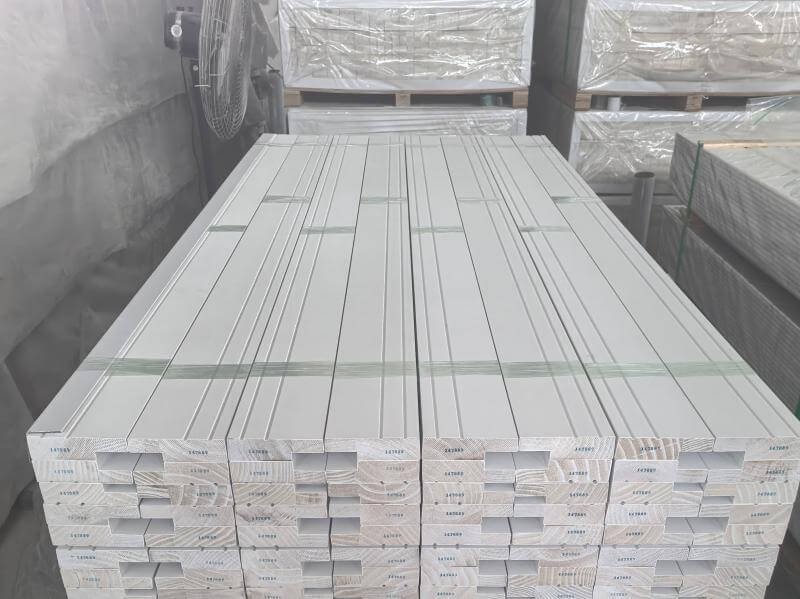
One case from our own production: an Australian importer received an order of standard-density MDF door casings, E0-grade, in 3.0-meter lengths, with the end faces left unsealed. During transit from the port to the importer's warehouse, the shipment was exposed to rain, and the exposed end grain absorbed moisture — the ends swelled by roughly 8%. The root cause was straightforward: unsealed MDF end grain is essentially a fast lane for moisture absorption, and Australia's coastal humidity makes this a near-certainty over time, not just a risk in unusual weather.
The fix we implemented wasn't a one-off patch. End sealing (two coats of water-based sealant, plus PE end caps) is now standard on every MDF order shipped to Australia, applied automatically rather than only when a customer specifically requests it. The lesson from that shipment is one we now build into every quote for that market by default, rather than treating it as an optional add-on a customer has to remember to ask for.
When a Full-Container Supplier Isn't the Right Fit
Not every buyer should be sourcing from a full-container overseas manufacturer, and a supplier who pretends otherwise isn't doing you any favors. A few scenarios where this model genuinely doesn't fit:
- Small, urgent restocks under a full container load. Minimum order quantities at the container level make this an expensive way to solve a short-term inventory gap — a local distributor with stock on hand will usually serve you better.
- Orders needed in under three weeks. Production plus ocean freight typically runs 21–30 days at minimum. If your timeline is shorter than that, look locally.
- One or two pieces of a profile for evaluation only. Production lines aren't set up to run true one-off samples efficiently; a paid sample program with a short turnaround is a more realistic path if you want to test a specific profile before committing to volume.
Being upfront about where a sourcing model doesn't fit is, frankly, a better signal of a trustworthy supplier than a homepage that claims to solve every scenario.
A Quick Checklist Before You Sign
Before finalizing a new supplier relationship, it's worth confirming:
- Current certification documents (CARB TPC report, FSC certificate number) that you can independently verify
- A clear sample approval process before bulk production begins
- Realistic lead time commitments, including production and shipping separately
- Batch numbering and moisture content records tied to each shipment
- Whether coating, veneering, and CNC work happen in-house or are subcontracted
- Container mix flexibility that matches your actual SKU spread, not just their minimums
None of these questions are unusual to ask, and a supplier who's used to fielding them will typically answer directly.
Frequently Asked Questions
Is CARB certification required for all wood moulding imports to the US? Yes — CARB Phase 2 (or the equivalent federal TSCA Title VI) applies to any composite wood product containing MDF, particleboard, or hardwood plywood sold in the US. It is a legal requirement, not an optional certification.
What's a realistic lead time for a full-container wood moulding order from China? Production plus ocean freight typically runs 21–30 days minimum, depending on destination port and whether the order uses stock profiles or requires new tooling.
Can I mix different moulding profiles in one container? Yes — most manufacturers can mix 20–60 SKUs per container, though this requires proper layering and packaging to prevent transit damage between different profile sizes and materials.
If you're evaluating suppliers for an upcoming order, we're happy to share our certification documents and sample program details — reach out anytime at info@goodwoodmouldings.com.