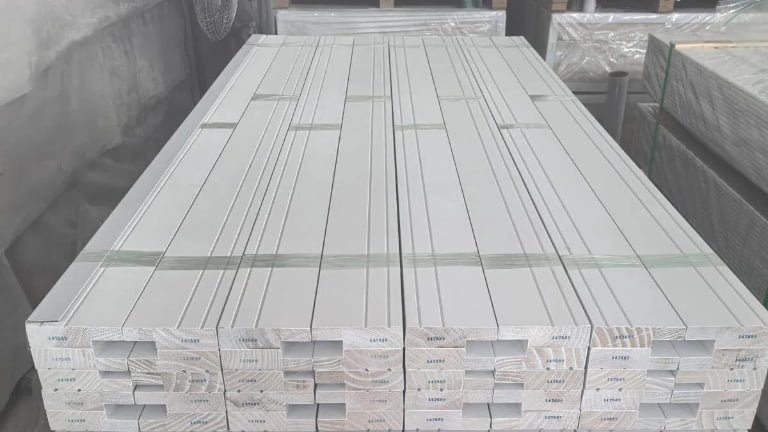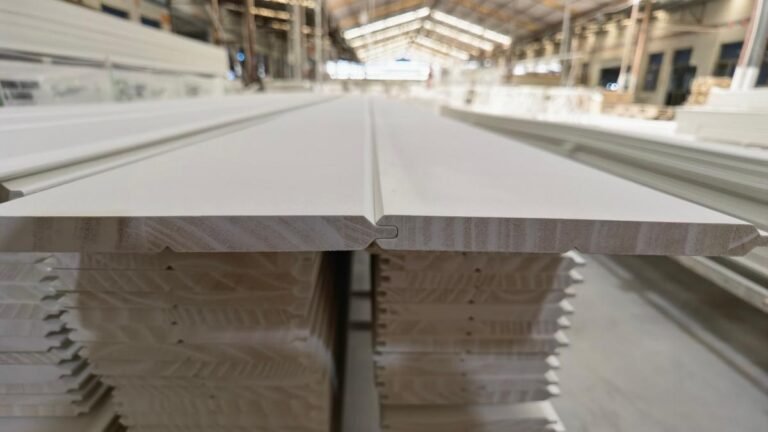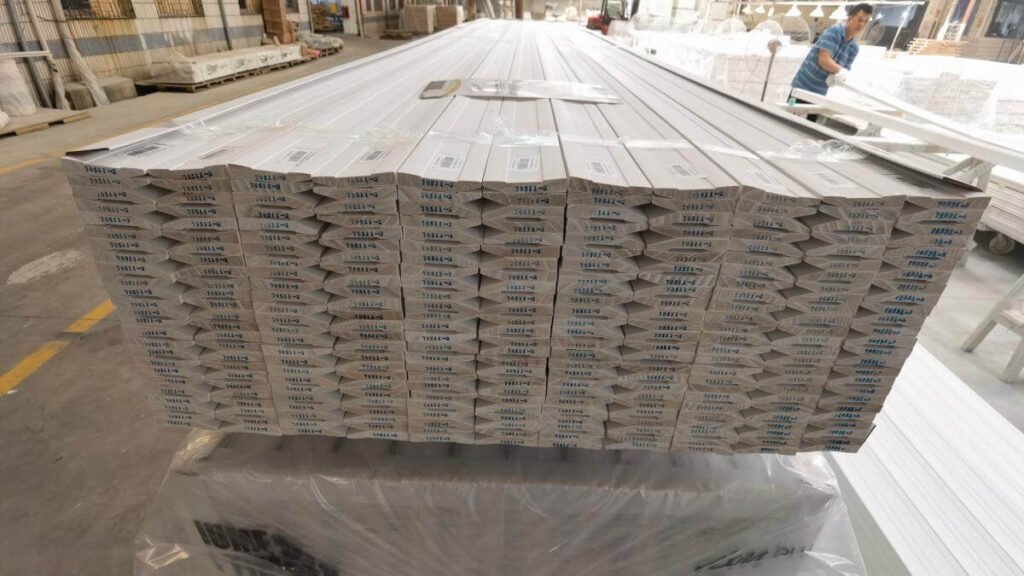
Goodwood Mouldings has been manufacturing wood mouldings and architectural profiles for nearly three decades, running a 200,000 m² production facility in Xiamen, China. Search "wood moulding suppliers" and you'll get a long list of names — but before you contact any wood moulding suppliers, it helps to understand a handful of terms that show up in almost every quote and technical spec sheet. Getting these right up front saves time on both sides of the conversation.
What Buyers Actually Mean by "Wood Moulding" — Solid, Finger-Jointed, or MDF?
"Wood moulding supplier" is a broad label. In practice, a supplier's product line usually falls into a few distinct categories, and which one you need depends on your application.
Solid wood moulding is milled from a single piece of timber — no joints, no seams. It offers the most natural grain and is generally the choice for stain-grade, visible-wood applications. It also costs more and is more sensitive to moisture-driven movement.
Finger-jointed moulding is made by joining short lengths of the same wood species end-to-end using an interlocking "finger" cut, then gluing and pressing them into a continuous length. This process significantly improves material yield and reduces the warping risk associated with long single boards, which is a large part of why it's the dominant format for North American baseboard, casing, and trim.
One thing worth being upfront about: finger-jointed moulding is not suited to stain-grade, clear-finish applications. The joint lines remain visible under a clear or semi-transparent finish no matter how precisely they're cut. This is a structural limitation, not a manufacturing defect — it holds true across any supplier's finger-jointed product, not just ours. If your project needs a fully uniform, joint-free appearance under stain, solid wood is the right call instead.
Where MDF and Veneered Mouldings Fit In
MDF moulding uses medium-density fiberboard as the base material. It machines to a very clean, uniform edge and is the standard substrate for paint-grade profiles where surface flatness matters more than natural grain.
Veneered moulding applies a thin layer of real or engineered wood veneer over an MDF or finger-jointed core, giving a wood-look surface at a lower cost than solid timber — a common choice when a project wants the appearance of real wood without the price or the movement.
"Primed White" and Other Terms You'll See in Every Quote
If you spend any time reading North American moulding specs, "Primed White" will come up constantly. It refers to a factory-applied white primer coat — typically one to two coats — that seals the surface and leaves it ready for the installer or homeowner to apply a finish paint color on site. It's the default finish for the North American market, largely because it lets one product serve any final paint color without the supplier stocking dozens of color variants.
Species also matters. Pine and Poplar are the two materials most commonly used in North American finger-jointed and primed moulding — pine for its cost-effective availability, poplar for its fine, tight grain that takes paint evenly.
Length specs follow imperial standards in this market: 8ft (2438mm), 12ft (3658mm), and 16ft (4877mm) are the standard order lengths most North American buyers request.
What "CARB Compliant" Actually Means
"CARB compliant" gets used loosely in marketing copy, but it refers to something specific and legally defined.
CARB stands for the California Air Resources Board, and CARB Phase 2 sets formaldehyde emission limits for composite wood products sold in the US — not just California. Under Phase 2, MDF thicker than 8mm must emit no more than 0.11 ppm formaldehyde, tested to ASTM E1333 (California Code of Regulations, Title 17). This applies to any product containing MDF, particleboard, or hardwood plywood components — which covers most primed and veneered moulding.
CARB vs TSCA Title VI — Are They the Same Thing?
Largely, yes. TSCA Title VI is the federal-level equivalent, administered by the EPA and enforced nationwide since 2019. It was written to align with CARB Phase 2, so a product compliant with one is generally compliant with the other. In practice, most suppliers reference both together because a shipment needs to satisfy federal requirements regardless of destination state.
Being "CARB compliant" as a supplier means having current Phase 2 certification from a CARB-recognized third-party certifier (TPC), with lot traceability back to that certification. It's worth asking any supplier for their TPC certificate number directly rather than taking the claim at face value — Goodwood, for example, holds CARB and EPA/TSCA Title VI compliance alongside FSC, CE, ISO 9001, and E0/E1 certification, and provides compliance documentation with every shipment.
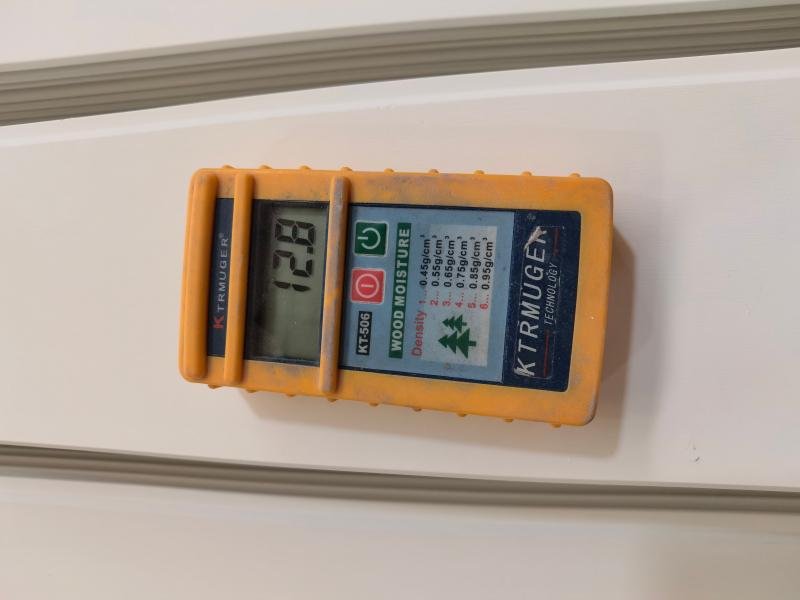
Moisture Content — The Spec Most Buyers Overlook
This is one of the most consequential numbers in a moulding spec sheet, and one of the least discussed upfront.
Wood moves with humidity. Ship moulding at the wrong moisture content for the destination climate, and you'll see cupping, gaps, or splitting months after installation — often long after the container has been unloaded and forgotten. In our production, moisture content is the single most common root cause behind the deformation complaints we investigate; a shipment can pass every dimensional and visual check at the factory and still develop problems on site months later if the moisture content wasn't right for the destination climate.
For orders headed to North America specifically — where winter heating drives indoor humidity down significantly — we set our own outgoing target of 8–10% (±1%) on solid and finger-jointed products. To be clear, that's our internal production standard, not a mandated industry figure; other suppliers may run higher or lower ranges. It's calibrated to the drier indoor environment created by winter heating systems rather than a generic global average, and it's a number worth asking any supplier for directly rather than assuming it's been controlled for.
Where This Fits in Your Sourcing Process
Understanding these terms puts you in a much stronger position when you start comparing suppliers — you'll be able to read a spec sheet and know what you're actually looking at, rather than relying on a sales pitch.
One thing to factor in early: container-based suppliers, Goodwood included, are set up around full-container-load (FCL) production and shipping. That model works well if you're sourcing on an ongoing basis or building out a SKU range, but it isn't a fit for small, urgent top-up orders under a full container — for that, a local distributor with stock on hand will generally serve you faster.
Once you've got the terminology down, the next step is usually evaluating the suppliers themselves — production capacity, certification currency, and how they handle custom profile development. That's a separate conversation, but it's the natural next question once you know what to ask.
Frequently Asked Questions
Is CARB compliance mandatory for all wood moulding sold in the US? It's mandatory for any product containing composite wood components — MDF, particleboard, or hardwood plywood — regardless of which state it's sold in. Solid, unfinished lumber with no composite content falls outside CARB's scope, but most primed, veneered, or MDF-based moulding is covered.
What's the difference between Primed White and unfinished moulding? Primed White has a factory-applied white primer coat ready for the installer to paint over on site. Unfinished (or "bare") moulding has no coating at all and needs both primer and finish paint applied after purchase.
Can finger-jointed moulding be stained instead of painted? Not for a fully uniform, joint-free look. The finger joints remain visible under stain or clear finish regardless of how precisely they're cut, so finger-jointed products are built for paint-grade applications. Solid wood is the better fit if staining is the plan.
Ready to move forward? Send us your project drawing for a feasibility check, and we'll walk you through material options, compliance documentation, and lead times specific to your order.