Most timber moulding supplier websites tell you what they make. Few tell you what to ask before you commit an order to them. We've been manufacturing wood mouldings and architectural profiles for nearly three decades — since 1995 — from a 200,000m² production base in Xiamen, China, and in that time we've seen most of the questions that separate a smooth first order from a difficult one. This guide sets those questions out directly, so you can use them in your own supplier vetting process, whoever you end up sourcing from.
In short: before placing an order with a timber moulding supplier, ask about their certifications (and whether they can produce the actual documents), their tracked on-time delivery rate, how they control moisture content batch to batch, whether they handle custom or discontinued profile matching, what their quality control process actually involves, how they pack mixed-container orders, and — just as importantly — what kind of order they're honest about not being the right fit for.
Why Vetting Matters More Than the Catalogue
A product catalogue tells you what a factory can produce. It doesn't tell you how consistently they produce it, how they handle a problem when one comes up, or whether their compliance paperwork will actually get your container through customs without delay. For UK buyers moving from "who makes this" to "who do we actually order from," the vetting stage is where the real risk gets filtered out — or missed.
The seven questions below are organised around the criteria that experienced distributors and door & window manufacturers typically use to score a new supplier.
Can You Show Me Your Current Certifications — Not Just List Them?
Any supplier can put a row of certification logos on a webpage. What matters is whether they can produce the actual documents and explain what the numbers mean.
CARB Phase 2, for instance, isn't a single pass/fail label — it sets specific formaldehyde emission thresholds that vary by product type, under California Code of Regulations, Title 17, Section 93120. MDF over 8mm thick, for example, is capped at 0.11 ppm under the regulation. A supplier who can talk you through that kind of detail, rather than just confirming "yes, we're CARB certified," is one who actually understands the compliance framework their product sits inside.
Goodwood holds six certifications relevant to the markets we serve: FSC, CARB, EPA, CE, ISO 9001, and E0/E1. Together these cover the core compliance requirements across North America, Europe, and international sustainability standards — the kind of coverage worth asking any prospective supplier whether they can match.
What's Your On-Time Delivery Rate, and How Do You Track It?
On-time delivery (OTD) is one of the most commonly used scoring criteria among distributors and importers evaluating timber moulding suppliers, with 95% or higher generally treated as the benchmark for a dependable supply partner. That's an industry-wide reference point, not a claim specific to any one factory — but it's a fair number to hold any supplier against.
Ask how they actually track OTD, not just what number they quote you. A supplier with a real tracking system will usually be able to describe it in a sentence or two. One without will change the subject.
How Do You Control Moisture Content Across Batches?
This is the question that catches out suppliers who look fine on paper. Moisture content is, in our experience, the single most common root cause of moulding complaints — and it's not always obvious at the point of shipping.
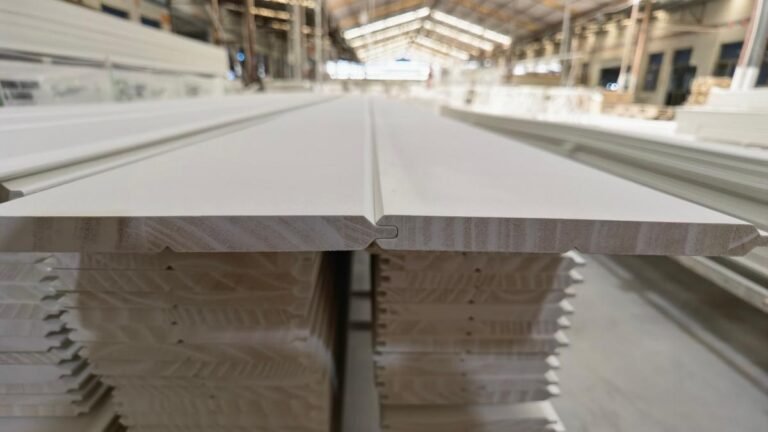
Timber has what's sometimes called a "shell-core differential": the outer layer of a piece of lumber can dry faster than the core. A piece of solid timber can test within spec on the surface at kiln-out, while the core still holds several percentage points more moisture. If that timber is machined and shipped without a settling period, the internal stress can release later as cupping or cracking — often weeks after installation, which is exactly when it becomes a customer complaint rather than a factory-floor catch.
We've dealt with this directly. In one case, a wide solid wood baseboard shipped at 11% moisture content began cupping around three months after installation, once North American winter heating dropped indoor humidity and the wood lost moisture unevenly. Following that case, we changed two things as our own internal standard — not an industry-wide requirement, but a rule we now apply ourselves: back-relief grooves became mandatory on any solid profile 90mm or wider destined for North America, and our target shipping moisture content for that market moved down to 9% (±1%). Both changes are now built into standard production for those orders, not a one-off fix. A supplier who can describe a specific process failure like this — and point to what it changed permanently in how they work — is more credible than one who simply says "our moisture control is excellent."
Can You Handle Custom Profiles or Discontinued Moulding Reproduction?
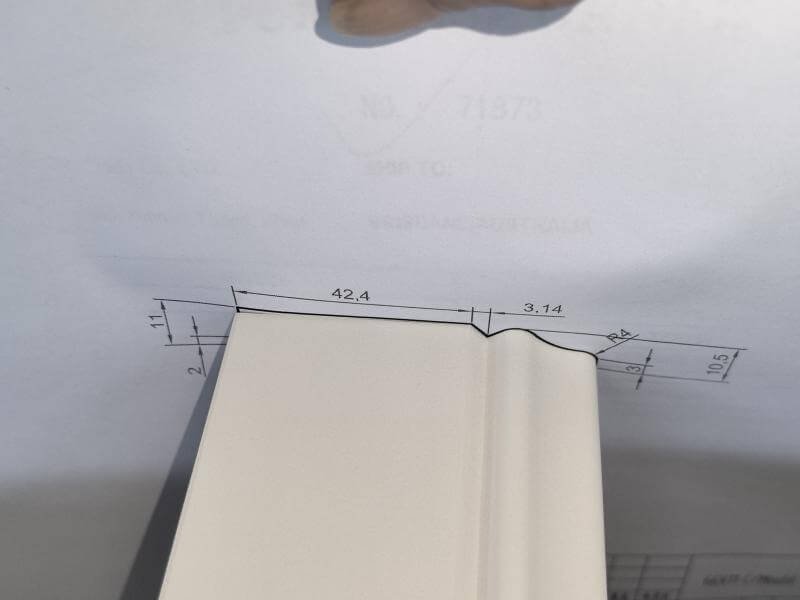
If you ever need to match an existing profile — because your original supplier closed, a tool was lost, or a product line was discontinued — this becomes a real test of capability. Not every factory treats it as a service worth offering.
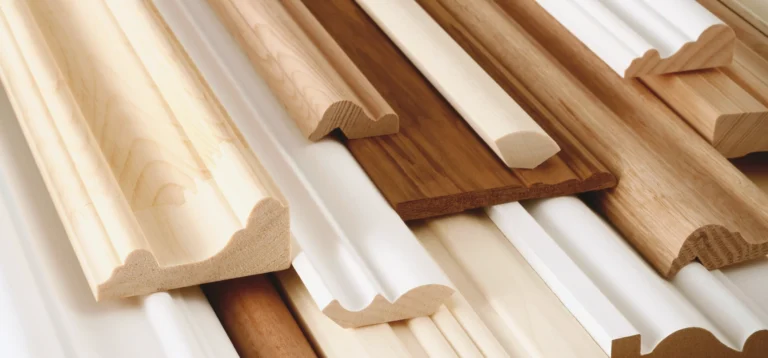
Goodwood has reproduced 300+ discontinued moulding profiles, typically turning around a sample in 3–7 working days. This is a deliberately underserved niche: many manufacturers simply aren't set up to prioritise small-batch profile matching, even though it's a real and recurring need for buyers dealing with historic renovation or replacement trim projects.
Ask a prospective supplier directly whether this is something they do routinely, or something they'd have to figure out.
What Does Your Quality Control Process Actually Look Like?
"We have quality control" is not an answer. A defined process is. Look for suppliers who can describe distinct checkpoints — incoming material inspection, in-process checks during production, and final inspection before packing — rather than a single inspection at the end of the line.
Goodwood runs this as a three-stage system: IQC (incoming quality control) on raw materials, IPQC (in-process quality control) during manufacturing, and FQC (final quality control) before goods are packed, backed by batch tracking for traceability. This structure is a standard requirement under ISO 9001, so any ISO-certified supplier should be able to describe something similar — if they can't, that's worth noting.
How Do You Package for Mixed-Container Orders?
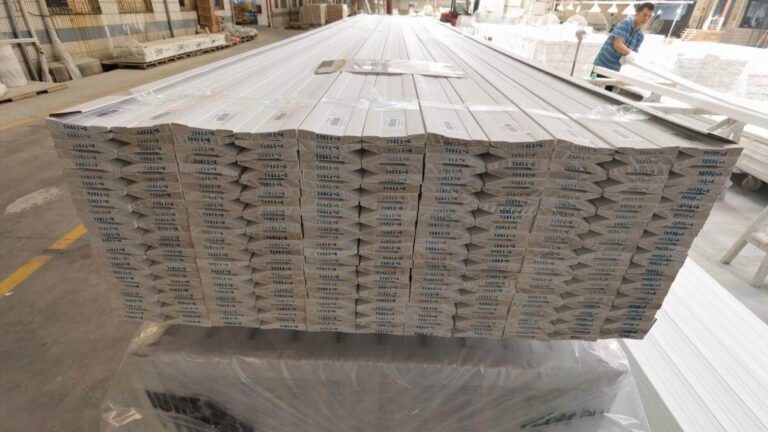
If you're not ordering a full container of a single SKU, this question matters more than it looks. Mixed loading is genuinely one of the higher-risk parts of the whole supply process: different profile sizes stacked together can crush narrow or delicate mouldings, and mixing MDF with solid wood on the same pallet risks pressure damage to the MDF from the weight difference.
Goodwood supports 20–60 SKUs per container, which only works reliably with proper layering and separation by profile type — not just stacking everything into the available space. It's worth asking any supplier how they physically separate different products within a mixed load, rather than assuming "we do mixed containers" means the same thing everywhere.
What Are You Not the Right Fit For?
This is the question most suppliers won't answer honestly — which is exactly why it's worth asking.
Every manufacturer has scenarios where they're not the best option, and a supplier willing to say so upfront is telling you something useful about how they'll handle problems later. For Goodwood, that includes situations like: urgent orders needing delivery in under 21 days (production plus sea freight typically needs 21–30 days), small emergency top-ups under a full container load, and small one-off sample runs outside a formal sampling programme. In these cases, a local distributor with stock on hand is usually the better call than a full-container overseas order.
If a supplier tells you they're a perfect fit for absolutely everything you ask about, that's worth treating as a flag rather than reassurance.
Final Checklist Summary
| # | Question | Why It Matters |
|---|---|---|
| 1 | Can they show certifications, not just list them? | Confirms real compliance, not marketing copy |
| 2 | What's their tracked OTD rate? | Signals delivery reliability against industry benchmark (95%+) |
| 3 | How is moisture content controlled across batches? | Root cause of most moulding complaints |
| 4 | Can they do custom or discontinued profile matching? | Tests real production flexibility |
| 5 | What does their QC process actually involve? | Separates a real system from a claim |
| 6 | How do they pack mixed-container orders? | Determines whether your goods arrive undamaged |
| 7 | What are they honest about not fitting? | A sign of a trustworthy long-term partner |
Frequently Asked Questions
What certifications should a timber moulding supplier have for the UK market? For UK and European buyers, the key certifications to check for are FSC (sustainable material sourcing), CE marking (for applicable building products), and E0/E1 formaldehyde emission standards. ISO 9001 is also worth confirming, as it's commonly required by larger European distributors during supplier audits.
How long does it usually take to get a timber moulding sample? This varies by supplier and by whether the profile is a standard stock design or a custom match. For discontinued profile reproduction specifically, a 3–7 working day turnaround for a first sample is a reasonable benchmark to ask for.
What's a normal on-time delivery rate for a timber moulding factory? 95% or higher is generally treated as the benchmark among distributors and importers when evaluating supplier reliability. Ask how the figure is tracked, not just what number is quoted.
Ready to Put These Questions to the Test?
If you're evaluating suppliers for an upcoming order, we're happy to walk through our own capabilities against this checklist directly.
Schedule a factory capability discussion with our team to go through certifications, production process, and container planning for your specific order.