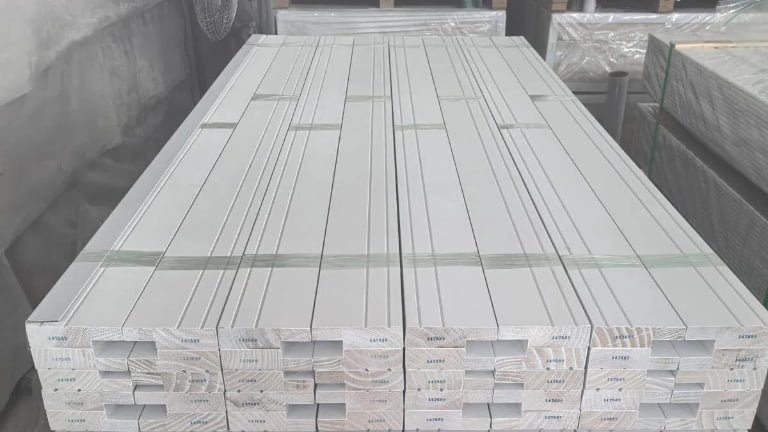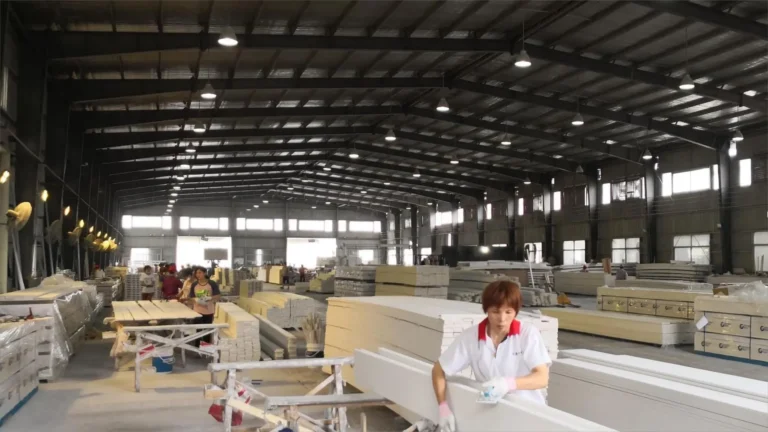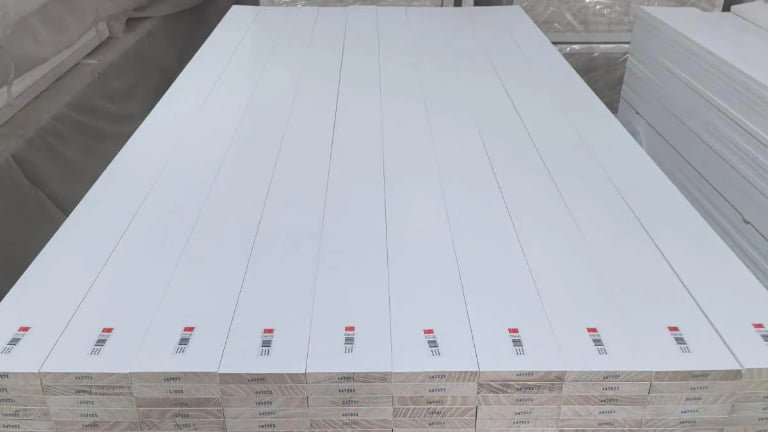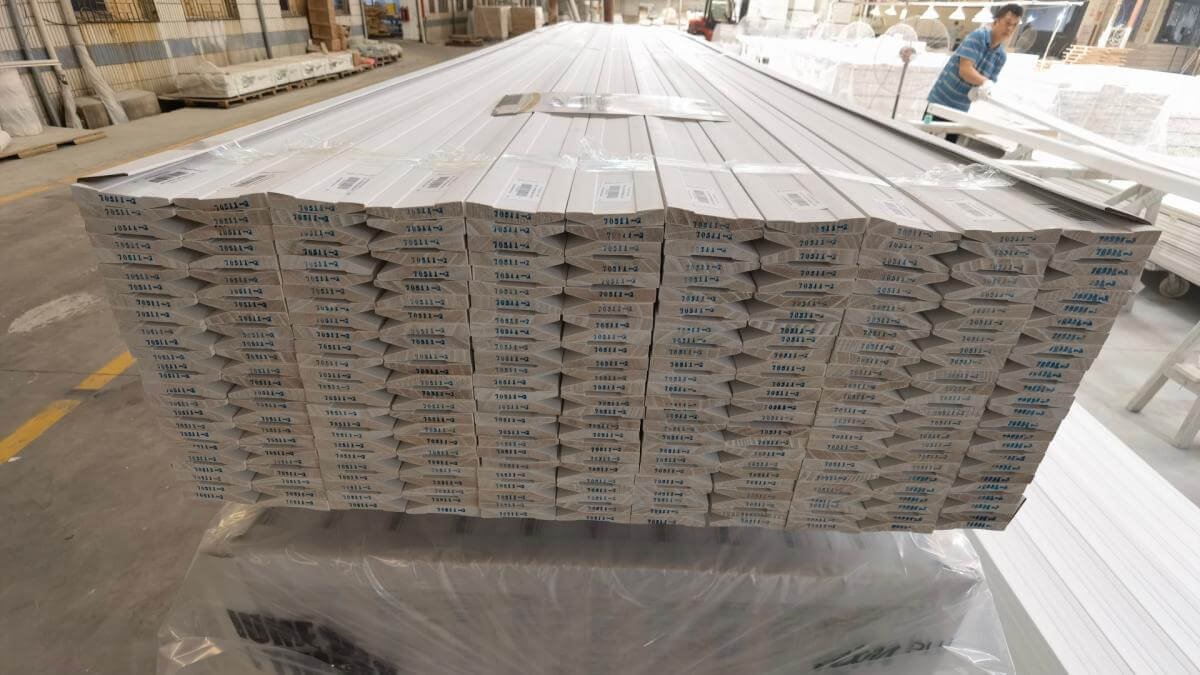
Goodwood Mouldings, operated by Xiamen Goodwood Industry Co., Ltd., has manufactured wood mouldings and architectural profiles from a 200,000 m² facility in Xiamen, China since 1995. Over nearly three decades of exporting to North America, Europe, and Australia, one pattern shows up again and again: buyers lose time — and sometimes money — when they send an RFQ before they've settled on the right category of moulding for their project.
If you're sourcing wood mouldings for the Canadian market for the first time, this guide walks through the four core material categories, plus the engineered components built from them, so you can walk into your first supplier conversation asking the right questions instead of guessing.
A Quick Note on Terminology
Canadian buyers will see both "moulding" and "molding" used interchangeably by suppliers — the British/Canadian spelling ("moulding") and the American spelling ("molding") refer to the same product. You'll also see "trim" used as a catch-all term for any decorative profile, and "profile" used more narrowly to describe the cross-sectional shape itself. None of this is standardized across suppliers, so when you're comparing quotes, confirm the actual product description (species, dimensions, finish) rather than relying on the category name alone.
Solid Wood Mouldings
Solid wood mouldings are milled from a single, continuous piece of lumber — no joints, no substrate, no veneer. They're the category most associated with a premium, traditional look, and they're the natural choice when a project calls for a stain-grade or clear-coat finish that shows the wood's natural grain.
That said, solid wood is also the category with the fewest ways to hide its physical limitations. Wood is hygroscopic — it expands and contracts as ambient humidity changes — and this is a physical property of the material, not a manufacturing defect. Wider profiles are more exposed to this movement, and color can vary naturally from one production batch to the next since it's a natural material rather than a manufactured, uniform one. If your project requires strict color consistency across a large run (for example, a hospitality project with a defined color target), a painted or veneered category is usually a more predictable choice than clear-finished solid wood.
Solid wood also typically costs more than MDF or finger-jointed alternatives for an equivalent profile, so it tends to make the most sense where the natural grain itself is part of the specification — not simply as a default "premium" choice.
For Canadian projects, two species come up most often on our production floor: Radiata Pine, valued for its fast growth, consistent grain, and reliable machinability; and Poplar, prized for its fine, even texture and strong paint adhesion when a project calls for a painted rather than stained finish. Both are well suited to the North American climate profile, provided the moisture content is controlled for winter heating conditions before the product ships — a detail worth raising directly with your supplier rather than assuming it's handled by default.
Finger-Jointed Mouldings
Finger-jointed moulding is made by joining short lengths of the same wood species end-to-end using an interlocking "finger" cut, then milling the resulting length into the finished profile. This process makes far more efficient use of raw lumber than solid wood milling, which generally makes finger-jointed product more cost-stable and less prone to warping than a comparable solid wood piece of the same length.
The trade-off is structural to the product, not a matter of supplier skill: the joints remain visible under a clear or semi-transparent finish, no matter how precisely they're cut and sanded. Finger-jointed moulding is built for paint-grade or primed applications — where the surface will be fully coated — not for projects where the wood grain needs to show through. If your project is going to be finished in a solid paint color, this is rarely a limiting factor. If it's going to be stained or clear-coated, solid wood is the better fit.
Radiata Pine and Poplar are also the two species most commonly finger-jointed for North American orders — both take glue well and hold up to the joining process cleanly, which is part of why they're the default starting point when a Canadian buyer asks for a primed, paint-grade product. Species like cedar and redwood, by contrast, aren't good candidates for finger-jointing at all: natural tannins in those woods interfere with glue cure, so they're typically kept to solid-piece applications instead.
MDF Mouldings
MDF (medium-density fiberboard) mouldings use an engineered wood panel as the base material instead of solid lumber. The main advantage is a perfectly flat, uniform surface — MDF has no grain, knots, or natural color variation, which makes it well suited to painted finishes and to projects where color consistency across a large order matters.
The category has one non-negotiable limitation: MDF mouldings are built for interior, dry environments only. Even moisture-resistant (MR) grade MDF will suffer permanent internal damage if it's exposed to sustained high humidity or direct water contact, so this category should not be specified for exterior applications or for rooms with persistent moisture exposure. MDF is also denser and heavier than solid wood of the same dimensions, which is worth factoring into installation planning for larger profiles, and its edges are more prone to chipping during transport and installation than solid wood edges are.
Veneered Mouldings
Veneered mouldings apply a thin layer of natural or engineered wood veneer over an MDF or finger-jointed substrate. The result approximates the look of solid wood — grain, tone, and texture — at a lower material cost, which makes it a common middle-ground choice for projects that want a natural aesthetic without the full cost or movement characteristics of solid lumber.
The category's main limitation sits at the substrate level: because the veneer is thin, natural veneer batches can vary slightly from one production run to the next, the same way solid wood does — so large single-space projects benefit from confirming enough same-batch stock is reserved at order time. It's also not well suited to heavy field modification; if a buyer cuts a veneered piece on-site, the exposed edge reveals the unveneered substrate underneath, which needs to be sealed the same way a raw MDF edge would.
Door Frames, Casings, and CNC-Routed Profiles
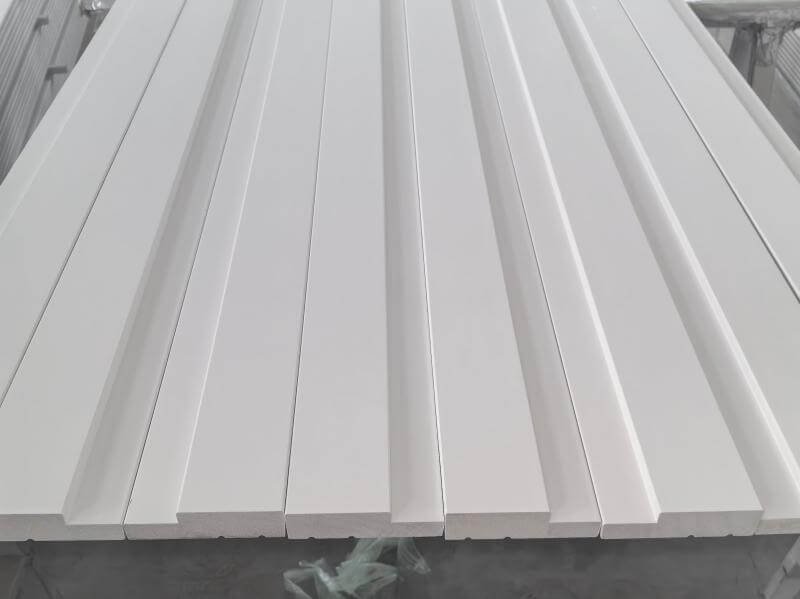
Beyond the four base material categories, many Canadian buyers — particularly door and window manufacturers — are sourcing engineered components rather than standalone trim: door casings, door and window frame components, and CNC-routed custom profiles built to a customer's own cross-section drawing. These are typically built from one of the four base categories above (most often finger-jointed or MDF substrate), machined to tighter dimensional tolerances, and supplied as semi-finished structural components rather than purely decorative trim. If your project involves matching an existing profile — including a discontinued one — this is generally the category where that conversation starts.
Matching Category to Your Project
Before requesting a quote, it's worth working backward from the finish and the environment, rather than starting from the category name:
- Finish is clear or stained, budget allows: solid wood.
- Finish will be fully painted, cost efficiency matters: finger-jointed or MDF.
- Project needs strict color/batch consistency: MDF or veneered with confirmed same-batch stock.
- Application is anywhere with sustained moisture exposure: none of these four categories — this points to a different material system entirely (such as PVC or WPC profiles), not a wood moulding.
- You're matching an existing installed profile: custom CNC-routed development, built to your drawing or a physical sample.
What to Have Ready Before You Send an RFQ
A quote comes together faster — and is more comparable across suppliers — when you can provide:
- A cross-section drawing or physical sample, if you're matching an existing profile.
- The intended finish (stain-grade, paint-grade, primed, unfinished).
- The installation environment (interior/exterior, humidity conditions).
- Target length and quantity per SKU, since container-load minimums shape pricing more than per-piece cost alone.
Frequently Asked Questions
Is "wood moulding" the same as "wood trim" in Canada? Yes, in practice they're used interchangeably. "Moulding" and "trim" both refer to decorative profile products; "profile" more specifically describes the cross-sectional shape.
Can MDF moulding be used in a bathroom or other high-moisture room? Even moisture-resistant MDF is designed for interior, generally dry conditions, not for direct or sustained water exposure — it isn't recommended for rooms with persistent high humidity.
Is finger-jointed moulding weaker than solid wood? For decorative, paint-grade applications, no — the finger joint doesn't compromise the piece for its intended use. The real limitation is cosmetic: the joints will show through a clear or stained finish, which is why finger-jointed moulding is built for painted applications rather than stain-grade ones.
Ready to move from category to quote? Send us your project drawing — or a photo of the profile you're trying to match — for a feasibility check.