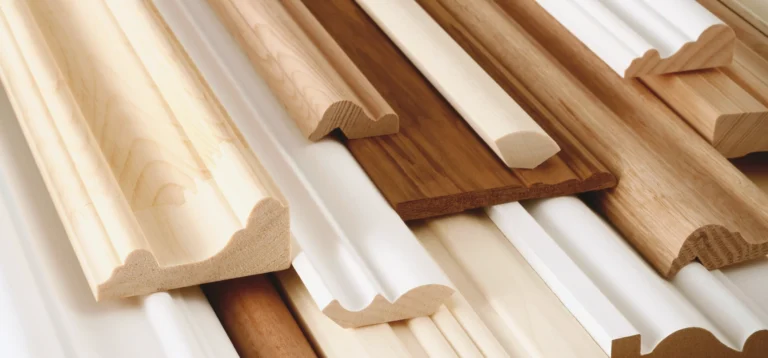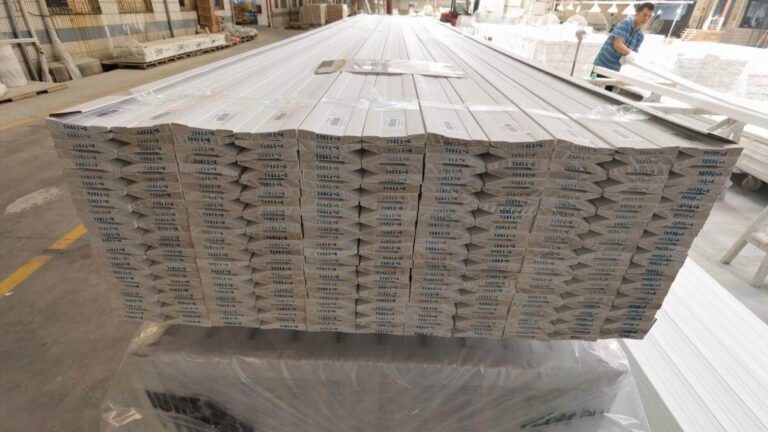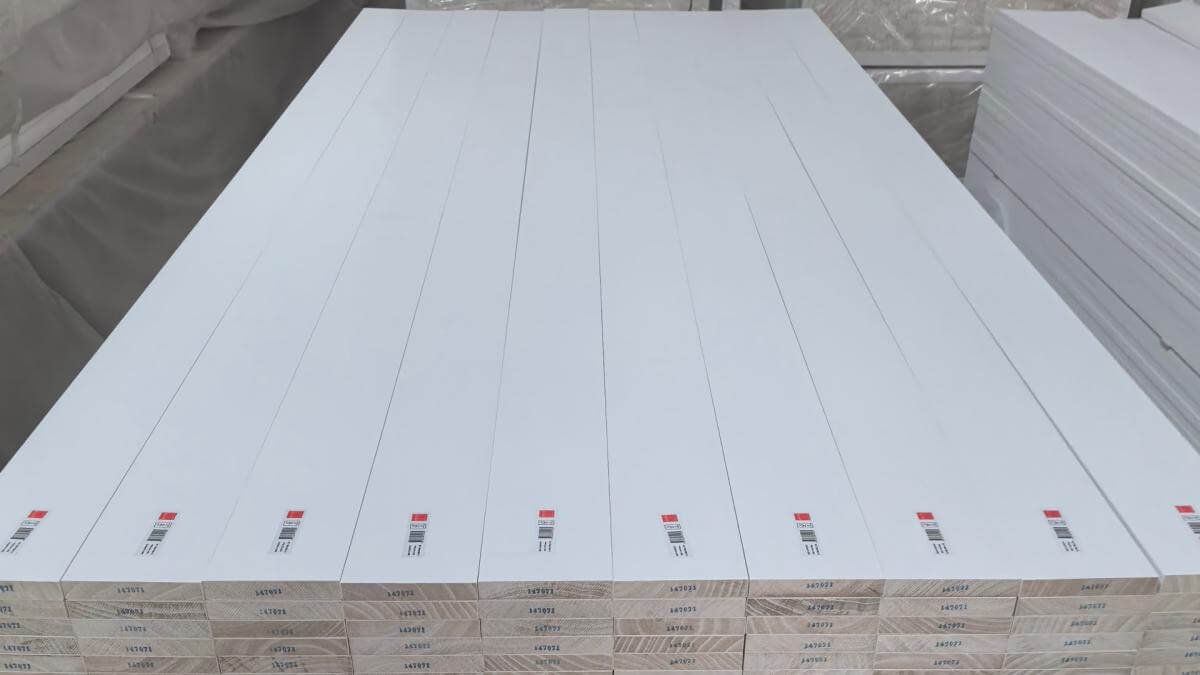
Sourcing architectural wood mouldings from an overseas manufacturer involves more than comparing price lists. The real costs — product failures after installation, customs rejections, production line stoppages from inconsistent dimensions — surface weeks or months after the purchase order is signed. For distributors, door manufacturers, and importers building long-term supply chains, the question is not simply "who makes mouldings?" but "what separates a manufacturer you can rely on from one that creates risk?"
This guide breaks the evaluation into five practical dimensions: compliance certifications, production capability, quality standards, substrate and adhesive choices, and logistics readiness. It also addresses the situations where sourcing directly from a manufacturer is not the right fit — because getting that match wrong is expensive in both directions.
Goodwood Mouldings, established in 1995 and operating from a 200,000 m² automated facility in Xiamen, China, is used throughout as a worked example — not to claim it is the only option, but because concrete figures are more useful than abstractions.
Compliance Certifications: The Non-Negotiable Starting Point
Compliance is not a differentiator — it is a market entry condition. A manufacturer that cannot provide verified third-party certification for the relevant standard should not be on your shortlist, regardless of price.
North American Market: CARB Phase 2 and TSCA Title VI
Any MDF-based moulding sold in the United States must comply with CARB Phase 2 formaldehyde emission limits: ≤0.11 ppm for MDF panels thicker than 8mm, measured by the climate chamber method (California Code of Regulations, Title 17, Section 93120–93120.12). Since 2019, this requirement has been federally enforceable under TSCA Title VI, which aligns directly with CARB Phase 2 thresholds. "CARB-compliant" and "TSCA-compliant" are effectively the same requirement today.
What to ask for: a current third-party lab report from a CARB-approved Testing and Production Certification (TPC) body, covering the specific MDF substrate used in your product line — not a general factory certificate. Manufacturers who cannot produce shipment-level documentation are a customs and legal liability.
European Market: E0/E1 and CE Marking
The European standard EN 13986:2004 + A1:2015 defines formaldehyde emission classes for wood-based panels. E1 allows ≤0.1 ppm (climate chamber method); E0 tightens this to ≤0.065 ppm. CE marking with a Declaration of Performance (DoP) is mandatory for wood-based panel products entering the EU market.
For specification-grade projects in Germany, the Netherlands, and Scandinavia, E0 has become the de facto expectation rather than a premium. If your market is trending in this direction, confirm E0-rated substrate at the point of inquiry, not after a sample order.
Sustainability: FSC Chain of Custody
FSC Chain of Custody (CoC) certification applies to manufacturers and traders who process or sell FSC-certified products — it is distinct from forest management certification. A valid CoC certificate means at least 70% of the relevant material input (by volume or weight) is FSC-certified, and the certificate is subject to annual surveillance audits over a five-year cycle.
For retail distribution programs, green building projects (LEED, Green Star), and government procurement in Europe and Australia, FSC CoC has moved from optional to expected. Verify that the certificate covers the specific product categories you are sourcing, not just the company name.
Production Capability: What a Real Manufacturer Looks Like
The distinction between a manufacturer and a trading company matters more than it appears on a quotation. A trading company that sources from multiple sub-suppliers cannot guarantee batch-to-batch consistency, control moisture content at the production stage, or replicate a discontinued profile without starting a new tooling process from scratch.
Integrated vs. Subcontracted Production
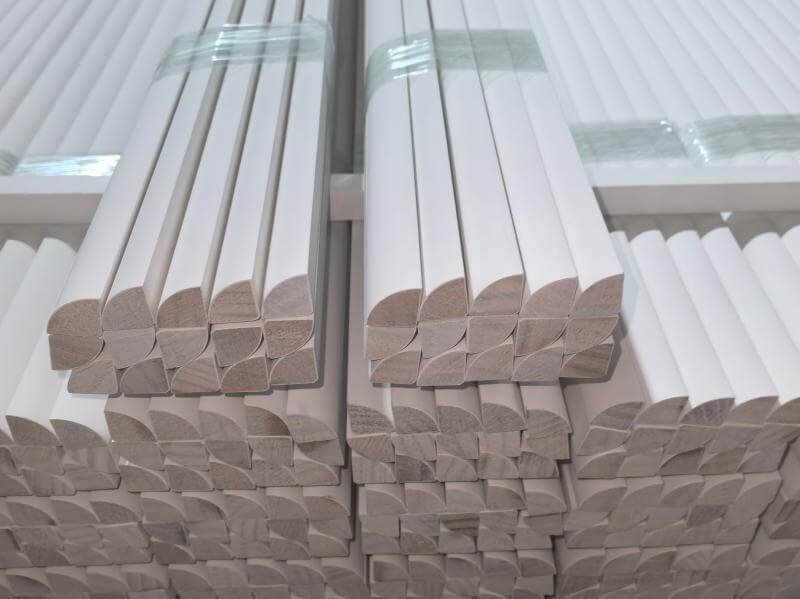
A vertically integrated manufacturer controls the full process chain: raw timber intake, finger-jointing, veneering, coating, CNC finishing, and final inspection. Each handoff eliminated is a quality variable removed.
Goodwood Mouldings operates this full sequence in-house at its Xiamen facility, which means a single point of contact for quality issues, a single set of quality records, and no dependency on sub-supplier scheduling. When evaluating any manufacturer, ask specifically which steps are performed in-house and which are subcontracted.
Mixed-Container Loading Capability
For distributors managing 100+ SKUs across multiple product lines, the ability to consolidate 20–60 SKUs into a single container is a material operational advantage. It removes the minimum order quantity (MOQ) barrier that forces distributors to over-order slow-moving items simply to justify a full container of a fast mover.
Goodwood's mixed-container loading program has allowed distributors to reduce inventory holding by 45% while maintaining a 98% order fulfillment rate — the reduction comes from right-sizing quantities per SKU rather than buying in bulk to hit MOQ thresholds. Not every manufacturer has the loading planning, pallet labelling systems, and SKU traceability required to execute this reliably. Ask to see a sample loading plan before committing.
Custom Profile and Discontinued SKU Replication
Profile continuity is a common pain point for distributors whose retail customers rely on matching existing installations. A manufacturer that can replicate a discontinued SKU from a physical sample or technical drawing — and deliver a sample within 3–7 business days — prevents the distributor from losing shelf space when a supplier exits a product.
Goodwood has replicated over 300 discontinued profiles to date using CAD-based tooling. CNC-processed door frames and jambs are also available as semi-finished components at tolerances of ±0.5mm, which reduces on-site labour costs for door manufacturers by 40–60% compared to cutting from full-length raw stock.
Quality Standards: Numbers That Actually Matter
Quality claims without supporting numbers are not evaluable. Before placing a first order, ask the manufacturer to provide documented specifications for the following.
Dimensional Tolerance
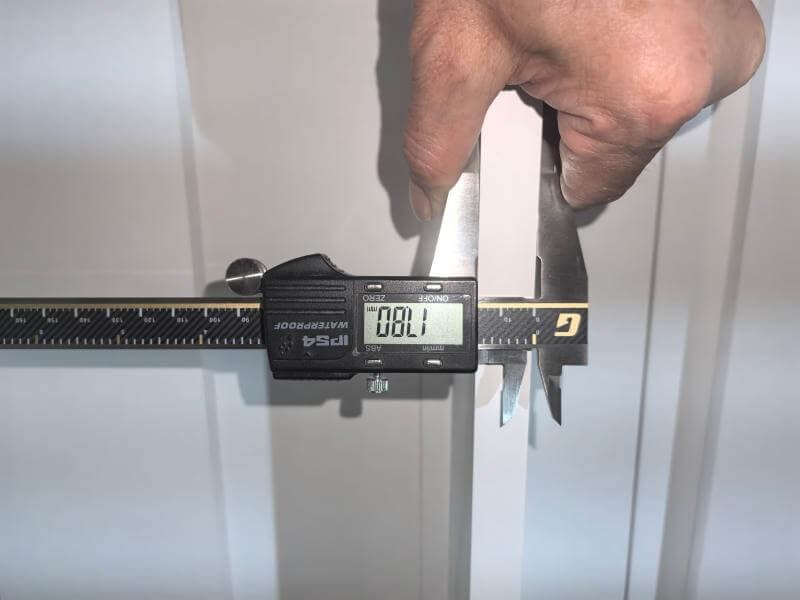
For primed MDF skirting boards and architraves, dimensional tolerance directly affects finish quality at joints and mitres. Goodwood's standard tolerance is ±0.3mm on width and ±0.2mm on thickness (post-sanding). The industry-common range from less rigorous suppliers is ±0.5mm — a difference that is small in isolation but becomes visible at every internal corner in an installation.
Ask for the tolerance figure in writing and request a recent inspection report showing actual measured values, not the rated specification alone.
Moisture Content Control
Moisture content (MC) is the most common root cause of post-installation failures in solid wood mouldings. The correct target MC depends on the destination market's equilibrium humidity conditions:
For North American markets — where heated interiors can drive indoor relative humidity below 25% during winter — the export MC target for solid wood should be 8–10%. Timber shipped at 12–14% MC into these conditions will lose moisture rapidly after installation. In solid mouldings wider than 75mm (3 inches), this differential drying creates cupping: the unfinished back face loses moisture faster than the painted front face, causing the board to curve across its width. Mouldings of this width or greater should also incorporate a back relief cut (one or two shallow grooves on the reverse face) to relieve internal stress and reduce cupping risk.
For timber sections exceeding 40mm in thickness, surface MC readings at kiln discharge can meet the target specification while the core remains 3–5% higher. Processing immediately after kiln discharge without a 1–2 week equalisation period can result in stress-release warping after machining. Ask your manufacturer how they manage the post-kiln equalisation step.
Ask for batch MC records — not a general claim. Goodwood includes MC records with shipment documentation and maintains 8–12% MC through production and pre-shipment storage.
Coating Quality and Colour Consistency
For primed product lines, the relevant parameters are dry film thickness (DFT) and cross-batch colour consistency. UV primer applied at 80–120 microns DFT delivers adequate adhesion for downstream topcoat application; below 80 microns, finger-joint telegraphing (the gradual visibility of joint lines through the paint film) becomes a reported issue at 6–18 months post-installation.
Colour consistency across batches matters for any project receiving phased deliveries. The threshold that is perceptible to the human eye under natural light is approximately ΔE 2.0 (CIE Lab formula); a batch-to-batch tolerance of ΔE ≤1.0 is the appropriate standard for a multi-shipment project. Verify this specification in writing before placing a project order.
Final inspection should follow AQL 2.5 sampling under ISO 2859-1, with 100% re-inspection of any rejected batch. Ask to see a sample final quality control (FQC) report to confirm the inspection process is documented, not verbal.
Substrate and Adhesive Choices: What the Spec Sheet Won't Tell You
The substrate and adhesive combination determines long-term product performance. Two areas where the wrong specification creates downstream problems are worth addressing directly.
MDF Mouldings: Where They Work and Where They Don't
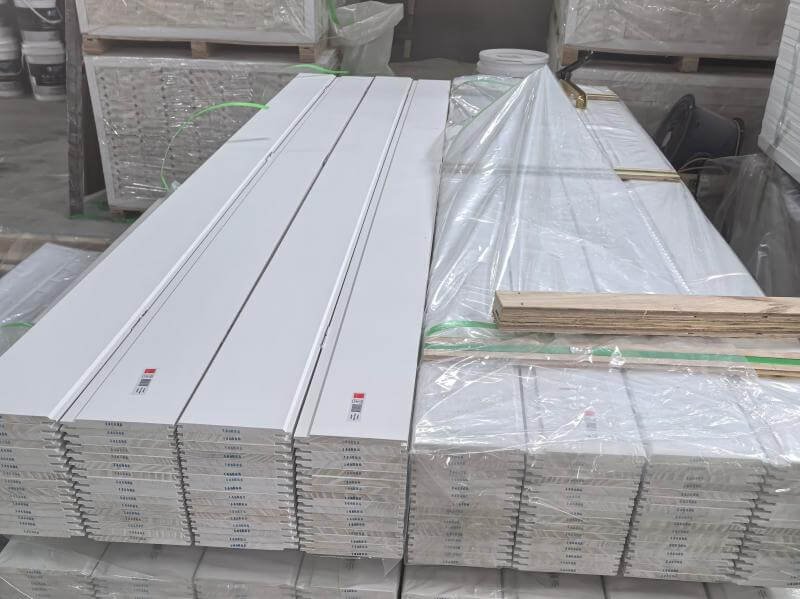
MDF is the correct material for the large majority of interior paint-grade moulding applications: it is dimensionally stable, takes primer uniformly, and is cost-effective at scale. Its density range (700–860 kg/m³, depending on grade) is higher than most solid timbers, which means MDF sections are heavier than their appearance suggests — a consideration for large door frames and tall skirting boards.
However, MDF has hard limits that should be communicated clearly to end users. Standard MDF cut sections can expand 10–25% in thickness after 24 hours of water exposure; moisture-resistant (MR) grade MDF reduces this to 5–12%, and MR-grade with sealed end faces brings it below 3%. This is not a defect — it is the material's behaviour. MDF mouldings are suitable for dry interior environments only. Long-term exposure to outdoor conditions, bathroom environments, or persistent humidity above 85% RH will cause irreversible internal structural failure regardless of the supplier or grade.
A further practical point: MDF edges damaged during installation — corner chips, impact dents — are difficult to repair to a finish that matches the original primer coat. Unlike solid timber, where surface damage can be sanded and re-primed seamlessly, MDF repairs typically require full section replacement. Factor this into installation handling specifications for large projects.
Finger-Jointed Pine: Adhesive Type Is Everything
Finger-jointed mouldings are produced by bonding short timber segments end-to-end using a comb-shaped joint. The adhesive choice determines which applications are appropriate.
PVA (polyvinyl acetate) adhesive is standard for decorative interior applications — skirting boards, chair rails, architraves — where the joint carries no structural load. Under dry conditions, PVA-bonded joints achieve 80–90% of clear wood tensile strength. However, moisture exposure degrades this figure significantly, making PVA unsuitable for environments with any humidity cycling.
For structural door frame applications, PUR (polyurethane hot-melt) adhesive is the correct specification. PUR cures irreversibly and retains over 90% wet strength after curing — it costs 30–50% more than PVA, but for frames carrying solid-core doors above 35 kg, it is not optional. Under repeated load cycling from door use, PVA-bonded finger joints in heavy-duty frame applications can exhibit creep and eventual joint displacement over a multi-year period.
One additional specification point: finger joints must not be positioned at knot locations. Knots reduce joint tensile strength by 40–60%, which is a material structural deficiency in load-bearing applications. Verify with your manufacturer that their finger-joint specification explicitly excludes knot positioning at joints.
Finger-jointed mouldings are also not suitable for stain-grade (clear or semi-transparent finish) applications. Joint lines are visible through transparent coatings regardless of machining precision — this is a structural characteristic of the product, not a quality deficiency. If the end application requires a clear timber finish, specify solid timber, not finger-jointed stock.
Logistics and Documentation: Where Supply Chains Break Down
A compliant, well-made product that arrives with missing documentation or incorrect packaging creates the same commercial disruption as a non-compliant product. Logistics readiness should be part of supplier evaluation from the outset.
Export Documentation Checklist
For a standard shipment to North America or Europe, the complete documentation set should include: Certificate of Origin (CO), Commercial Invoice (CI) and Packing List (PL), CARB Phase 2 third-party lab report (North America) or E0/E1 test report with CE Declaration of Performance (Europe), FSC Chain of Custody certificate (if FSC-labelled product), and ISPM 15 heat treatment certification on all solid wood packaging materials. Goodwood includes third-party lab reports with every shipment as standard — request the same from any supplier you evaluate, and confirm the lab is accredited, not in-house.
For Australia, ISPM 15 compliance must be accompanied by a phytosanitary certificate from the exporting country's relevant authority, a requirement distinct from EU and North American destinations.
Lead Times: What to Expect
Standard stock product lead times from a manufacturer in China to North American or European ports run 25–35 days for production, plus 12–35 days for sea freight depending on destination. Custom profile tooling adds 45–60 days to the production phase. Total lead time from confirmed order to delivery at destination warehouse is typically 6–12 weeks for stock items and 10–16 weeks for new custom profiles.
These timelines are not compressible through urgency — production and ocean freight do not accelerate based on downstream demand. Building this into your inventory planning is part of working effectively with an overseas manufacturer.
When a Direct Manufacturer May Not Be the Right Fit
Working directly with a manufacturer in China — or any overseas production base — has real advantages in price, product range, and customisation capability. It also has constraints that make it the wrong channel for some procurement needs.
Small or urgent replenishment orders: A container-based minimum order quantity means that orders below one full container (20ft or 40ft) are not efficiently served by a direct manufacturer relationship. If you need less than a container, or need product within three weeks, a local distributor holding inventory is the appropriate source.
Stain-grade finger-jointed mouldings: There is no supplier — anywhere — that can produce finger-jointed mouldings without visible joint lines under a clear or semi-transparent finish. If your application requires a clear timber look, specify solid timber from the outset.
Outdoor or high-humidity applications: MDF and finger-jointed pine mouldings are interior dry-area products. If the installation environment is exterior, or persistently humid (bathrooms with poor ventilation, covered exterior soffits), the product category is wrong regardless of supplier quality. Tropical hardwood or aluminium profiles are the appropriate alternatives.
Expedited samples of one or two pieces per profile: Volume production tooling and inspection processes are not designed for single-piece sample runs. Goodwood offers a paid sample programme with 3–7 business day turnaround for proper sample quantities; single-piece requests from the production line are not workable within a standard lead time framework.
Being clear about these limits at the start of a supplier relationship saves time on both sides.
Conclusion: A Framework for Supplier Evaluation
Selecting a wood moulding manufacturer for a long-term supply relationship comes down to four sequential questions: Can they meet your market's compliance requirements (CARB, CE, FSC)? Do they have the production capability to serve your range and volume reliably? Can they document consistent quality at the dimensional and coating level? And does their minimum order and lead time structure match your operational model?
Price is a fifth question, but it is the wrong first question. A supplier that fails on any of the first four creates costs — customs rejections, installation failures, customer complaints, emergency re-sourcing — that exceed any per-unit saving.
Goodwood Mouldings is designed around buyers who have worked through those four questions and found that a stable, documentation-transparent manufacturing partner is the specification that actually reduces total supply chain cost. If that describes your situation, contact the sales team at info@goodwoodmouldings.com or +86 151-6071-6597 to discuss product requirements, request a sample, or review compliance documentation for your target market.
Frequently Asked Questions
What certifications should a wood moulding manufacturer have for the US market? For MDF mouldings entering the US market, CARB Phase 2 certification is mandatory — the federal TSCA Title VI standard, in force since 2019, requires the same formaldehyde emission limit of ≤0.11 ppm. Third-party lab reports from a CARB-approved TPC body should accompany every shipment. FSC Chain of Custody certification is increasingly required for retail and commercial specification projects.
What is the correct moisture content for exported solid wood mouldings? Target moisture content depends on the destination. For North America, where heated interiors can drive indoor humidity below 25% in winter, the export MC target is 8–10%. For Europe and Australia, 10–12% is the standard range. Shipping above these targets into drier climates is a primary cause of post-installation warping and cupping.
Can finger-jointed mouldings be used for door frames? Yes, but the adhesive specification matters. PVA-bonded finger-jointed stock is appropriate for decorative applications but should not be used in frames carrying solid-core doors above 35 kg. PUR (polyurethane) adhesive retains over 90% wet strength after curing and is the correct specification for structural door frame applications.
What does mixed-container loading mean for moulding distributors? Mixed-container loading allows 20–60 different SKUs to be shipped in a single container, rather than requiring a full container of each individual product. For distributors managing wide ranges, this eliminates the need to over-order slow-moving items to justify a shipment, reducing inventory holding costs and freeing up working capital.
How long does it take to source custom wood moulding profiles? For custom profiles requiring new tooling, allow 45–60 days for production plus sea freight transit time — typically 10–16 weeks total to destination warehouse. For discontinued profile replication from an existing sample or drawing, sample turnaround can be achieved in 3–7 business days. Stock profiles ship on 25–35 day production lead times.