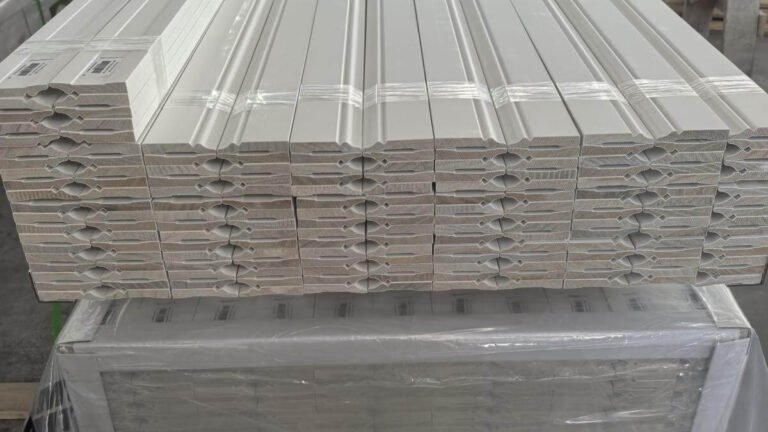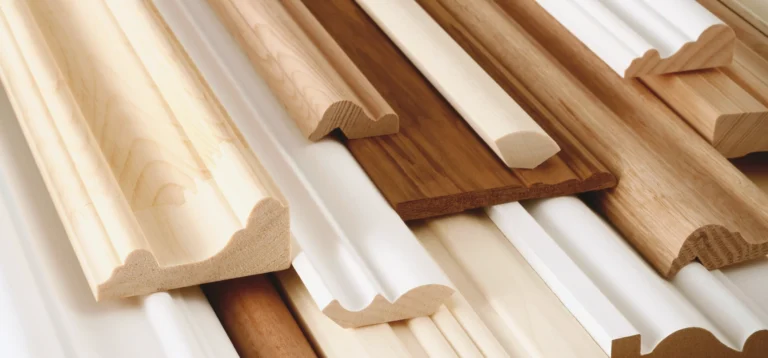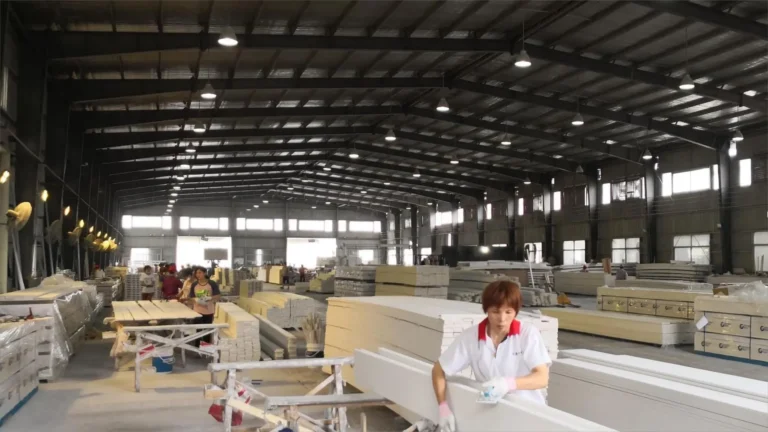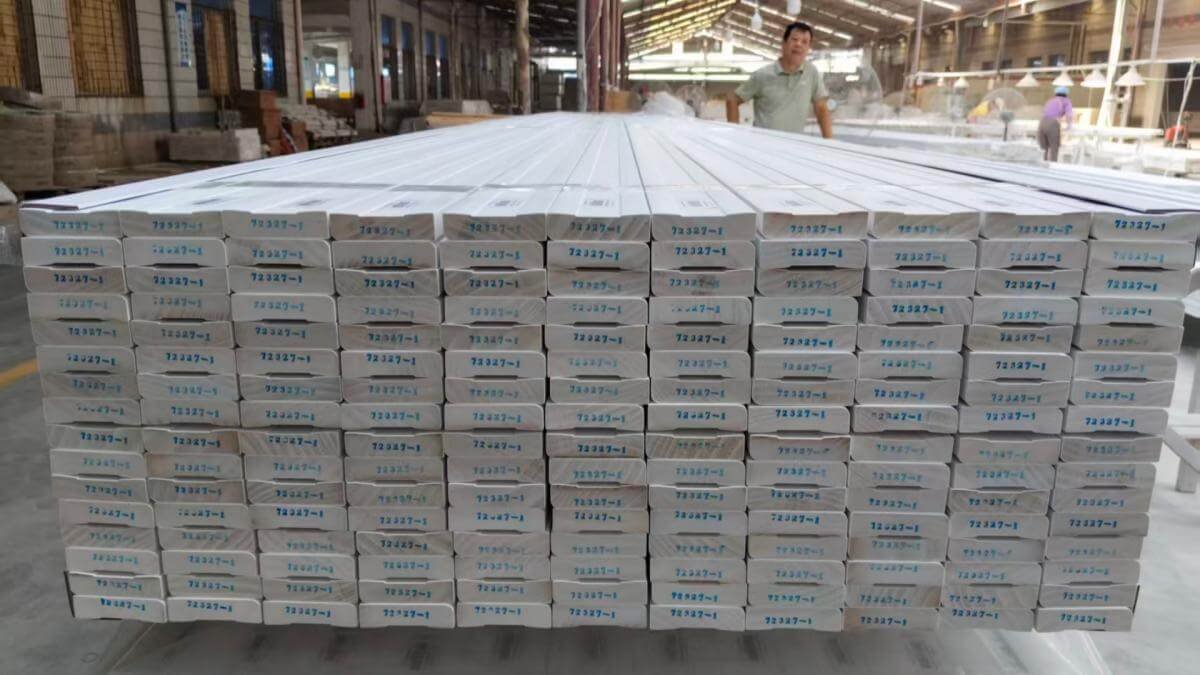
Not every company that calls itself a "timber moulding manufacturer" actually owns and runs the factory. Goodwood Mouldings has been manufacturing wood mouldings and architectural profiles in Xiamen, China since 1995 — nearly three decades — from a 200,000 m² production base where every stage, from raw timber processing to CNC finishing, happens in-house. That distinction matters more than most buyers realise, and it's worth understanding before you send your first RFQ.
Why "Manufacturer" Doesn't Always Mean What You Think
In the timber moulding trade, "manufacturer," "factory," and "supplier" are often used loosely — and sometimes interchangeably — in marketing materials, B2B platform listings, and even on company websites. In practice, three quite different business models hide behind similar language:
- True manufacturers, who own production equipment and run the process themselves.
- Traders/importers, who take orders and source finished goods from one or more third-party factories, sometimes switching suppliers between orders without telling the buyer.
- Manufacturers who subcontract key stages, most commonly coating and veneer application, while keeping the "manufacturer" label because they do own some equipment.
None of these models is inherently dishonest — trading companies play a legitimate role in the supply chain, and subcontracting specific finishing steps is a common industry practice, particularly among small and mid-sized producers. The problem arises when a buyer assumes full in-house production while dealing with a trader or a partially outsourced operation, because that assumption shapes expectations around quality consistency, lead times, and who is actually accountable when something goes wrong.
Manufacturer, Trader, or Subcontracted Producer — What's the Actual Difference
| True Manufacturer | Trader / Importer | Manufacturer with Outsourced Finishing | |
|---|---|---|---|
| Owns production equipment | Yes | No | Partially |
| Controls raw material sourcing | Directly | Indirectly, via factory | Directly for core process, indirectly for outsourced step |
| Can guarantee batch consistency | Generally yes | Depends on which factory fulfils the order | Depends on the outsourced supplier's own consistency |
| Compliance documentation ownership | Direct (own FSC CoC certificate, timber legality/due-diligence records, etc.) | Passed through from factory, harder to verify | Mixed — direct for in-house steps, indirect for outsourced ones |
| Typical strength | Consistency, traceability, direct problem-solving | Flexibility, ability to switch sources quickly | Lower fixed cost, sometimes faster turnaround on niche processes |
This isn't a case of one model being universally "better." A trader can be a perfectly reliable partner for smaller, less specification-sensitive orders. But for buyers who need consistent colour matching across shipments, verifiable compliance paperwork tied to a single factory, or long-term supply stability, knowing exactly which model you're dealing with changes how much diligence is required upfront.
What Full In-House Production Actually Looks Like
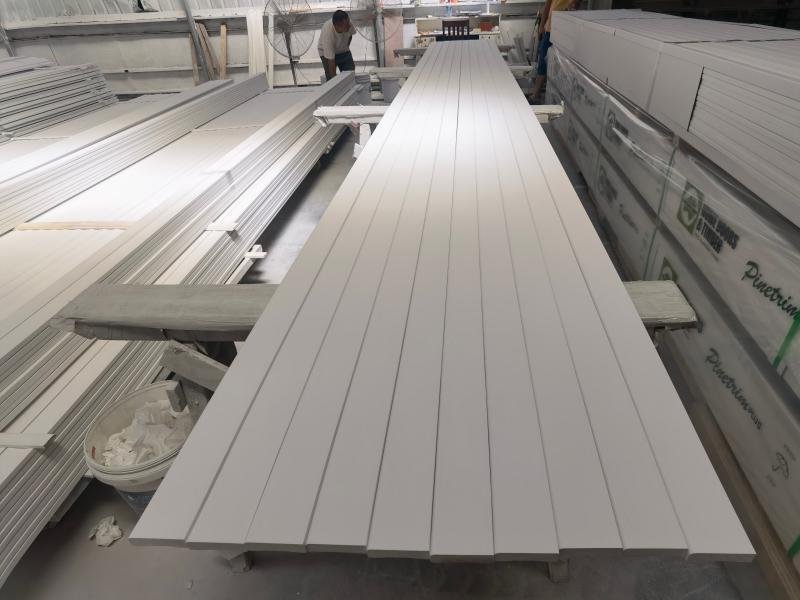
Within the industry, it's common practice for small and mid-sized manufacturers to outsource coating lines or veneer sourcing, while only larger, more capitalised producers run fully automated spraying and finishing in-house. At Goodwood, the full process — log processing, finger-jointing, veneering, coating, CNC finishing, and packaging — takes place on-site, without relying on subcontracted production. That's the kind of operational detail worth asking about directly, rather than assuming from a company's marketing language.
The practical benefit of this model isn't abstract: it means the same team that controls raw material quality is also the team responsible for the finish that ends up on your shipment, which makes tracing a defect back to its root cause considerably more straightforward than when two or three companies were involved in producing a single order.
Questions to Ask Before You Assume "Manufacturer"
Buyers evaluating a supplier's manufacturer claim can get a reasonably clear picture by asking:
- Can you show us photos or video of your own production line, not just finished product?
- Which specific stages happen on your premises, and which (if any) are outsourced?
- Whose name is on the FSC Chain of Custody certificate and the mill test reports we'll receive — and can they speak directly to the timber legality due-diligence records required under the UK Timber Regulation (UKTR)?
- If we place a repeat order in six months, will it come from the same production line?
- Who do we contact if there's a quality issue — and do they have direct authority over the production process, or do they need to relay it to a third party?
(UKTR — the UK Timber Regulation — is the post-Brexit framework requiring UK-based operators to exercise due diligence on timber legality; it sits alongside, and is closely modelled on, the EU's timber legality requirements. Any supplier should be able to explain, in plain terms, how their documentation supports it — not just point to a general "we're certified" claim.)
These questions aren't about catching anyone out. They're about matching the supplier model to what your project actually needs.
A Small Detail That Only a Real Factory Notices
One area where the difference between a hands-on manufacturer and a pass-through trader tends to show up is in the details that never make it onto a spec sheet. Moisture content compliance on paper, for example, doesn't automatically mean a batch is ready to ship — thicker solid wood sections can have a "shell-core" moisture gradient, where the surface reads within spec while the core is still several percentage points higher. That's the kind of thing you generally only learn from running kilns and handling timber day to day, not from reviewing someone else's test certificate. It's a small example, but it illustrates why proximity to the actual production process matters for quality outcomes, not just for paperwork.
When a Manufacturer Like This Isn't the Right Fit
To be equally direct about the other side: a full in-house manufacturing model with FCL-based production runs isn't the right fit for every buyer. If you need a small trial order below a full container load, or you're testing a new product line with just one or two pieces per SKU, a manufacturer built around container-scale production will generally not be the most practical route — a local distributor with stock on hand, or a paid sampling programme, is usually a better starting point.
FAQ
Is a trading company always a worse choice than a manufacturer? No. Traders can be a good fit for smaller or less specification-sensitive orders, and many operate reliably. The key is knowing which model you're working with so you can set the right expectations around consistency and documentation.
How can I verify that a supplier actually owns its production line? Ask for production line photos or video, request that certificates (FSC Chain of Custody, ISO 9001) be issued in the company's own name, ask whether they can provide the timber legality due-diligence records expected under UKTR, and ask specifically which stages — coating and veneering in particular — happen on-site versus with a third party.
Does working with a full in-house manufacturer guarantee lower prices? Not necessarily. In-house production tends to support more consistent quality and clearer accountability, but pricing depends on order volume, specification complexity, and market conditions, not on production model alone.
Want to discuss whether a full-container, in-house production model fits your sourcing plan? [Schedule a factory capability discussion] with our team.