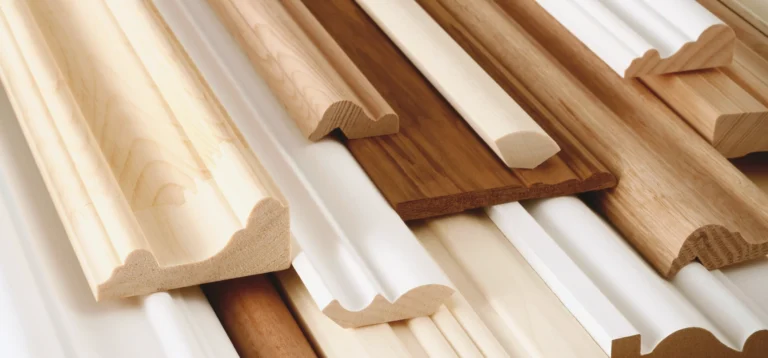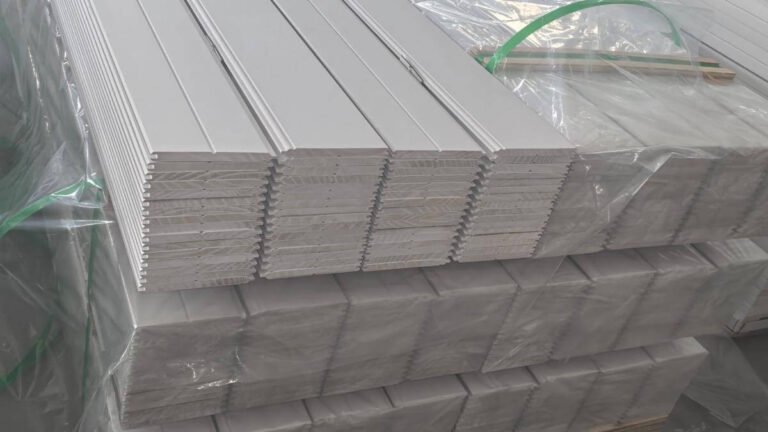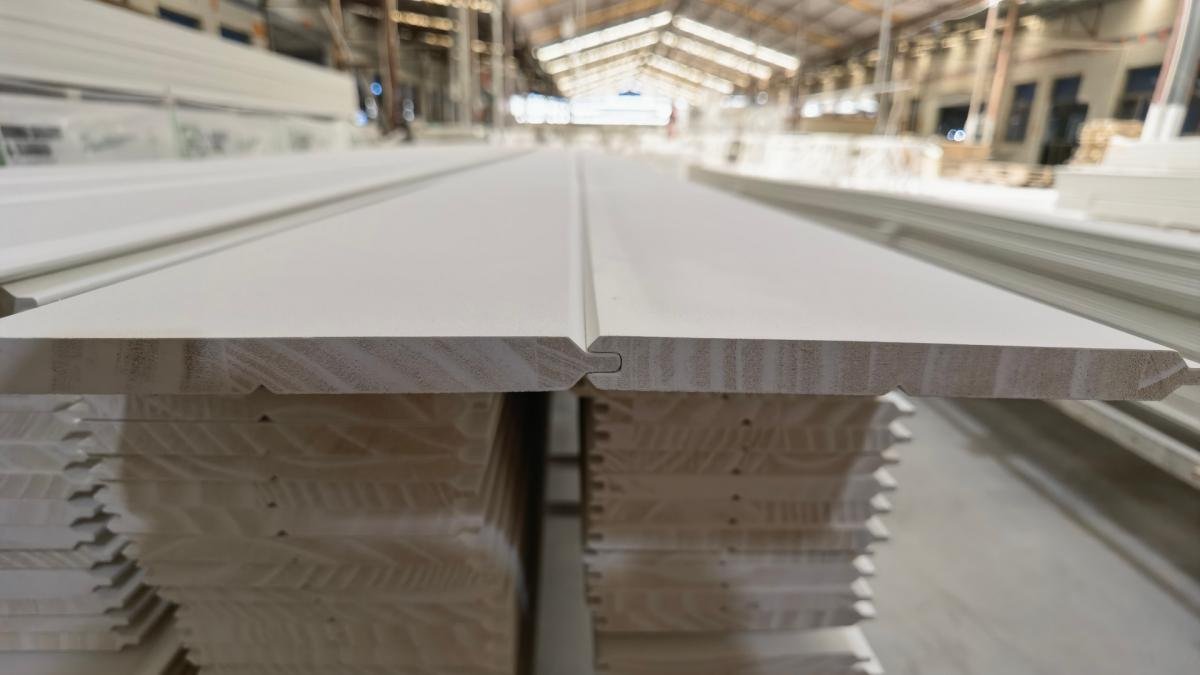
Sourcing timber mouldings from an overseas factory is easy to start and hard to get wrong-proof. Most buyers compare price sheets and lead times, then find out too late that "the cheapest quote" and "the supplier who can actually deliver a consistent container, month after month" are rarely the same company.
We've seen this gap from the other side of the table. Goodwood Mouldings has been manufacturing wood mouldings and architectural profiles from a 200,000m² production facility in Xiamen, China since 1995, and the questions that separate a reliable long-term partner from a risky one rarely show up on a first quote — they show up when you ask directly.
Below are seven questions worth asking before you sign anything, along with what a real answer should sound like.
Why Supplier Vetting Matters More Than the First Quote
Distributors and importers evaluating timber moulding suppliers typically weigh the same core factors: price competitiveness, compliance documentation, product consistency, on-time delivery, customisation ability, communication, and after-sales support. Price is only one of seven, and it's usually the easiest one for a supplier to make look good on paper. The other six are where the real risk — and the real differentiation — sits.
Question 1 — Is This a Manufacturer or a Trading Company?
This sounds basic, but it changes everything downstream: pricing transparency, quality control access, and how quickly problems get fixed.
A genuine manufacturer runs the full process in-house — log processing, finger-jointing, veneering, coating, CNC finishing, inspection, and packing — rather than subcontracting stages like coating or veneer sourcing out to third parties, which is common practice among smaller operations. Ask directly whether raw log processing through to final packing happens on one site, or whether any stage is outsourced. A supplier who owns the full production line can control consistency and turnaround in a way a broker or partial-manufacturer cannot.
Question 2 — What Certifications Do They Actually Hold?
Certifications are not a nice-to-have — for most target markets they're the legal floor, not the ceiling. Ask for the specific standard and the actual threshold, not just the certificate name.
For formaldehyde emissions, US-bound MDF products are held to CARB Phase 2 limits (≤0.11 ppm for MDF over 8mm), while European E0-grade material is tested to a stricter ≤0.065 ppm under climate chamber testing. A supplier who can cite these numbers from memory, rather than reading them off a poster, usually has a QC team that actually works with them daily.
At minimum, ask to see current certificates for: FSC Chain of Custody, formaldehyde compliance for your target market, and ISO 9001. If a supplier can't produce the certificate number and expiry date on request, that's a flag worth following up on before anything else.
Question 3 — How Do They Control Moisture Content for Your Target Market?
Moisture content is the single most common root cause of claims on solid wood and finger-jointed mouldings — cupping, warping, and joint movement almost always trace back to it. And the target figure isn't universal: it depends on the climate the product will actually live in.
Material destined for markets with higher indoor humidity is typically kiln-dried to a different target than material shipped into drier, centrally-heated environments — generally in the 10–12% range for European-style humidity conditions, versus a tighter 8–10% range for markets with dry winter heating. Ask your supplier what moisture content they target for your specific market, and whether that figure is checked and recorded at the point of shipment, not just at the kiln.
Note: buyers sourcing into the UK specifically should also confirm with the supplier and their own compliance team whether any UK-specific requirements apply post-Brexit, separate from general EU figures — this is worth a direct question rather than an assumption.
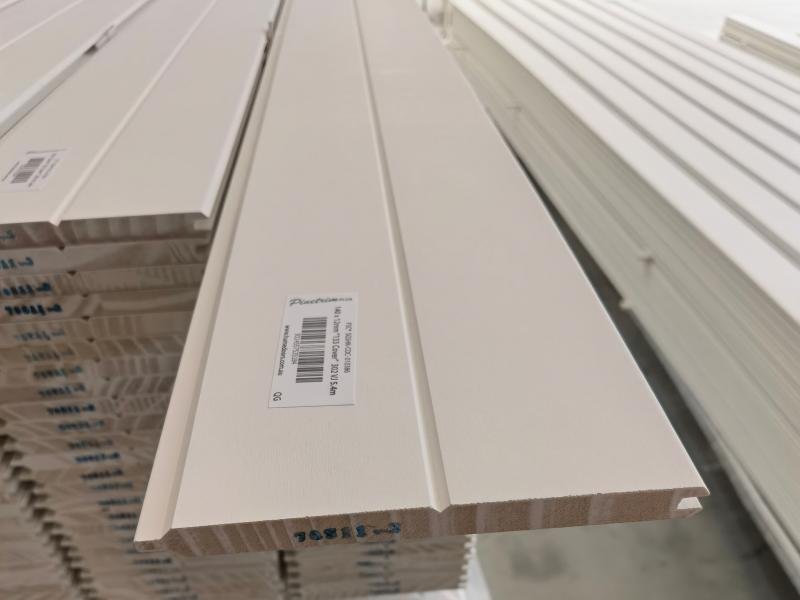
Question 4 — Can They Show a Real Quality Control Process (Not Just a Certificate)?
A certificate proves a system exists. It doesn't prove it's followed on the batch you're about to receive. Ask what inspection happens at three points: incoming raw material, mid-production, and before the container is loaded — commonly structured as IQC (incoming), IPQC (in-process), and FQC (final) checks. Ask specifically whether batch numbers and moisture readings are recorded per SKU, and whether that data is something you could request after the fact if a claim came up. A supplier who can trace a problem back to a batch record is a very different proposition from one who can only say "we'll look into it."
Question 5 — What Happens When Something Goes Wrong?
Every supplier will tell you their reject rate is low. Fewer will tell you what actually happened the last time a shipment had an issue. This is worth asking directly, because the answer tells you more about the supplier than almost anything else on this list.
As one example of how this should work in practice — one we can speak to directly: an MDF door casing shipment we sent to an Australian importer arrived with roughly 8% dimensional swelling at the cut ends, traced back to rain exposure during transit reaching unsealed edges on the machined cut faces. The fix wasn't a one-off apology. We made end-sealing (two coats of water-based sealant, plus a protective end cap) a mandatory step on every MDF order shipped to that market, checked at final inspection before the container is ever loaded — not something the customer has to remember to request. To be clear, this is our own internal production rule learned from that shipment, not an industry-wide requirement — but it's the kind of standard a supplier should be able to point to and explain exactly where it came from.
That's the pattern worth listening for: a specific failure, a specific traceable cause, and a change that became permanent process rather than a promise.
If a supplier can't describe a real incident and what changed afterward, be cautious of anyone who claims a spotless record — it usually means they haven't been pushed hard enough by a customer yet, not that problems never happen.
Question 6 — Can They Support Mixed Container Orders and Realistic MOQs?
Most distributors don't want a container of one SKU — they want 20 to 60 SKUs in a single load to match real shelf and warehouse needs. Ask whether the supplier can pack a mixed container without treating it as a special favour, and how they prevent damage when different profile sizes and materials share a pallet (MDF and solid wood, for instance, shouldn't be stacked together due to weight differential).
It's also worth being upfront about scale: container-based suppliers are generally not the right fit for urgent small-batch top-ups under a full container load — that's a gap better filled by a local distributor holding stock. A supplier who tells you this plainly, rather than trying to force-fit a small order into a container-based model, is one being honest about where they add value.
Question 7 — What Do Their Export Documents Actually Cover?
The paperwork that gets your container through customs without delay is not optional detail — it's the difference between a shipment clearing on schedule and one sitting in a port. Ask specifically whether the supplier provides, as standard: Commercial Invoice, Packing List, Certificate of Origin, formaldehyde/compliance test reports, and — where relevant to your certification requirements — FSC CoC documentation. A supplier who treats these as default paperwork, not an add-on you have to request, is one who's done this at volume before.
A Note on Honesty — When a Supplier Like This Isn't the Right Fit
Not every timber moulding need is best served by an overseas container-based manufacturer, and a supplier worth trusting should be willing to say so. A few scenarios where this model genuinely isn't the right answer:
- Small, urgent top-ups below a full container — better served by local distributor stock than a 20–30 day production-plus-shipping cycle.
- Fully defect-free, transparent-finish (stain-grade) requirements on finger-jointed material — the joint is visible under clear or semi-transparent coatings on any supplier's finger-jointed product; solid, select-grade timber is the more honest recommendation here.
- Genuine outdoor exposure applications — neither MDF nor finger-jointed mouldings are suited to sustained outdoor or wet-contact use, regardless of coating.
- Sub-21-day turnaround requirements — production plus sea freight realistically needs 21–30 days at minimum; anything faster needs to come from existing local stock.
A supplier who volunteers this kind of limitation before you ask is, ironically, one of the stronger signals you're dealing with a manufacturer confident enough in what they're actually good at.
Quick Reference: The 7 Questions Checklist
- Are you a manufacturer with full in-house production, or a trading company?
- Which certifications do you currently hold, and what are the specific compliance thresholds?
- What moisture content do you target for my market, and is it recorded per batch?
- What does your incoming, in-process, and final inspection process actually check?
- Can you describe a real quality issue you've had, and what changed afterward?
- Can you support a mixed-SKU container, and what's your realistic MOQ?
- What export documents come as standard with every shipment?
Ask these seven questions before comparing a single price line, and the quotes that come back will already tell you more than the numbers on them.
FAQ
What's the most important question to ask a timber moulding supplier? There isn't a single most important question — but whether they're a manufacturer or a trading company is the one that changes how every other answer should be interpreted. A trading company can quote you certifications and processes it doesn't directly control; a manufacturer should be able to walk you through its own factory floor.
How do I know if a supplier's certifications are real? Ask for the certificate number, issuing body, and expiry date, and cross-check the standard's actual threshold (for example, CARB Phase 2 sets MDF formaldehyde emissions at ≤0.11 ppm). A supplier who can quote the specific figure, not just the certificate name, is usually the one whose QC team works with it day to day.
Can a timber moulding factory support a mixed container order? A manufacturer set up for distributor-scale supply should be able to pack 20–60 SKUs into a single mixed container without treating it as a special request. If a supplier can only offer single-SKU containers, that's worth factoring into your comparison.
Is a full container load always required? For most overseas timber moulding manufacturers, yes — container-based production isn't well suited to urgent orders below a full container load. That gap is better filled by a local distributor's existing stock rather than forcing a small order through a 20–30 day production and shipping cycle.
If you'd rather skip the guesswork, schedule a factory capability discussion with our team — we're happy to walk through certifications, moisture control standards, and container options for your specific project.