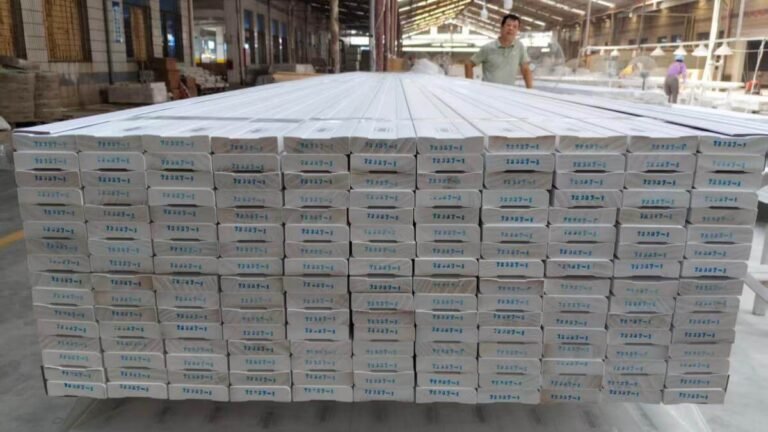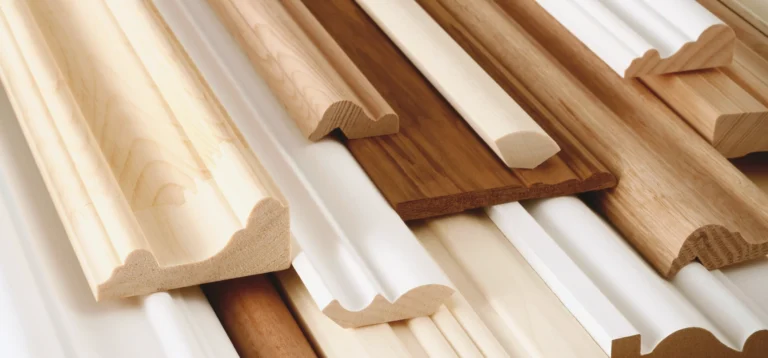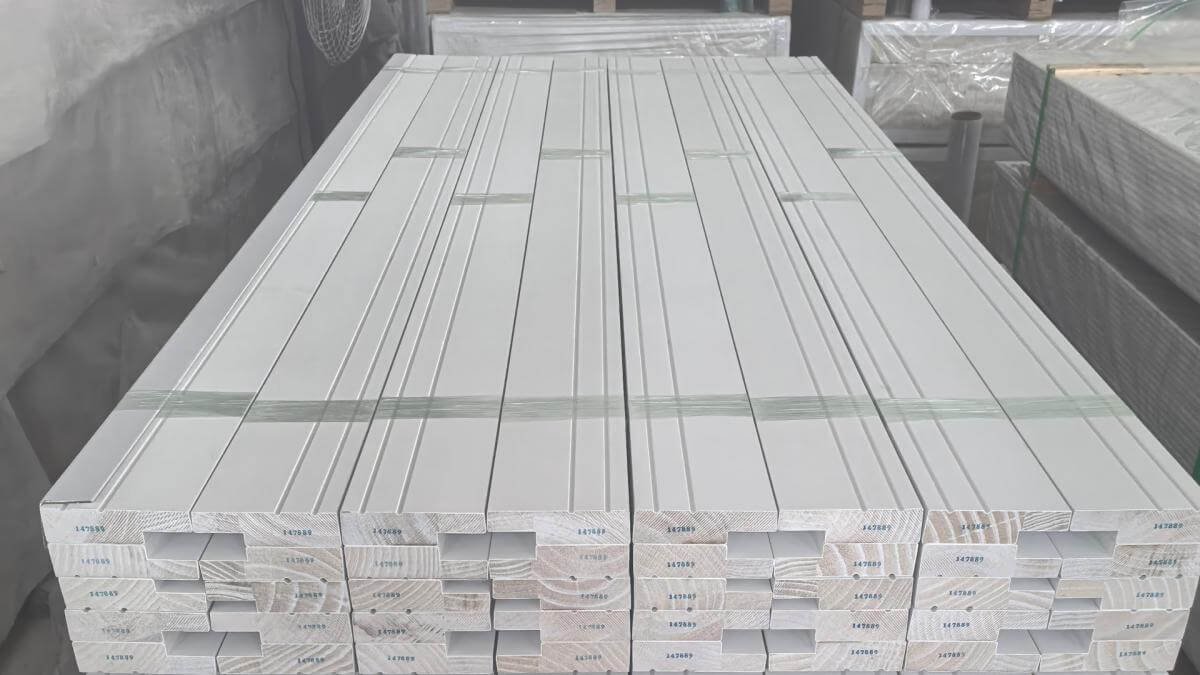
Choosing the wrong wood moulding supplier does not announce itself at the point of order. It shows up three months later — in a customs hold triggered by missing compliance documentation, in a batch of primed MDF skirting boards that arrive with swollen end faces, or in a distributor's complaint that the profile shipped in Q3 does not match the colour of the Q1 stock still sitting on their shelves.
For purchasing managers and category buyers sourcing architectural wood mouldings at scale, supplier selection is a risk management decision as much as a commercial one. The six criteria below give you a structured framework for evaluating any wood moulding supplier — with specific, verifiable benchmarks rather than vague quality claims.
Goodwood Mouldings, established in 1995 and operating a 200,000 m² automated manufacturing facility in Xiamen, Fujian, ships more than 12,000 containers per year and maintains an average customer relationship of over eight years. The parameters referenced throughout this guide reflect the standards we hold ourselves to — and the questions we recommend you ask of every supplier you evaluate.
Verify Compliance Before Anything Else
Compliance is not a differentiator — it is the entry ticket. For distributors and importers supplying the North American market, the non-negotiable starting point is formaldehyde emission certification for any composite wood substrate.
CARB Phase 2 and TSCA Title VI set the following limits for products sold in the United States:
| Substrate | Formaldehyde Limit (chamber method) |
|---|---|
| Hardwood plywood (HWPW) | ≤ 0.05 ppm |
| Particleboard (PB) | ≤ 0.09 ppm |
| MDF (thickness > 8 mm) | ≤ 0.11 ppm |
| MDF (thickness ≤ 8 mm) | ≤ 0.13 ppm |
California's CARB Phase 2 regulation has been in force since 2009. The federal equivalent — TSCA Title VI — extended the same requirements across all U.S. states from 2019. Any MDF moulding entering the American market must comply with both; there is no geographic carve-out.
A supplier's verbal assurance of compliance is not sufficient. What to request:
- Third-party laboratory test reports for the specific MDF substrate used in your products — not a general mill certificate. Reports should reference ASTM E1333 (large chamber method) or equivalent.
- CARB ATCM certification documentation from the panel manufacturer, confirmed by the moulding manufacturer's own traceability records linking finished product to certified substrate batches.
- FSC Chain of Custody (CoC) certificate if your customers are specifying sustainable sourcing or if projects target LEED credits. FSC CoC applies to the manufacturer and every entity in the supply chain, not only to the forest of origin.
- ISO 9001 certificate as baseline evidence of a documented quality management system.
- Certificate of Origin (CO) and full export documentation package — a supplier who routinely provides clean documentation reduces your customs clearance exposure.
A reliable wood moulding supplier will provide these documents proactively, not reluctantly. If documentation has to be chased at the point of shipment, treat that as a structural risk signal.
Evaluate Quality Consistency — Not Just Sample Quality
Sample approval is the beginning of quality assurance, not the end of it. The question that matters more is whether the tenth container matches the first.
Moisture content is the most common source of field failures
For solid wood and finger-jointed profiles destined for North American markets, the target export moisture content (MC) is 8–10% (±1%). This range is calibrated to North American interior conditions, where winter heating systems can reduce indoor relative humidity below 25% — significantly lower than the manufacturing environment in coastal China, where ambient humidity regularly exceeds 75%.
When export MC runs high — 11–13% rather than the 8–10% target — wood arriving in a heated interior loses moisture rapidly and unevenly. The result is dimensional movement that installers encounter weeks or months after the product leaves the factory.
One failure mode worth understanding: kiln-drying certification at discharge does not automatically guarantee dimensional stability in the finished product. Timber above 40mm in cross-section can exhibit a measurable moisture gradient between the surface and core layers at the time of kiln discharge. Surface readings may meet the target MC while the core remains 3–5% higher. Processing this stock before a 1–2 week equalisation period allows residual stress to release after cutting, which can produce bow or twist in the finished moulding. Ask your supplier whether their production schedule accommodates this equalisation window for thicker profiles.
Dimensional and colour benchmarks
For primed MDF mouldings and finger-jointed pine profiles, the following are industry-standard quality thresholds that a reliable supplier should be able to demonstrate through batch records:
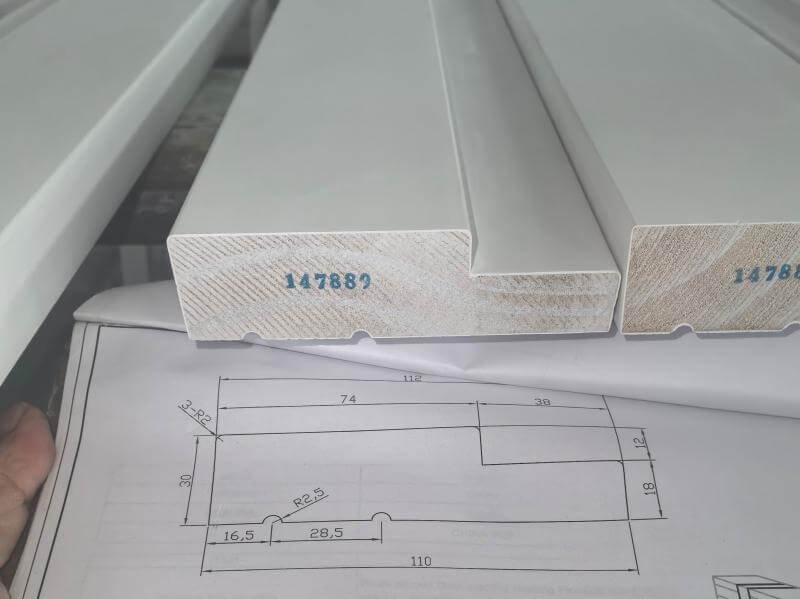
- Cross-section dimensional tolerance: ±0.2mm (top-tier manufacturers can hold ±0.1mm)
- Bow (longitudinal straightness): ≤ 1.5mm per 2.4m length
- Batch-to-batch colour consistency: ΔE ≤ 1.0 (CIE Lab colour difference formula) — values above ΔE 2.0 are visually detectable under natural light, which creates problems for split-shipment projects
Questions to ask about quality control infrastructure
- Does the supplier operate a three-tier inspection system — incoming material (IQC), in-process (IPQC), and final (FQC) — with documented records traceable to batch number?
- Is moisture content verified using the oven-dry method (AS/NZS 1080.1 or equivalent) for export shipment sign-off, rather than pin meter readings alone?
- What AQL sampling level applies to cosmetic defects? AQL 2.5 per ISO 2859-1 is the standard for appearance-critical moulding products.
Understand What Each Substrate Is — and Is Not — Good For
A supplier who presents every substrate as suitable for every application is either uninformed or incurious about your end use. The three primary substrates for architectural mouldings each have genuine performance limits, and understanding them protects you from specifying the wrong product into the wrong environment.
Primed MDF mouldings
MDF is the dominant substrate for interior skirting boards, architraves, and cornice profiles — for good reasons. It machines cleanly, holds paint uniformly, and delivers consistent dimensions at a competitive price point.
Its limits are equally clear. MDF must not be used in exterior applications or environments where sustained relative humidity exceeds 85%. Even moisture-resistant (MR) grade MDF is rated for intermittent moisture exposure, not continuous wet conditions. Standard-density MDF cut sections can expand 10–25% after 24-hour water exposure; MR grade with double-coat end sealing reduces this to under 3%, but the structural suitability for wet areas does not change.
MDF also carries a density of 700–860 kg/m³ — meaningfully heavier than solid softwood at 420–550 kg/m³. For large-section door liners and tall skirting profiles, this weight differential has implications for wall fixing requirements. And because MDF does not have a grain structure to absorb impact, edge damage from transit or installation typically requires full-piece replacement rather than localised repair.
Solid wood mouldings in wide profiles
Solid wood baseboards wider than 90mm (3.5 inches) carry an elevated risk of cupping in North American heating environments. The differential shrinkage between the exposed, painted face and the unfinished back face — accelerated when indoor RH drops below 25% during winter — can produce a measurable cup of 1.5–2.5mm across the width.
Back-relief cuts — one to two longitudinal kerfs routed into the back face — are a standard mitigation practice for wide solid-wood profiles destined for North American markets. For profiles at or above 90mm width, this should be a default production specification, not an optional add-on. Confirm with your supplier whether this is included as standard for the relevant SKUs.
Finger-jointed profiles and paint-grade applications
Finger-jointed pine is well suited to paint-grade applications — primed skirting boards, door casings, and window architraves that will receive an opaque topcoat. One constraint applies without exception: finger-jointed profiles are not appropriate for stain-grade or clear-lacquer applications.
Joint telegraphing — faint lines becoming visible through the paint film 6 to 18 months after installation — occurs because the joint zone has a slightly different density and absorption rate from the surrounding wood, causing uneven primer uptake. A UV primer dry film thickness of 100–120 microns, combined with an additional sanding and primer pass at joint locations, significantly reduces this risk. Confirm your supplier's primer specification and application process for finger-jointed lines if telegraphing is a concern for your market.
For structural applications — specifically door frames carrying solid-core doors above 35kg — PVA-bonded finger-jointed stock is not recommended. PUR (polyurethane) adhesive, with wet-strength retention above 90% after curing, is the appropriate choice for load-bearing door frame profiles.
Assess Supply Chain Flexibility — Especially If You Manage Many SKUs
For distributors managing broad product ranges, the practical economics of sourcing from a single wood moulding manufacturer depend heavily on two operational capabilities: mixed-container loading and the ability to maintain range continuity when individual profiles are discontinued.
Mixed-container loading
The ability to consolidate 20–60 SKUs into a single container — rather than requiring full-container minimums per profile — changes the inventory equation for distributors. It allows you to reorder across your full range in a single shipment cycle without building excess stock in your slower-moving profiles. Goodwood's mixed-container program has allowed customers to reduce inventory holding costs by 45% while maintaining 98% order fulfillment rates, by aligning replenishment cycles with actual demand patterns rather than MOQ thresholds.
When evaluating a supplier's mixed-container capability, ask specifically: how is the loading plan documented, and how are individual SKUs labelled and separated within the container? Mixed loading done poorly — without batch segregation or clear identification at the pallet level — creates receiving errors that offset the logistics benefit.
Discontinued profile replication
A persistent operational problem for distributors is the gap created when a long-running profile is discontinued by a supplier. Customers who have built installations around a specific profile need continuation stock; sourcing a visual match from a new supplier requires tooling, sampling, and approval cycles that can run six to ten weeks.
A manufacturer with dedicated profile replication capability — custom tooling from CAD drawings or physical samples — can often compress this to 3–7 working days for a sample, with full production tooling ready in parallel. Goodwood has replicated over 300 discontinued profiles for distributor customers. When reviewing a supplier's replication capability, ask for reference examples and typical sample lead times.
Check Lead Times and Logistics Capability
For importers and distributors planning replenishment cycles, realistic lead time expectations matter more than headline numbers.
Standard production and shipping timelines from a China-based manufacturer to North American ports:
- Stock profiles: 25–35 days total (production lead time + approximately 12–16 days sea freight to US West Coast ports; 25–35 days to East Coast)
- Custom tooling and new profiles: 45–60 days total
These timelines assume no port congestion delays — build buffer into planning cycles accordingly, particularly for Q4 peak season orders.
On the logistics documentation side, a capable supplier should provide, without prompting: commercial invoice, packing list with batch-level detail, certificate of origin, CARB/TSCA compliance documentation, FSC certificate (if applicable), and ISPM 15-compliant timber packaging with heat treatment (HT) marks. ISPM 15 compliance is mandatory for all solid wood packaging materials entering the United States, European Union, and Australia — a missing HT mark is grounds for quarantine hold at the destination port.
Complete, accurate documentation assembled before shipment — not reconstructed after a customs query — is one of the clearest indicators of a supplier's operational maturity. Goodwood's European customers have maintained zero customs rejection rates across multi-year supply relationships as a direct result of documentation consistency.
Know When a Supplier Isn't the Right Fit
No manufacturer is the right fit for every buyer, and a supplier who claims otherwise is telling you something important about how they will handle problems when they arise.
There are specific scenarios where a volume manufacturer like Goodwood is not the most practical option — and where a different sourcing approach will serve you better:
Small-volume urgent replenishment (below one container load). Manufacturing economics at this scale do not work for either party. A local distributor with available stock is the right answer for sub-container fill-in orders.
Lead times under 21 days. The combination of production scheduling and ocean freight means that 21 days is a realistic floor, not a target. If your operation requires shorter replenishment cycles for certain SKUs, a regional warehouse holding local inventory is the appropriate solution — not a China-based manufacturer, regardless of what they tell you about rush production.
Single-unit sampling before commitment. Quantity production lines cannot be set up to run one or two pieces of a profile economically. A structured paid sample program — with 3–7 day turnaround on representative production samples — is the appropriate mechanism for evaluation before a commercial order.
Stain-grade applications requiring finger-jointed profiles. As noted in Section 3, joint telegraphing under clear or semi-transparent finishes is a structural limitation of the substrate, not a quality variable. If your application requires clear-coat finish and invisible jointing, solid wood select-grade stock is the correct specification.
A supplier who lays out these boundaries clearly is demonstrating the same operational discipline that determines how they will handle production problems, quality disputes, and shipping delays. The boundaries and the reliability come from the same place.
Conclusion
Selecting a wood moulding supplier for a long-term supply relationship comes down to six verifiable dimensions: compliance documentation that holds up to customs scrutiny; quality systems that deliver batch-to-batch consistency, not just strong samples; honest substrate specification that matches product to application; logistics flexibility that works for your SKU range and order pattern; lead times built on realistic production and transit realities; and a supplier that is clear about where they are not the right fit.
Goodwood Mouldings has built supply relationships averaging over eight years with distributors, door manufacturers, and importers across North America, Europe, and Australia — not by being the right fit for every buyer, but by being a dependable partner for the buyers we are built to serve.
If you are evaluating suppliers for a mixed-container program, a discontinued profile replacement, or a new market compliance requirement, contact our team directly. We will provide documentation, samples, and a loading plan — not a sales pitch.
Contact: info@goodwoodmouldings.com | +86 151-6071-6597
Frequently Asked Questions
What certifications should a wood moulding supplier have for the North American market? At minimum: CARB Phase 2 compliance documentation (third-party verified, per-batch), EPA TSCA Title VI certification, ISO 9001 quality management certification, and full export documentation including certificate of origin. FSC Chain of Custody certification is required for projects targeting LEED credits or sustainable sourcing specifications.
What is CARB Phase 2 and why does it matter for imported MDF mouldings? CARB Phase 2 is a California Air Resources Board regulation limiting formaldehyde emissions from composite wood products. For MDF thicker than 8mm, the limit is 0.11 ppm (chamber method). Since 2019, the federal TSCA Title VI regulation has extended equivalent requirements to all U.S. states — not only California. Any MDF moulding sold in the United States must comply, and suppliers must be able to provide third-party test reports confirming compliance per production batch.
What is the typical lead time when sourcing wood mouldings from China? For stock profiles, expect 25–35 days total — combining production lead time with sea freight of approximately 12–16 days to US West Coast ports or 25–35 days to East Coast ports. Custom profiles requiring new tooling typically require 45–60 days. Lead times below 21 days are not achievable via ocean freight from China; for urgent replenishment, local inventory sources are the practical alternative.
Can I order multiple profiles in the same container to reduce minimum order quantities? Yes — mixed-container loading is a standard service offered by manufacturers with the right production and logistics infrastructure. A capable supplier can consolidate 20–60 SKUs into a single container, with each product lot separately identified, batch-labelled, and segregated within the load. This allows distributors to replenish across their full range in a single shipment without building excess stock in slower-moving profiles.
What is the difference between finger-jointed and solid wood mouldings? Finger-jointed mouldings are made by joining shorter lengths of timber end-to-end using interlocking comb-shaped joints, bonded with PVA or PUR adhesive. This produces stable, knot-free profiles suited to paint-grade applications — primed skirting boards, door casings, and window architraves. Solid wood mouldings are cut from continuous timber and are available in both paint-grade and stain-grade (clear-coat) finishes. Finger-jointed profiles should not be used in stain-grade applications, as the joint lines become visible under transparent or semi-transparent finishes.