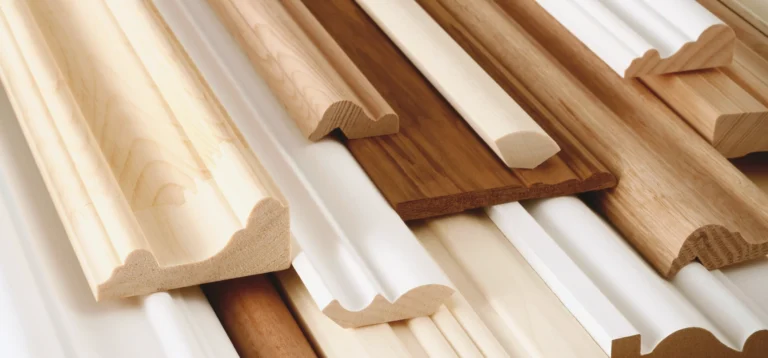
Are you struggling to find quality frame moulding suppliers? Don't let inconsistent supplies and vague specifications hold your business back. I know how important reliable sourcing is for your projects.
Sourcing the right wholesale frame moulding is a strategic decision that impacts everything, from product aesthetics and quality to production costs and supply chain reliability. This guide will equip you with the knowledge and actionable checklists you need to make informed, professional decisions in the global sourcing market.
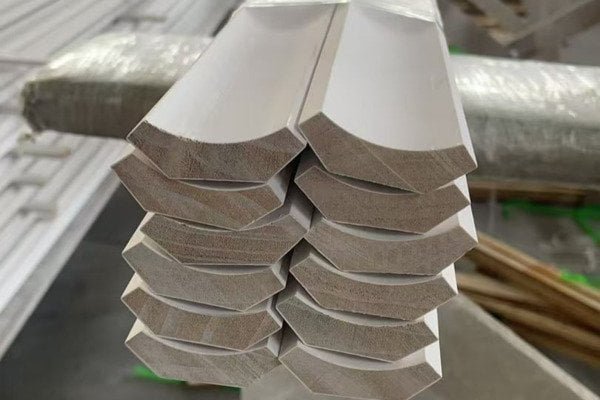
As a wholesale buyer and project procurement manager, I understand the challenges of finding the perfect balance between cost, quality, and consistency. This guide is your definitive playbook, whether you’re a frame manufacturer, a custom framing shop, a home goods factory, an e-commerce seller, or a building materials distributor.
What are the Two Pillars of Frame Moulding Materials: Wood vs. MDF?
Are you unsure which material is best for your frame moulding needs? Choosing between solid wood and MDF can impact your product's appeal and cost.
The primary decision hinges on your target market and cost structure. Solid wood is a clear choice for high-end, luxury markets, while MDF is more efficient and cost-effective for mass-market products, e-commerce, or consistent, large-volume production.
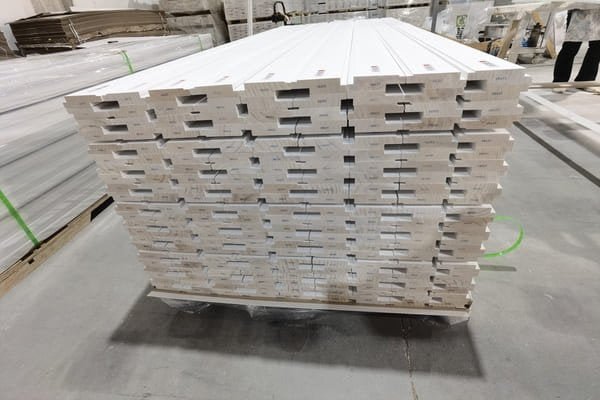
When I consider frame moulding, the first thing I look at is the material. The choice between solid wood and MDF isn't just about price; it's about the final product's look, strength, and target customer. Each has its own strengths and weaknesses.
Why is Solid Wood Frame Moulding Considered Premium Quality?
Solid wood has been a top choice for centuries. It just looks great and has a timeless appeal. This makes it perfect for high-end markets.
Solid wood offers unique grain patterns and color, giving each piece a high-end look. It is durable and allows for detailed designs and finishes. People see wood frames as premium products, especially those made from oak, maple, or walnut, which lets you charge more. While it's more expensive and can warp with moisture, its natural beauty and craftsmanship are unmatched for luxury items.
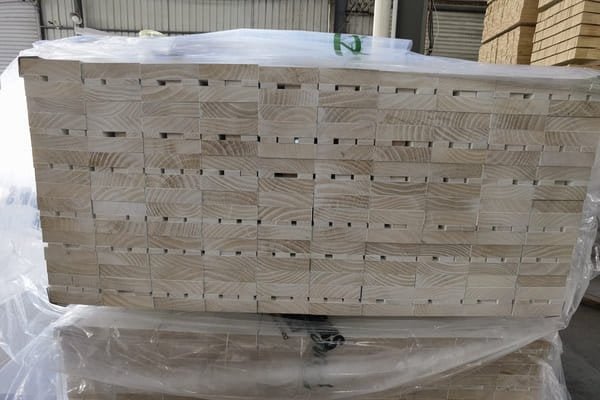
When I think about solid wood, I think about its natural beauty. Every piece has its own grain and color, which makes each frame unique. This is why it works so well for luxury brands and custom shops. I have seen how customers in North America and Europe really prefer these natural materials.
However, I also know solid wood can be tricky. It costs more to buy and process. And I always have to watch out for moisture. If the wood isn't dried just right, it can bend or crack, especially when shipping it overseas to different climates. It's also hard to get the exact same look in every batch, so I always do careful quality checks.
Here is a simple breakdown:
| Feature | Advantage | Disadvantage | Target Market |
|---|---|---|---|
| Aesthetics | Natural, unique grain; high-end look | Inconsistency in grain/color | Luxury, custom, high-end galleries |
| Durability | Strong, can be carved for intricate designs | Moisture-sensitive; can warp or crack if not controlled | Collectors, art enthusiasts, high-end homes |
| Perceived Value | Premium product, commands higher prices | Costly material and processing | Affluent customers, discerning buyers |
| Usage | Art galleries, custom framing, luxury home decor | Requires careful handling and climate control | Markets valuing authenticity and craftsmanship |
Why is MDF Frame Moulding the Solution for Consistency and Cost?
MDF has changed the framing industry. It offers a cheap and stable option instead of solid wood. It’s made from wood fibers pressed together with a binder.
MDF is much cheaper to make than solid wood, making it good for big orders and mass markets. It stays stable and does not warp or crack with humidity changes, ensuring consistent profiles. It can also be finished in many ways, like painting, veneering, or wrapping, for a uniform look. However, you must check for formaldehyde emissions and know it is not as strong as solid wood.
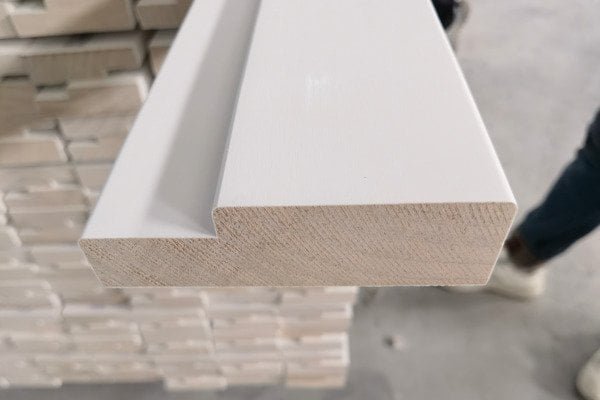
I've seen MDF become a game-changer for many of my clients, especially when they need a lot of frames at a good price. It's really cost-effective, which is great for large distributors and online sellers. I appreciate that MDF doesn't warp or twist like solid wood when the humidity changes. This makes manufacturing much easier because the profile stays the same every time.
What I really like about MDF is how many finishes you can put on it. You can paint it, wrap it in PVC, or stamp foil on it. This means you can get a perfect, smooth look across thousands of pieces. My main concern with MDF is always the chemicals used. I always make sure our suppliers meet standards like CARB P2 or EPA TSCA Title VI to protect both end-users and the environment. Also, MDF isn't as strong as solid wood, so I pay close attention to how it's handled to avoid chipping.
Here is a simple breakdown:
| Feature | Advantage | Disadvantage | Target Market |
|---|---|---|---|
| Cost | Substantially cheaper to produce | Tooling fees for custom profiles | Mass market, e-commerce, large-scale distributors |
| Stability | Dimensional stability; does not warp or crack with humidity | Less robust than solid wood; prone to chipping | High-volume production, projects needing uniformity |
| Finishes | Versatile; ideal for lacquering, veneering, PVC wrapping | Lacks natural visual appeal without finish | Markets valuing consistency, affordability, and wide design options |
| Compliance | Ensures consistent profiles and easy manufacturing | Formaldehyde concerns; requires compliance with CARB P2, EPA TSCA | Retail chains, home decor factories |
What Must You Know About Specifications & Packaging for Your RFQ?
Are you having trouble getting clear quotes from suppliers? Providing exact details from the start is very important.
To get accurate quotes quickly, give precise specifications like profile width (12-120mm), height (10-45mm), length (2.4-3.6m), and surface finish. Also, clearly state your MOQ (200-2,000 linear meters) and packaging needs (20-100 pieces per bundle, reinforced cartons) to ensure protection and optimized shipping costs.
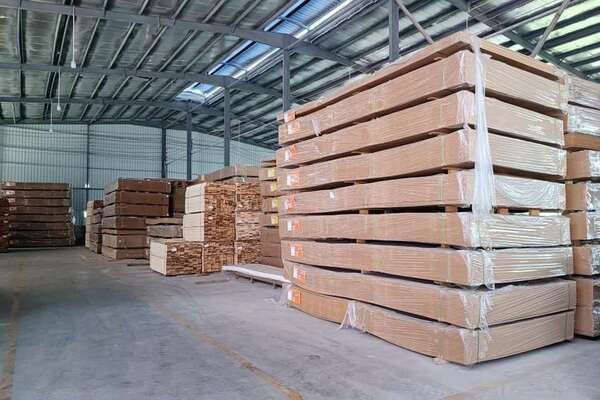
When I send out a Request for Quotation (RFQ), I know that clarity is key. If I provide exact specifications right away, it saves me a lot of time and gets me accurate prices.
What are the Key Specifications to Include in Your RFQ?
When you ask for a quote, you need to be very clear. This helps the supplier give you the right price for what you want.
When I create an RFQ, I always include these key specifications: visible face width (from 12 mm to 120 mm), profile height or depth (from 10 mm to 45 mm), and standard lengths (2.4 m, 2.7 m, 3.0 m, 3.6 m, or custom). Minimum Order Quantity (MOQ) is critical; for standard profiles, it runs 200 to 2,000 linear meters, but custom profiles will have higher MOQs or a tooling fee. I also specify the exact surface finish needed, such as raw, primed, painted, veneered, PVC wrapped, foil-stamped, or UV-coated, to make sure the supplier understands my needs precisely.
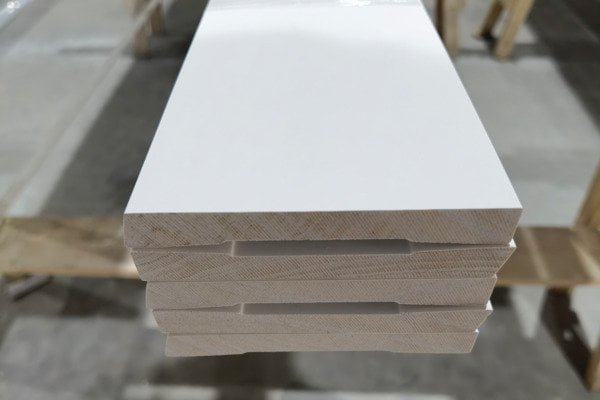
I have learned that the more specific I am, the better the outcome. For example, for the profile width, I typically deal with ranges from 12 mm to 120 mm. This tells the supplier how much of the frame will be seen. For height, it's usually between 10 mm and 45 mm. Length is also important; standard finished lengths are generally 2.4 m, 2.7 m, 3.0 m, and 3.6 m. Sometimes, I need custom lengths, so I always ask if they can do that.
My team and I also pay close attention to the Minimum Order Quantity (MOQ). This is a big deal, because it affects our costs and inventory. For a standard profile, the MOQ can be anywhere from 200 to 2,000 linear meters. If I need something custom, the MOQ will be higher, or I'll have to pay a one-time fee for new tools. Finally, I have to be super specific about the surface finish. Is it going to be raw, primed, fully painted, veneer-wrapped, PVC wrapped, foil-stamped, or UV-coated? Every detail matters.
Here's an example of how I specify these:
| Specification | Typical Range/Detail | Importance |
|---|---|---|
| Profile Width | 12 mm – 120 mm (visible face) | Defines visual impact and frame proportion |
| Profile Height/Depth | 10 mm – 45 mm (side dimension) | Affects frame presence and structural integrity |
| Length | 2.4 m, 2.7 m, 3.0 m, 3.6 m (custom lengths possible) | Crucial for efficient cutting and waste reduction |
| MOQ | 200 – 2,000 linear meters (higher for custom) | Affects unit cost and production planning; may involve tooling fees |
| Surface Finish | Raw, primer, painted, veneer-wrapped, PVC-wrapped, etc. | Dictates aesthetic and durability; impacts cost and application |
| Color/Pantone Code | Specific RAL/PMS codes or samples | Ensures exact color matching across batches |
| Material Type | Solid wood (pine, poplar, oak), MDF (with grade) | Influences cost, stability, and environmental compliance |
What are the Key Packaging Standards for Frame Moulding?
When I order frame moulding, I know how important good packaging is. It keeps the product safe during shipping.
I always ensure moulding is protected during shipping. Typically, moulding is bundled in packs of 20–100 pieces, secured with cardboard, foam, or plastic wrap. These bundles then go into master cartons, often with corner protectors and reinforced with wooden bars to prevent crushing. I also keep in mind that the MOQ is usually linked to a full pallet or container load to reduce shipping costs. Proper packaging is key to preventing damage and disputes.
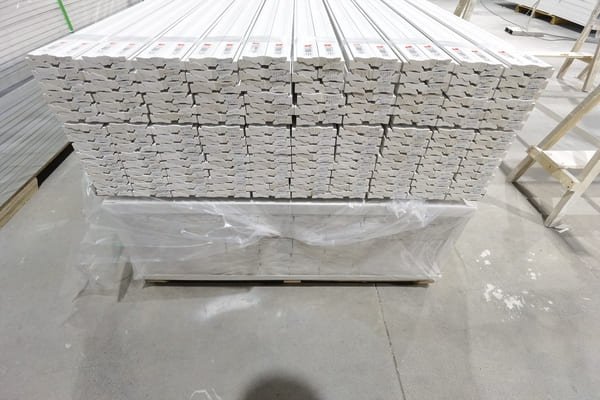
From my experience, I have learned that without proper packaging, even the best moulding can arrive damaged. I always ensure that the moulding is bundled tightly, usually in packs of 20 to 100 pieces. These bundles are then carefully protected with cardboard, foam, or plastic wrap.
For shipping, these bundles go into master cartons. I insist on corner protectors and strong wooden bars to keep them from getting crushed. I also know that the Minimum Order Quantity (MOQ) is usually set to fill a whole pallet or container. This helps keep shipping costs down.
This table shows what I expect for packaging:
| Aspect | Detail | Purpose |
|---|---|---|
| Bundling | 20-100 pieces per bundle | Keeps pieces together, prevents movement and minor abrasions |
| Protection | Cardboard, foam, plastic wrap | Guards against scratches, dents, and moisture |
| Master Cartons | Bundles placed inside, often with corner protectors | Provides structural integrity and external impact resistance |
| Reinforcement | Wooden bars, strapping | Prevents crushing, especially during stacking in transit |
| Palletization | Full pallet or container load (tied to MOQ) | Optimizes shipping efficiency, reduces per-unit freight costs |
| Moisture Control | Desiccants, moisture-resistant wraps | Crucial for preventing warping and mold, especially for long sea voyages |
| Labeling | Clear identification of product, quantity, and handling info | Ensures correct sorting, inventory management, and safe handling |
What is Your Quality Assurance Checklist: What to Verify Before You Buy?
Are you tired of receiving sub-par products? Don't blindly trust your supplier’s promises.
Always request a physical sample to check color, texture, dimensions, and corner splicing. Inspect for surface flaws like bubbles or chips, and agree on a dimensional tolerance (e.g., ±0.5 mm). For solid wood, demand a moisture content certificate (6-12%), and for MDF, ensure formaldehyde emissions reports (CARB Phase 2/EPA TSCA Title VI). Finally, confirm robust packaging and clarify shipping responsibilities.
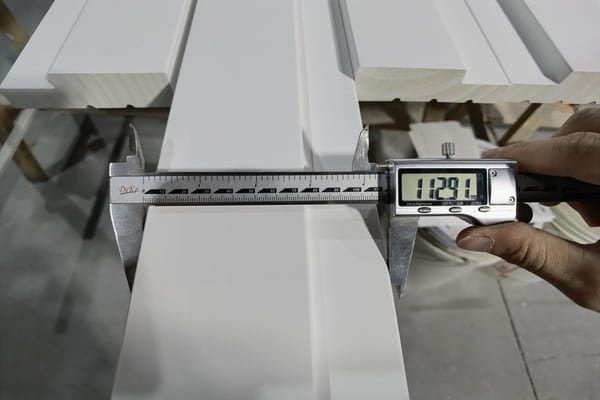
From my experience, I've learned that a professional B2B buyer never just takes a supplier's word for it. I always need proof of quality. My checklist helps me make sure I am getting the best product.
What are the Essential Steps on Your QA Checklist?
When I get new frame moulding, I follow a strict checklist. This ensures that every piece meets my standards.
I rigorously check every aspect of a sample. First, I always request a physical sample to inspect the color, sheen, texture, dimensions, and how corners join. Then, I check for surface flaws like bubbles or chips. I discuss acceptable tolerance, usually ±0.5 mm, with the supplier. For solid wood, a moisture content certificate (6–12%) is essential, adjusted for the destination climate. For MDF, I demand formaldehyde emission reports (CARB Phase 2 or EPA TSCA Title VI) and ensure legal timber source or FSC certification for wood. I also verify how they manage batch consistency and ensure robust packaging for transport, clarifying damage responsibility.
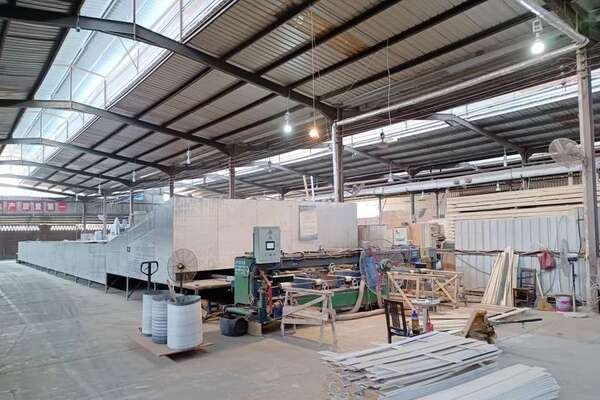
First, I always ask for a physical sample. This lets me see the color, feel the texture, and check the measurements. Most importantly, I test how the corners fit together. I look very closely at the surface for any bubbles, peeling, or chips, especially on wrapped products.
When it comes to size, I know that no product is perfect. So, I always talk with the supplier about how much variation is okay. A common tolerance is ±0.5 mm. For solid wood, moisture content is a must-check. I always ask for a certificate showing it’s between 6–12%, adjusted for our target market's climate to prevent warping. For MDF, I demand an emissions report for formaldehyde, checking for CARB Phase 2 or EPA TSCA Title VI. If my clients want it, I also make sure the wood comes from legal sources and has FSC certification.
I also ask about how the supplier keeps colors and grain consistent across different batches. And I carefully check the packaging. Is it strong enough to protect the moulding from moisture, pressure, and scratches during shipping? I clarify who is responsible for damage under our shipping terms (like FOB or CIF).
Here’s my detailed QA checklist:
| Item | Action | Why It's Important |
|---|---|---|
| Physical Sample Approval | Inspect color, sheen, texture, dimensions, corner splice. | Prevents surprises; confirms aesthetic and fit before mass production. |
| Surface & Edge Quality | Check for bubbles, peeling, chipping, glue lines. | Ensures a clean, professional finish; impacts product value. |
| Dimensional Tolerance | Agree on acceptable deviation (e.g., ±0.5 mm). | Maintains consistency in product size; critical for automated framing. |
| Moisture Content (Solid Wood) | Request certificate (6–12%). | Prevents warping, cracking, and dimensional instability in different climates. |
| Environmental Compliance (MDF) | Demand formaldehyde emission report (CARB Phase 2, EPA TSCA). | Ensures health safety and market compliance; avoids regulatory issues. |
| FSC Certification (Wood) | Verify for legally sourced timber. | Meets sustainability demands; important for ethical sourcing and market access. |
| Batch Consistency | Inquire about color/grain management across production. | Guarantees uniformity for large orders and repeat purchases. |
| Packaging Robustness | Assess protection from moisture, pressure, scratches. | Minimizes transit damage; reduces returns and claims. |
| Shipping Terms Clarity | Define responsibility for transit damage (FOB, CIF, etc.). | Avoids disputes and clarifies financial liability for damaged goods. |
Conclusion
Sourcing wholesale frame moulding requires careful attention to material choice, precise specifications, and stringent quality control. By prioritizing physical samples, verifying compliance, and understanding packaging, you ensure consistent quality and reliable supply for your business needs.