Are you a buyer struggling to find consistent quality and reliable supply for your wood moulding needs? I understand the challenges of balancing cost efficiency with product quality and lead times.
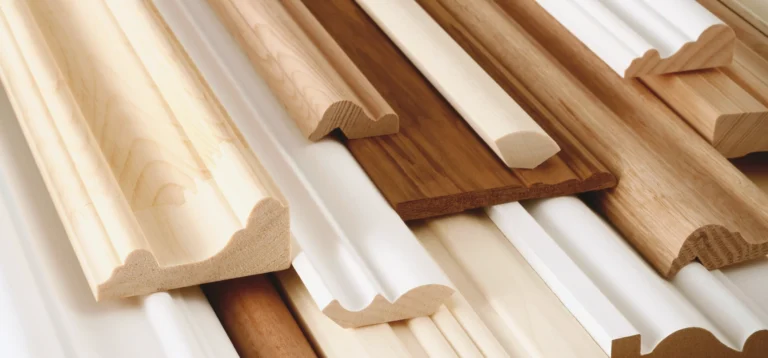
Wood mouldings for high-end projects are crafted through a meticulous process involving selecting premium timber, precision milling with advanced machinery, and rigorous quality control. This ensures custom specifications are met, profiles are consistent, and the final product delivers the aesthetic and structural integrity required for demanding applications.
As someone deeply involved in manufacturing and exporting wood mouldings, I have seen firsthand how critical each step is to meet the exacting standards of international buyers. My experience has shown that understanding the “how” not only informs purchasing decisions but also builds trust.
How are wood mouldings manufactured?
Are you wondering about the typical production steps for wood mouldings? The manufacturing process for wood mouldings is a blend of traditional craftsmanship and modern technology, ensuring precision and quality.
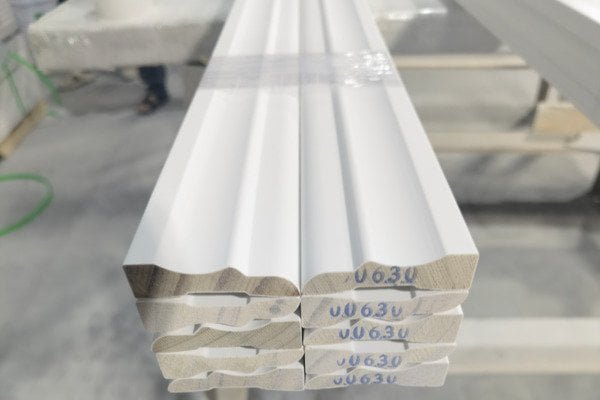
Wood mouldings are manufactured by first selecting appropriate timber, which is then dried, planed to a precise thickness, and fed through moulder machines that cut the desired profile. This process is followed by sanding, finishing (such as priming), and rigorous quality inspection to ensure consistent dimensions and smooth surfaces.
Material Selection & Preparation
For high-end projects, the selection of raw materials is very important. We start by choosing suitable wood species like pine, poplar, or oak. These species offer specific characteristics that make them ideal for mouldings. Pine is lightweight and easy to work with. Poplar is strong and takes paint well. Oak is durable and has a distinctive grain.
Once selected, the timber undergoes a careful drying process. This process reduces the moisture content to a specific level, usually between 6% and 10%. Proper drying prevents warping, cracking, and shrinkage after the moulding is installed. We use modern kilns to control the drying environment precisely. After drying, the timber is visually inspected for defects. Any knots, cracks, or other imperfections are removed. This ensures that only the best quality wood moves to the next stage. Next, the wood is cut into rough blanks, slightly larger than the final moulding dimensions. These blanks are then planed to achieve a consistent thickness and width, creating a smooth surface for the moulding machine. This preparation is a foundational step. It ensures that the final product will be stable and beautiful.
| Step | Description | Key Outcome |
|---|---|---|
| Timber Selection | Choosing appropriate wood species (e.g., pine, poplar, oak) based on project requirements like durability, paintability, and grain. | Right material for the job. |
| Drying | Kiln-drying timber to reduce moisture content (6-10%). | Prevents warping and shrinkage. |
| Defect Removal | Visual inspection and cutting out knots, cracks, or other imperfections. | Ensures high-quality raw material. |
| Planing | Reducing timber to consistent thickness and width, creating a smooth surface. | Uniform blanks for moulding. |
Milling and Profiling
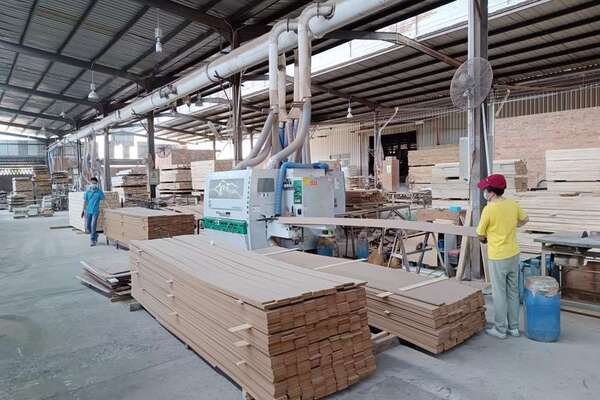
After lumber preparation, the milling and profiling stage begins. Precision is key here. The prepared wood blanks are fed into a moulder machine. This machine has several rotating cutting heads. Each head is equipped with knives shaped to create a specific part of the moulding profile. As the wood passes through, the knives precisely cut the desired shape. This process happens very quickly. It requires careful calibration of the machine. The speed of the feed and the rotation of the cutters are adjusted. This ensures a clean, smooth cut. For complex profiles, multiple passes through different moulders or a single pass through a multi-head moulder may be needed.
Once the profile is cut, the moulding often goes through a sanding station. This station uses fine-grit sandpaper belts to smooth any imperfections left by the cutting knives. Automated sanding lines ensure consistent pressure and coverage. This creates a ready-to-finish surface. Sanding is critical for achieving a high-quality finish, especially for mouldings that will be painted or stained. After sanding, mouldings are inspected again for any small defects. They are then trimmed to exact lengths. This stage ensures that the mouldings meet the precise dimensions and profile requirements of the customer.
| Process | Description | Purpose |
|---|---|---|
| Moulding | Using multi-head moulder machines with shaped knives to cut the desired profile onto the wood. | Creates the specific decorative or functional shape. |
| Sanding | Passing mouldings through automated sanding stations with fine-grit belts. | Achieves a smooth, ready-to-finish surface. |
| Trimming | Cutting mouldings to precise lengths. | Ensures accurate dimensions for installation. |
Finishing & Quality Control
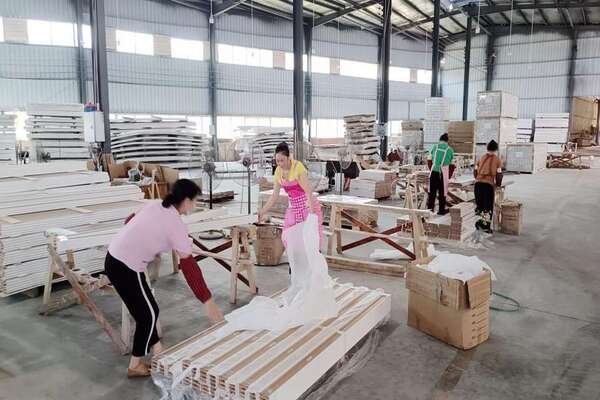
The final stages of moulding production involve finishing and rigorous quality control. Once the mouldings are profiled and sanded, they often receive a primer coat. This primer is usually water-based or oil-based. It prepares the surface for final painting. Priming ensures better adhesion of the topcoat. It also helps to hide minor imperfections. For some projects, the mouldings might be pre-finished with a specific paint or stain color. This saves time and effort during installation. My experience has shown that pre-primed or pre-finished products are increasingly preferred by buyers. They reduce on-site labor and ensure a uniform appearance.
After finishing, every piece undergoes a strict quality control inspection. This inspection checks for several things. It checks for dimension accuracy against specifications. It checks for profile consistency. It checks for surface quality, looking for flaws like dents, scratches, or uneven finishes. Tolerances are very strict, especially for high-end projects. Any piece that does not meet the standards is either reworked or rejected. This dedication to quality control ensures that only perfect pieces are shipped. It builds trust with our buyers and reduces issues on their end. Finally, the mouldings are carefully packaged to prevent damage during shipping. They are then ready for export.
What machines are used to produce wood mouldings?
Are you curious about the specific equipment that shapes raw timber into elegant mouldings? Producing high-quality wood mouldings relies on specialized machinery designed for precision and efficiency.
Modern wood moulding production utilizes a range of specialized machines including multi-head moulders, rip saws, planers, and automated sanding lines. These machines work together to transform rough timber into precise profiles, ensuring consistent dimensions and smooth finishes for various applications.
Primary Shaping Machines
The foundation of wood moulding production lies in primary shaping machines. These machines prepare the raw timber for profiling. The first important machine is the rip saw. Rip saws cut wide boards into narrower strips. These strips are then closer to the width needed for the specific moulding profile. They ensure accurate and parallel cuts. This minimizes waste and prepares the timber for the next step. After ripping, the timber goes to a planer. Planers remove material from the faces of the wood. They create a consistent thickness and a smooth surface. This uniform thickness is very important. It ensures that the wood will feed smoothly through the moulder. It also ensures that the final moulding will have accurate dimensions.
The most critical machine is the multi-head moulder. This machine has several cutting spindles. Each spindle is fitted with custom-ground knives. As the wood passes through, these knives cut the desired profile from all sides simultaneously. Modern moulders can have four, five, or even six heads. This allows for complex profiles to be cut in a single pass. The precision of these machines is incredible. They can hold very tight tolerances, ensuring that every piece of moulding matches the design specifications. Proper setting and maintenance of these machines are crucial. I know from experience that even a slight misalignment can affect the final profile.
| Machine Type | Function | Benefit |
|---|---|---|
| Rip Saw | Cuts wide timber boards into accurate, parallel strips of specified width. | Minimizes waste, prepares for subsequent milling. |
| Planer | Levels and smooths timber surfaces, ensuring consistent thickness and flatness. | Essential for uniform material feed and accurate profiles. |
| Multi-Head Moulder | Precisely cuts complex profiles on multiple sides of the wood simultaneously using custom-ground knives. | Creates the final moulding shape with high precision. |
Finishing and Auxiliary Equipment
Beyond basic shaping, other machines play a vital role in perfecting wood mouldings. Automated sanding lines are essential. These machines have oscillating sanding belts or orbital sanders. They smooth the surface of the profiled mouldings. This removes any tool marks from the moulder. It prepares the wood for finishing. Proper sanding is key to achieving a high-quality surface. It ensures that paint or stain applies evenly. For pre-primed mouldings, a primer application machine is used. This machine applies a uniform coat of primer to all surfaces. It can be a spray booth or a roll coating machine. These machines ensure consistent coverage and thickness of the primer. This speeds up the finishing process for the end-user.
Optimizing workflow also involves auxiliary equipment. A dust collection system is critical. It removes wood dust and shavings created during milling and sanding. This improves air quality. It also keeps the machines clean. This helps them run efficiently. Blade sharpening equipment is also important. It keeps moulder knives sharp. Sharp knives produce cleaner cuts and extend the life of the tooling. I have found that investing in good auxiliary equipment pays off. It improves product quality and factory efficiency. It ensures that our production line runs smoothly from start to finish.
| Equipment Type | Role in Production | Impact on Quality/Efficiency |
|---|---|---|
| Automated Sanding Lines | Smooths profiled mouldings, removing tool marks and preparing surfaces for finishing. | Ensures a high-quality, even finish for paint or stain. |
| Primer Application Machine | Applies uniform primer coat (spray or roll) to prepared mouldings. | Speeds up finishing, ensures consistent pre-primed product. |
| Dust Collection System | Collects wood dust and shavings, improving air quality and machine performance. | Enhances worker safety, maintains machine efficiency. |
| Blade Sharpening Equipment | Maintains the sharpness of moulder knives and other cutting tools. | Ensures clean, precise cuts and extends tooling lifespan. |
How much does custom wood moulding production cost in the US?
If you are a buyer, you might be asking about the costs of custom wood moulding production in the US market. Understanding these costs is important for project budgeting and supplier selection.
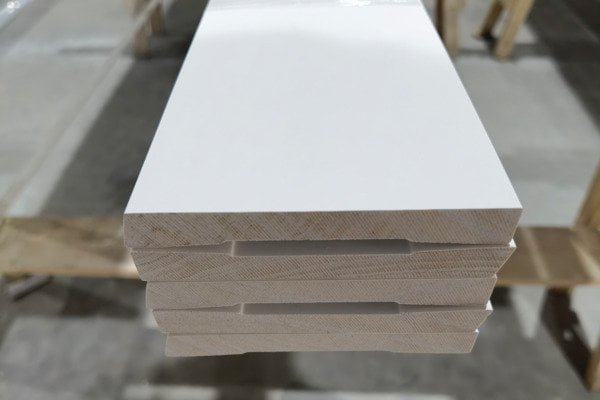
Custom wood moulding production costs in the US can vary widely, typically ranging from $2 to $15 per linear foot or more, depending on factors such as wood species1, profile complexity2, order volume3, and finishing requirements4. Setup fees for custom knives can add significantly to initial costs.
Cost Factors Explained
Several key factors heavily influence the cost of custom wood moulding production in the US. First, the wood species1 selected plays a big role. Common softwoods like pine and poplar are generally more affordable. Hardwoods such as oak, maple, or cherry are more expensive. Exotic wood species1 can cost even more. The cost of the raw timber is a significant part of the total. Second, profile complexity2 affects pricing. Simple, standard profiles are cheaper to produce. Intricate or highly detailed patterns require more specialized tooling and longer machine run times. This increases the cost. Creating new custom knife profiles5 also adds setup fees6. These fees can range from a few hundred to over a thousand dollars per profile.
Third, order volume3 directly impacts the unit price. Larger orders typically lead to lower per-linear-foot costs. This is because setup costs for machinery are spread across more units. Small, one-off custom runs are usually the most expensive per foot. Fourth, finishing requirements4 add to the cost. Unfinished mouldings are the cheapest. Pre-primed mouldings cost a bit more. Fully pre-finished mouldings (painted or stained) are the most expensive. They save labor on site, but add to the manufacturing cost. Finally, lead time7 can influence pricing. Rush orders often incur additional charges. Understanding these factors helps in making informed purchasing decisions.
Cost Comparison: US vs. International Sourcing
When considering custom wood mouldings, buyers often compare US domestic production with international sourcing8, especially from countries like China. There are clear differences in cost structures. US production9 often benefits from shorter lead time7s for domestic projects. It also allows for easier communication10 and oversight. However, labor costs in the US are higher. This translates to higher per-linear-foot prices for mouldings. Setup fees for custom profiles can also be substantial. Material costs might be similar, but manufacturing overheads11 are higher.
International sourcing, particularly from countries like China, generally offers a significant cost advantage. Labor costs are lower. This leads to more competitive pricing, especially for large volume orders. Custom knife production and tooling costs are often much lower or even absorbed into larger orders. However, international sourcing8 involves longer lead time7s due to shipping. It also includes additional costs like freight, customs duties, and import taxes. Communication can sometimes be a challenge due to time zones and language barriers, although many Chinese manufacturers, like us, have dedicated English-speaking teams. For large-scale projects, the overall savings from international sourcing8 often outweigh the added logistics12 complexities, making it an attractive option for many bulk buyers.
| Cost Factor | US Production (General) | International Sourcing (e.g., China) |
|---|---|---|
| Unit Price | Higher, due to higher labor and overhead costs. | Lower, due to competitive labor costs and economies of scale. |
| Setup Fees (Custom Knives) | Potentially significant (hundreds to thousands of USD), especially for small runs. | Often lower or absorbed into larger orders; less impact on overall cost. |
| Lead Time | Shorter for domestic delivery. | Longer, due to manufacturing time and international shipping (weeks to months). |
| Shipping Costs | Lower for domestic ground freight. | Higher, includes ocean freight, customs, duties, and inland transport. |
| Communication | Easier, direct. | May involve time zone differences, but many suppliers offer dedicated English-speaking service. |
| Volume Discounts | Available, but higher baseline cost. | More substantial for large volume orders, maximizing cost savings. |
Is manufacturing wood mouldings for export profitable?
Are you wondering about the profitability of exporting wood mouldings, especially in today's market? For manufacturers like us, understanding the export landscape is crucial for sustainable growth.
Manufacturing wood mouldings for export can be highly profitable due to economies of scale from large international orders, competitive labor costs in manufacturing regions, and access to diverse global markets. However, success depends on managing international logistics12, complying with certifications13, and building strong client relationships.
Export Market Dynamics
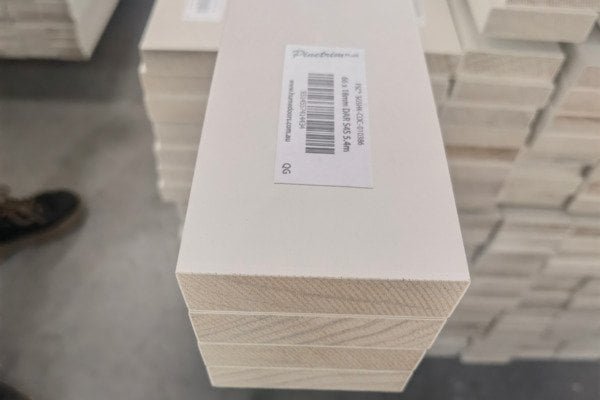
The export market for wood mouldings has unique dynamics. My company, Goodwood Mouldings, has been exporting for over 20 years. We have seen many changes. The global demand for building materials is strong. This includes wood mouldings. Many countries, especially in North America and Europe, rely on imports. They rely on imports for cost-effective and high-quality products. This creates a large market for exporters. However, this market is also competitive. To succeed, manufacturers must offer consistent quality. They must also offer competitive pricing. And they must offer reliable supply chains. Buyers in these markets value efficiency and certainty. They want products that meet high standards. They also want products that are delivered on time.
Changes in material costs and shipping rates also impact profitability. My strategy has been to secure reliable raw material sources and optimize production processes. This helps to manage costs. We also focus on product standardization. This includes pre-primed and modular profiles. These features meet growing buyer preferences. They help to streamline project installations. We also prioritize certifications13 like FSC and CARB. These certifications13 are important for market access. They show our commitment to quality and environmental standards. Our ability to respond quickly to custom demand also sets us apart. This flexibility helps us to meet diverse project needs. It strengthens our position in the global market.
Challenges and Opportunities for Exporters
Exporting wood mouldings comes with both challenges and opportunities. One major challenge is managing complex international logistics12. This includes ocean freight, customs clearance, and fluctuating shipping costs14. Ensuring timely delivery across vast distances requires robust planning and a strong logistics12 network. Compliance with international regulations is another challenge. Different countries have different standards for product quality, environmental certifications13, and labeling requirements. For example, CARB II for formaldehyde emissions is critical for the US market. FSC certification for sustainable forestry15 is crucial for many European buyers. Meeting these diverse requirements can be complex and expensive.
However, these challenges also open doors to opportunities. By mastering logistics12 and compliance, we gain a competitive edge. Our ability to offer comprehensive certifications13 gives buyers confidence. It simplifies their procurement process. Building long-term relationships with global partners is key. My experience has shown that buyers are not just looking for a product. They are looking for a reliable partner. They want a partner who understands their needs. They want a partner who can provide consistent quality and support. Providing accurate information and transparent processes helps build trust. This includes clear product catalogs and technical specifications16. This proactive approach helps us stand out. It helps us secure high-value, long-term contracts. This makes exporting very profitable for us.
Conclusion
Manufacturing wood mouldings for high-end projects17 demands precision, quality, and adaptability. From raw material selection to advanced machinery and strict quality control, every step ensures premium products. Understanding both the production process and the cost dynamics, especially in export markets, allows manufacturers to deliver exceptional value and build strong, lasting relationships with global buyers.
Learn how different wood species impact pricing and quality in moulding production. ↩
Discover how the complexity of profiles influences production costs and design options. ↩
Find out how larger orders can lead to cost savings in moulding production. ↩
Understand the different finishing options and their impact on overall costs. ↩
Learn about the significance of custom knife profiles and their impact on production. ↩
Understand the significance of setup fees and how they affect overall production costs. ↩
Explore the relationship between lead time and pricing in moulding production. ↩
Discover how international sourcing can provide cost advantages and competitive pricing. ↩
Learn about the advantages of sourcing mouldings domestically, including quality and communication. ↩
Learn how effective communication can enhance the sourcing process and build trust. ↩
Understand the role of manufacturing overheads in determining the price of mouldings. ↩
Discover the complexities of logistics in the wood moulding export process. ↩
Learn about essential certifications that can enhance market access and buyer confidence. ↩
Explore how shipping costs can vary and affect the final price of mouldings. ↩
Explore the importance of sustainable forestry practices in the wood industry. ↩
Understand the technical details that buyers need for informed purchasing decisions. ↩
Explore the characteristics of high-end projects and their requirements in moulding production. ↩